
PAX TIBI MARCE — The Winged Lion That Still Watches Over Spinalonga
27/08/2026
Jeep Safari to Trypiti Beach – Discover the Authentic Crete
06/09/2026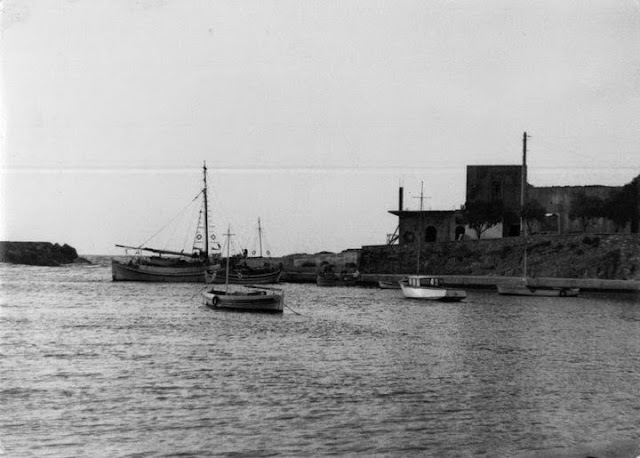
On the northern coast of Lasithi, between Malia and the Mirabello region, lies Sissi, today one of the best-known small seaside resorts of eastern Crete.
To most visitors, Sissi appears to be a relatively modern village: a small natural harbour surrounded by restaurants, shops, accommodation and hotels. Yet the history of this small area stretches back thousands of years.
Archaeological excavations immediately west of the modern settlement have revealed an important Bronze Age community. A Venetian document records the name Sisi as early as 1391. In the nineteenth century, the harbour was used for the export of olive oil and carobs. During the Cretan Revolution of 1866–1869, it became one of the landing points serving the insurgent provinces of eastern Crete.
The modern village itself, however, is surprisingly recent.
Official population records show that Sissi was still barely inhabited at the beginning of the twentieth century. Its transformation into the village we know today occurred principally during the twentieth century and accelerated dramatically with the arrival of tourism.
The history of Sissi is therefore not the story of a single village continuously inhabited for thousands of years. It is the story of the same geographical area acquiring very different functions at different moments in history.
And throughout much of that history, the sea has played a decisive role.
The Minoan Settlement at Sissi
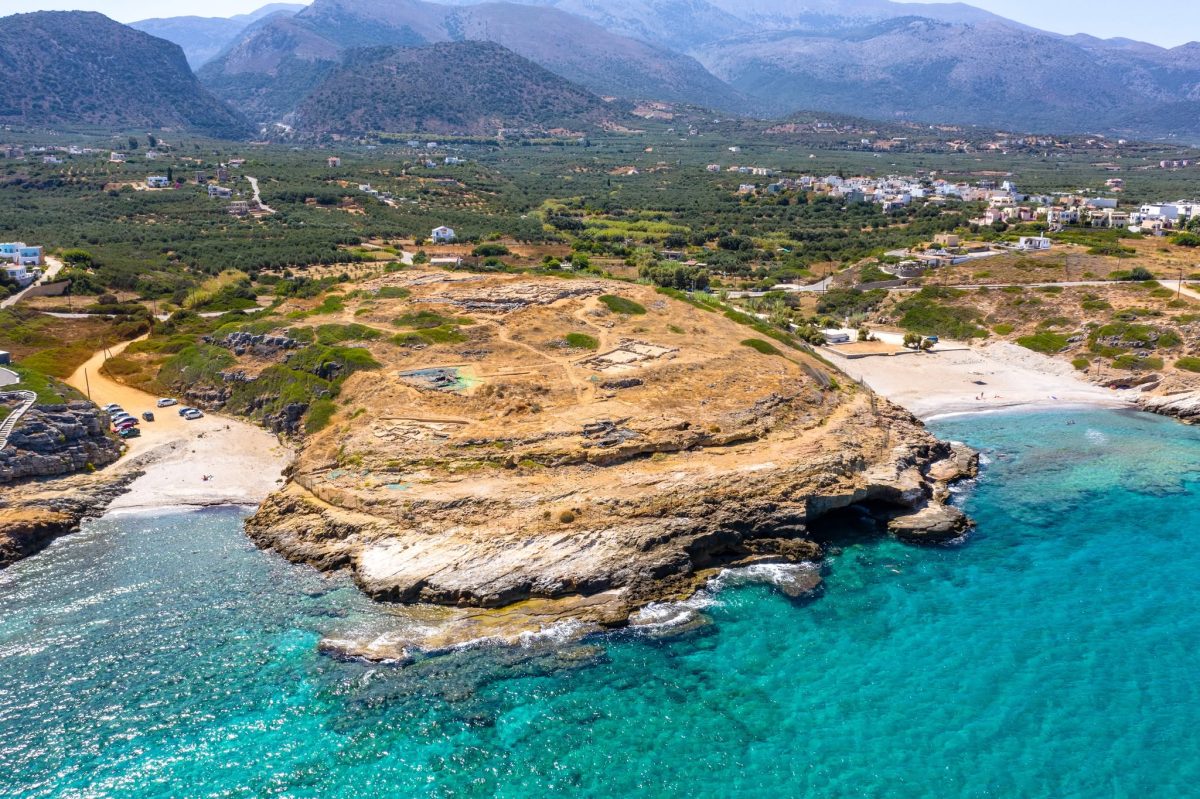
The earliest known chapter begins not at the modern harbour but immediately to its west, on the coastal hill known as Kephali tou Agiou Antoniou, near Boufos.
Systematic excavations conducted by the Sissi Archaeological Project, under the auspices of the Belgian School at Athens and directed by Professor Jan Driessen of UCLouvain, have revealed an important Bronze Age settlement.
The archaeological evidence indicates that the site was first occupied around 2600 BC, during the Early Minoan IIA period, and continued to be used through successive phases until approximately 1200 BC.
Source: Sissi Archaeological Project, Belgian School at Athens / UCLouvain, Site History.
The geographical position of the settlement was significant. Sissi lies less than four kilometres east of the great Minoan centre of Malia and close to the natural passage connecting central and eastern Crete through the area of Selinari and Anavlochos.
Archaeological research suggests that Sissi developed into one of the most important settlements in the Bay of Malia. Jan Driessen has proposed that it was probably the second most significant settlement in the region after Malia during much of the period between approximately 2600 and 1450 BC.
Following the widespread destructions that affected many Cretan centres around 1450 BC, Sissi continued to be occupied and may subsequently have become the principal settlement of the Malia plain until approximately 1200 BC.
Sources: Jan Driessen, Archaeological Institute of America, Annual Meeting Abstracts; Sissi Archaeological Project.
Excavations have revealed residential areas, a cemetery and substantial architectural complexes.
Among the most important discoveries is a monumental complex organised around a large rectangular paved court. The complex belongs principally to the Neopalatial period, approximately 1700–1450 BC, and demonstrates that the settlement was considerably more complex than a small agricultural community.
Source: Jan Driessen, Excavations at Sissi; Sissi Archaeological Project.
Occupation eventually came to an end around the close of the Late Minoan IIIB period, approximately 1200 BC.
An important distinction must be made here.
There is currently no archaeological evidence proving uninterrupted settlement between the Bronze Age community at Kephali and the modern village of Sissi.
After approximately 1200 BC, a long gap appears in the available evidence. The prehistoric settlement and the modern village belong to the same wider geographical area, but they should not be presented as one continuously inhabited community.
The Name “Sisi” in 1391
The historical trail becomes visible again many centuries later, during Venetian rule in Crete.
The earliest written reference presently known to the name Sisi dates to 1391.
Historian Stergios Spanakis records a document from the Ducal Archives of Candia concerning the monk Ioannikios Skordilis, who lived at a location identified as:
“S. Ioh. Sisi”
— Saint John at Sisi.
The document concerned permission granted to Skordilis to travel outside Crete in order to be ordained an Orthodox priest.
Sources: Stergios Spanakis, Cities and Villages of Crete, entry “Sisi”; Elisabeth Santschi, Regestes des arrêts civils et des mémoriaux (1363–1399) des Archives du Duc de Crète, p. 313.
The document is particularly important because it demonstrates that Sisi was already an established geographical name in the late fourteenth century.
It does not, however, tell us the size or character of the settlement. We cannot conclude from this reference that a village comparable to modern Sissi existed around the present harbour.
Researcher Eleftherios Platakis proposed that the Saint John mentioned in the Venetian document might correspond to the church of Agios Ioannis Theologos at Sissi. This remains an identification proposed by a researcher rather than something demonstrated by the Venetian document itself.
Source: Stergios Spanakis, Cities and Villages of Crete, citing Eleftherios Platakis, Rizes, issue 4.
Later sources record different forms of the place-name. Spanakis notes nineteenth-century versions including Souti, while in 1894 Nikostratos Kalomenopoulos explicitly referred to the “Bay of Sisi.”
The documentary evidence therefore establishes the antiquity of the name.
Its precise etymology, however, remains uncertain.
For this reason, popular stories attempting to explain the origin of the name — including modern associations with famous historical personalities — should not be confused with documented history.
Sissi in 1865: Thomas Spratt’s Eyewitness Account
For the nineteenth century we possess something especially valuable: an eyewitness description of Sissi.
British naval officer, hydrographer and explorer Thomas Abel Brimage Spratt travelled extensively through Crete and published his observations in the two-volume Travels and Researches in Crete in London in 1865.
Spratt visited the area and described what he saw.
His account appears on page 113 of the first volume:
“The creek is called Sisi.”
He described a narrow inlet at the outlet of a rocky ravine crossing the stony plain east of Malia.
More importantly, he explained how the harbour was actually being used.
Small boats and coastal trading vessels could find some shelter there during the summer months, while in winter they could be hauled onto the shore for protection.
The harbour was used for the export of olive oil and carobs.
When Spratt arrived, he saw empty oil barrels lying on the shore, waiting to be filled before a coastal trading vessel returned to collect them.
Source: T. A. B. Spratt, Travels and Researches in Crete, Vol. I, London: John van Voorst, 1865, p. 113.
This apparently small observation provides one of the clearest pictures we possess of nineteenth-century Sissi.
There was maritime trade.
There was barely a village.
Spratt states that the only building standing near the harbour was a Greek chapel, although he also noticed traces of a few other structures.
This is crucial evidence for understanding the origins of modern Sissi.
By the middle of the nineteenth century, the harbour was economically active, but the densely settled coastal village familiar today did not yet exist.
Spratt also recorded the expression “Hellenico Sisi, or Seese”, which he heard from people cultivating the surrounding land. He speculated that the inlet might have been used as a harbour in antiquity.
That interpretation was Spratt’s hypothesis and should not be confused with archaeological evidence.
What he personally witnessed is much more important: in the 1860s, Sissi was a small working harbour through which agricultural produce from the surrounding countryside reached the sea.
Sissi and the Cretan Revolution of 1866–1869
Only a few years after Spratt’s visit, the harbour acquired another important function.
During the Cretan Revolution of 1866–1869, Sissi became part of the supply network serving the insurgent provinces of eastern Crete.
A document dated 25 May 1867, connected with the humanitarian missions of American physician and philhellene Samuel Gridley Howe, records the coastal landing points designated by the Provisional Government of Crete for supplies.
For the eastern provinces, the document explicitly includes Sissi, together with Malia, Agios Nikolaos and other coastal locations.
Source: I. P. Mamalakis, “Samuel Howe and the Cretan Revolution of 1866”, publishing documents from the General State Archives of Greece, GAK K14a, no. 871.
This demonstrates that Sissi was not merely used accidentally by passing vessels. It had been selected as an organised landing point for supplies destined for eastern Crete.
An even more remarkable event occurred several weeks earlier.
During the night of 29–30 April 1867, the steamship Arkadi reached the Bay of Sissi carrying supplies for the eastern provinces.
After the cargo was unloaded, the supplies were transported inland towards the Monastery of Agios Georgios Vrachasiotis.
The ship then embarked 124 women and children, evacuating them from war-torn Crete, and departed from Sissi for Syros on 30 April.
Source: Nikolaos Stavrinidis, Captain Michalis Korakas and His Fellow Fighters, account of the April 1867 voyage of the Arkadi.
The episode reveals the practical importance of the small natural harbour.
In peacetime it handled agricultural produce.
During revolution it could receive supplies and provide an evacuation point for civilians.
From Harbour to Village
Despite this activity, Sissi remained extremely small throughout the nineteenth and early twentieth centuries.
Stergios Spanakis notes that Sissi does not appear as a separate village in the official censuses of 1881 or 1900.
He also records the existence of storage buildings, or magazedes, at Sissi during the period of Egyptian administration in Crete between 1830 and 1840. These were associated with the storage of agricultural products awaiting maritime transport.
Spanakis describes Sissi characteristically as:
“the harbour of the inhabitants of Vrachasi.”
Source: Stergios Spanakis, Cities and Villages of Crete, Vol. II, entry “Sisi”.
This helps explain the original relationship between the coast and the inland settlement.
Sissi’s importance initially came from what it provided: access to the sea.
The first striking population figure comes from the census of 1920.
Sissi was recorded with only:
3 inhabitants.
It does not appear separately in the census of 1928.
By 1940, however, the settlement — recorded as Sision — had 79 inhabitants.
Source: Stergios Spanakis, Cities and Villages of Crete, Vol. II, entry “Sisi”, historical census data.
These figures allow us to make an important distinction.
The name Sisi is medieval.
The harbour was economically active by at least the nineteenth century.
But the modern permanently inhabited coastal village developed principally during the first decades of the twentieth century.
The Second World War and Iosif Sakadakis at Boufos
The Second World War reached Sissi while it was still a small settlement.
Following the occupation of Crete in 1941, Lasithi initially formed part of the Italian occupation zone. After Italy’s armistice in September 1943, German forces assumed direct control of eastern Crete.
One particularly tragic event from this period is directly connected with Sissi.
Iosif “Sifis” Sakadakis, a 39-year-old pharmacist from Sitia and member of the resistance network of eastern Crete, was arrested by the German authorities in May 1944.
His case appears in the important Report of the Central Committee for the Verification of Atrocities in Crete, prepared in 1945 by Ioannis Kalitsounakis, Nikos Kazantzakis and Ioannis Kakridis.
The report records Sakadakis’s arrest and death following severe torture.
Source: Report of the Central Committee for the Verification of Atrocities in Crete, 1945, reprinted by the Municipality of Heraklion, 1983, p. 88.
Further historical research identifies Boufos at Sissi as the place where Sakadakis was taken and killed on 8 May 1944.
His body was secretly buried in the area. His remains were exhumed on 20 November 1949, initially transferred to the cemetery at Vrachasi and later returned to his birthplace in the Sitia region.
Sources: Winfried R. Garscha, “Ordinary Austrians: Common War Criminals during World War II”, in Austrian Lives, pp. 304–326; N. I. Vlachos, research concerning the murder of Iosif Sakadakis.
Today, a marble memorial plaque at Boufos preserves his memory at the place associated with his death and original burial.
It is one of the physical reminders in Sissi itself of the violence of the occupation years.
The Post-War Village
After the war, Sissi was still a small coastal community.
The population increased from 79 inhabitants in 1940 to 165 in 1951, while 138 inhabitants were recorded in 1961.
Source: Stergios Spanakis, Cities and Villages of Crete, Vol. II, entry “Sisi”.
The economy remained closely connected with the surrounding countryside, small-scale fishing and local activity.
At the same time, however, the traditional economic importance of the harbour was declining.
The expansion of road transport reduced the need to move agricultural produce by small coastal trading vessels. The maritime economy that Spratt had observed in 1865 was gradually disappearing.
Sissi was approaching another major turning point.
This time, instead of agricultural products leaving the village by sea, increasing numbers of visitors would begin arriving from elsewhere.
The Arrival of Tourism
Tourism began to transform the northern coast of Crete during the 1960s and accelerated considerably during the following decades.
Sissi lay in an important geographical position between the rapidly developing tourist areas around Malia and the established resort region of Agios Nikolaos and Mirabello.
Unlike a purpose-built resort, however, Sissi was an existing small community into which tourism gradually entered.
The first changes were relatively modest.
Visitors created demand for accommodation, food and services. Existing buildings acquired new uses, new rooms and small accommodation businesses appeared, and restaurants and shops increasingly catered for visitors as well as residents.
The harbour also acquired a new identity.
It was no longer important primarily because agricultural products could be loaded onto boats there. Its sheltered waters and distinctive shape became part of the attraction of Sissi itself.
The 1970s and 1980s: The Transformation Accelerates
During the 1970s and 1980s, tourism increasingly changed the economic structure and physical appearance of Sissi.
Accommodation expanded. New restaurants, shops and tourism-related businesses appeared. Construction moved beyond the oldest nucleus around the harbour.
Land also acquired a different value.
Areas previously used principally for agriculture or local needs became increasingly desirable for accommodation and other tourist development.
This change was fundamental.
For generations, the economic value of the area had been connected primarily with what the land could produce.
Tourism increasingly made the location of the land itself valuable.
Proximity to the sea, the harbour and the developing resort became economic assets.
As a result, tourism changed not only employment but the physical geography of the village.
Local Enterprise and the Arrival of Outside Investment
The development of tourism in Sissi was not driven by a single group.
Local families participated in the new economy by creating accommodation, restaurants, shops and other businesses.
But as Sissi became increasingly established as a tourist destination, another phenomenon appeared.
The village began attracting Greek investment capital from entrepreneurs who had no previous family, geographical or economic connection either with Sissi or with the wider area.
This represents an important stage in the modern history of the village.
Tourism was no longer developing only because local residents were adapting their own property and businesses to a new source of income.
Sissi itself had become a place in which outsiders considered it worthwhile to invest.
The arrival of larger-scale investment increased accommodation capacity and contributed to further construction. It also created additional demand for employees, suppliers, restaurants, transport, retail and other services.
Local enterprise and outside capital developed alongside one another.
This combination accelerated the transformation of the village.
The 1990s: The Emergence of Modern Sissi
By the 1990s, tourism was no longer a secondary activity in Sissi.
The settlement had become an established holiday destination.
The built-up area expanded away from the old harbour, while accommodation and businesses increasingly occupied areas that had previously been open or agricultural land.
The distinctions between the older harbour settlement, Upper Sissi and surrounding areas gradually became less pronounced as construction expanded.
The physical form of modern Sissi was taking shape.
This represented a remarkable reversal of the village’s historical relationship with the outside world.
In the nineteenth century, products from the surrounding countryside travelled towards Sissi in order to leave Crete by sea.
By the late twentieth century, people were travelling towards Sissi itself.
The harbour village had become the destination.
Tourism and a New Local Economy
Tourism brought employment, investment and new business opportunities.
It also created a strongly seasonal economy.
During the summer months the population present in Sissi became many times larger than the permanent resident population. Hotels, apartments, restaurants, shops, excursion services, transport and other businesses depended heavily on the tourist season.
Winter presented a very different picture.
This seasonal rhythm became one of the defining characteristics of modern Sissi.
The change also altered the relationship between the village and its surrounding land. Agriculture did not disappear, but it was no longer the principal force determining development along the coast.
Tourism had become the dominant influence on construction, employment and land values.
Within only a few generations, Sissi had undergone a transformation that would have been almost unimaginable to the people who had lived around its harbour at the beginning of the twentieth century.
From Three Inhabitants to an International Destination
The scale of that transformation becomes particularly striking when compared with the historical record.
In 1920, Sissi was recorded with only three inhabitants.
Only a few generations later, the same place possessed accommodation capable of receiving large numbers of visitors over the course of each tourist season and had become known internationally as a holiday destination in Crete.
This transformation constitutes one of the most important chapters in the history of Sissi.
The modern village was not created simply through natural population growth.
It emerged through the interaction of an older local community, tourism, local entrepreneurship, outside investment, changing transport networks, construction and the rapidly increasing economic value of the northern Cretan coast.
Administrative Development
For much of its modern history, Sissi was administratively connected with Vrachasi. Following successive local-government reforms, it later formed part of the Municipality of Neapoli and the Community of Vrachasi.
Since 2011, Sissi has formed part of the Municipality of Agios Nikolaos, in the Regional Unit of Lasithi.
Sources: Hellenic Agency for Local Development and Local Government (EETAA), administrative records; Laws 2539/1997, 3448/2006 and 3852/2010.
Sissi Today
Modern Sissi bears little resemblance to the almost empty harbour described by Spratt in 1865 or to the tiny settlement recorded in the early twentieth-century censuses.
Yet the geographical feature around which its modern history developed remains unmistakable:
the harbour.
The narrow natural inlet remains the physical and visual centre of Sissi.
Its function, however, has changed completely.
The oil barrels and carob cargoes observed by Spratt have disappeared. Fishing boats and leisure craft now occupy waters once visited by small merchant vessels.
Immediately west of the village, at Kephali, archaeological excavations continue to reveal the remains of the Bronze Age settlement that occupied the area thousands of years before the modern village appeared.
At nearby Boufos, the memorial to Iosif Sakadakis recalls a completely different period of history.
And around the harbour, the buildings and businesses of the modern tourist village represent the most recent chapter.
Within a remarkably small geographical area, Sissi therefore contains traces of very different periods of Cretan history.
The Real History of Sissi
The history of Sissi does not need legends to make it interesting.
Archaeology takes organised human settlement in the area back to the third millennium BC.
A Venetian document records the name Sisi in 1391.
Thomas Spratt found a small but functioning commercial harbour there in the nineteenth century, exporting olive oil and carobs.
During the Cretan Revolution, the harbour formed part of the supply network of eastern Crete, and in 1867 the Arkadi landed supplies there and evacuated 124 women and children.
At the beginning of the twentieth century, Sissi remained barely inhabited.
Then a permanent village emerged.
The Second World War left its own tragic mark at Boufos.
And during the second half of the twentieth century, tourism transformed the scale, economy and physical appearance of the settlement.
Local residents created new businesses. Outside investment arrived. Agricultural land acquired tourism value. Construction expanded. A small coastal community became an international holiday destination.
Yet throughout these transformations, one geographical feature repeatedly shaped the history of the place:
the small natural harbour.
It helped connect the surrounding countryside with maritime trade.
It made Sissi useful during the Cretan Revolution.
It became the centre around which the modern settlement developed.
And eventually, rather than serving merely as infrastructure, it became one of the principal attractions of the tourist village itself.
The ships changed.
The cargo changed.
The people arriving at Sissi changed.
And the village surrounding the harbour changed almost beyond recognition.
But the harbour remained.
Sources & Bibliography
Driessen, Jan (ed.). Excavations at Sissi: Preliminary Report on the 2007–2008 Campaigns. Louvain: Presses Universitaires de Louvain.
Driessen, Jan (ed.). Excavations at Sissi II: Preliminary Report on the 2009–2010 Campaigns. Louvain: Presses Universitaires de Louvain.
Sissi Archaeological Project. Belgian School at Athens / UCLouvain. Archaeological reports, site history and research publications concerning the settlement at Kephali tou Agiou Antoniou.
Santschi, Elisabeth. Regestes des arrêts civils et des mémoriaux (1363–1399) des Archives du Duc de Crète. Reference concerning “S. Ioh. Sisi”, 1391, p. 313.
Spanakis, Stergios. Cities and Villages of Crete, Vol. II. Entry “Sisi”. Historical references, place-name evidence and census data.
Spratt, Thomas Abel Brimage. Travels and Researches in Crete. Vol. I. London: John van Voorst, 1865, p. 113.
Mamalakis, I. P. “Samuel Howe and the Cretan Revolution of 1866.” Documents from the General State Archives of Greece (GAK), including K14a, no. 871.
Stavrinidis, Nikolaos. Captain Michalis Korakas and His Fellow Fighters. Reference to the voyage of the steamship Arkadi to Sissi, April 1867.
Report of the Central Committee for the Verification of Atrocities in Crete. Ioannis Kalitsounakis, Nikos Kazantzakis and Ioannis Kakridis, 1945; Municipality of Heraklion reprint, 1983.
Garscha, Winfried R. “Ordinary Austrians: Common War Criminals during World War II”, in Austrian Lives, pp. 304–326.
Hellenic Statistical Authority (ELSTAT). Historical population census records and settlement documentation.
Hellenic Agency for Local Development and Local Government (EETAA). Historical records of administrative changes affecting Sissi and Vrachasi.