
The Cup of Pythagoras – The Ancient Greek Cup That Teaches Moderation
13/07/2026
Eastern Crete Travel Guide (2026): The Best Places to Visit Near Sissi
14/07/2026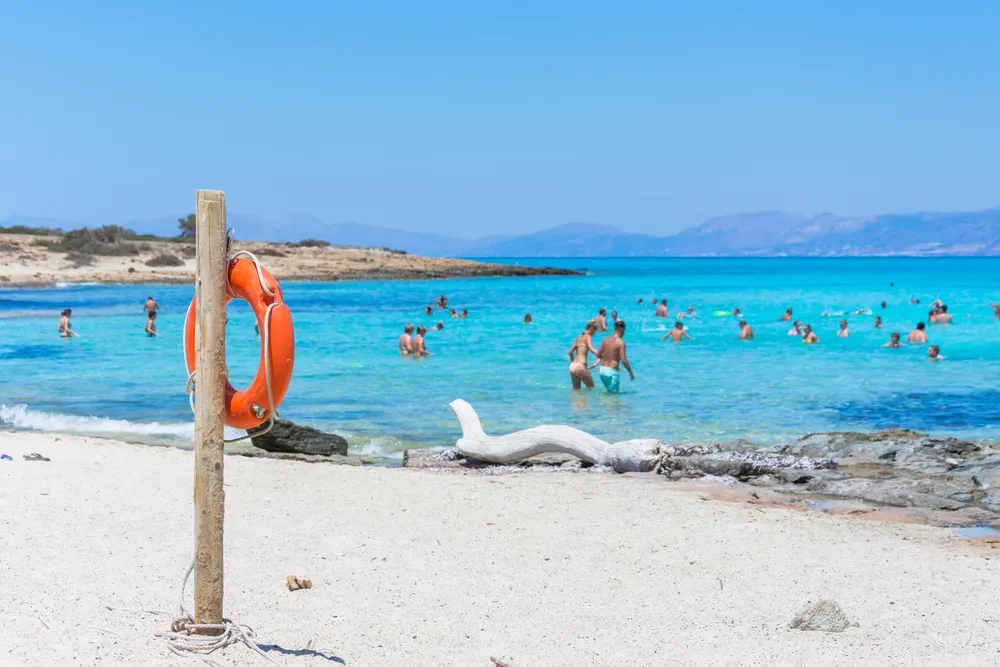
Introduction
There are places that impress you the moment you arrive.
And then there are places that stay with you long after you’ve gone home.
Chrissi Island Crete is one of those places.
Every summer, while talking with visitors at our office in Sissi, I hear the same question over and over again.
“Is Chrissi Island really worth it?”
I always smile before answering.
Not because I’m trying to sell an excursion, but because I already know what will happen a few hours later.
They’ll return with salt still drying on their skin, hundreds of photographs on their phones and exactly the same expression I’ve seen countless times before.
A mixture of surprise and admiration.
Most of them say the same thing.
“I knew it would be beautiful… but I never expected it to look like this.”
And honestly, I understand why.
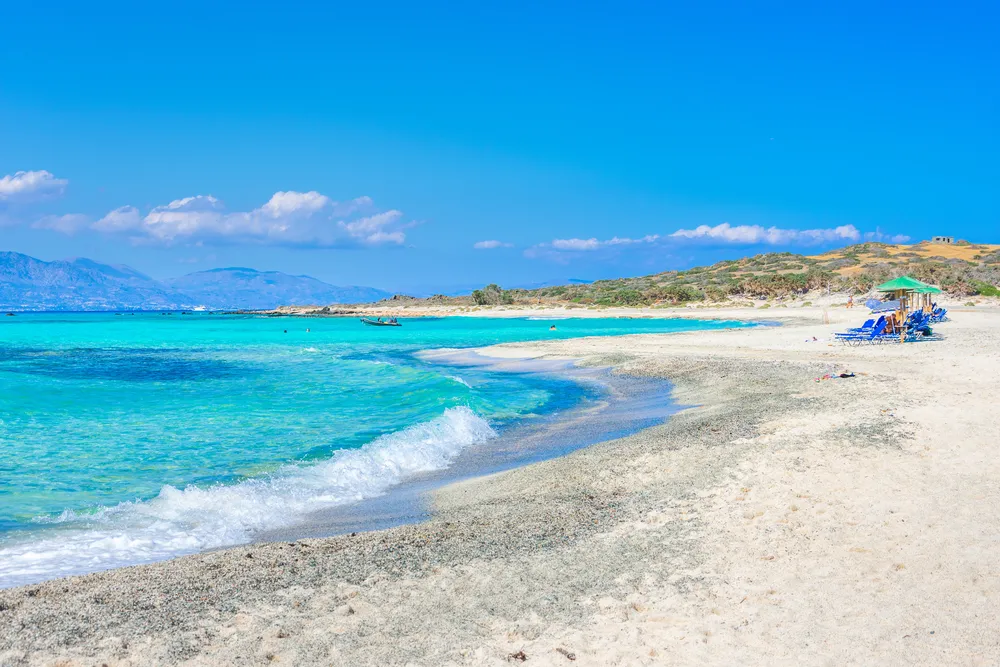
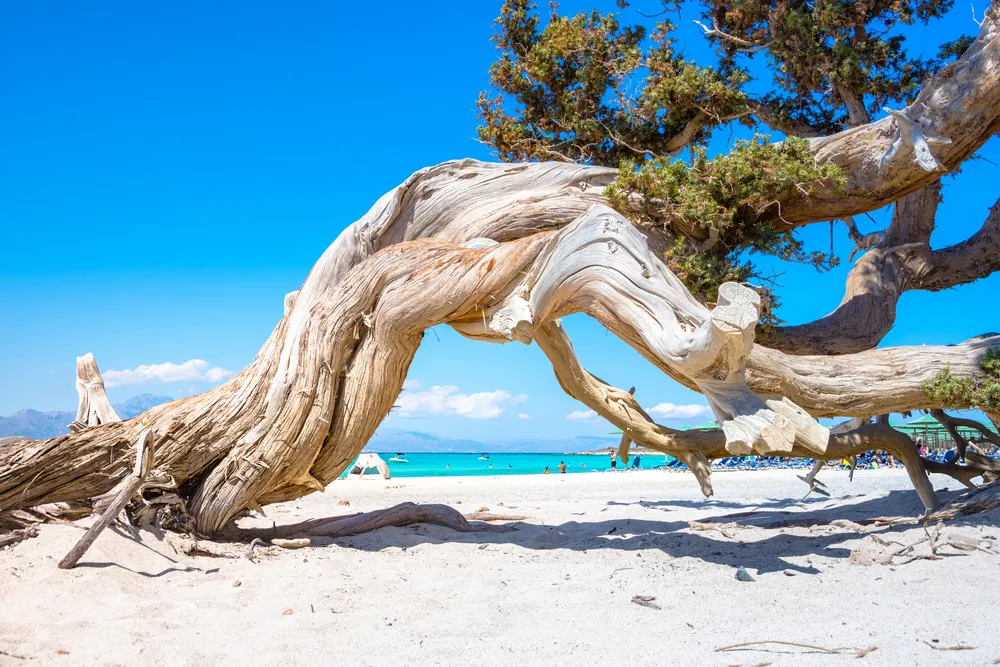
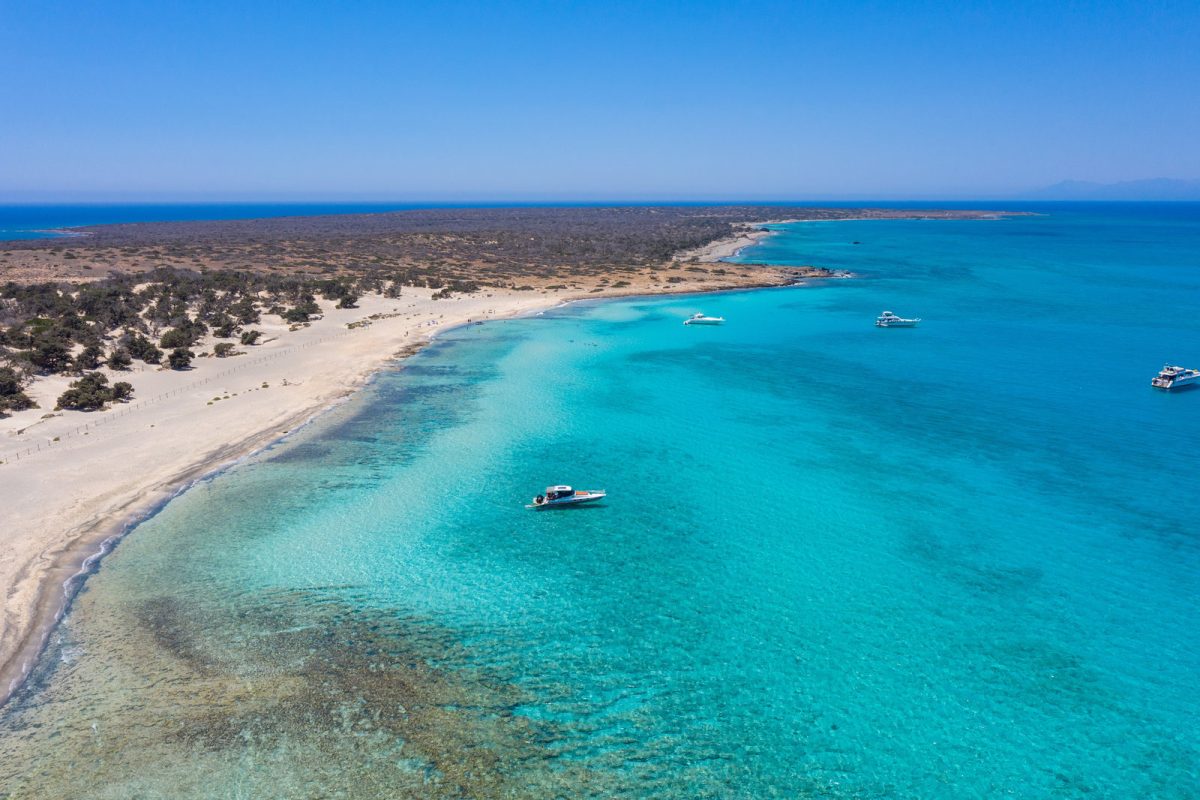
As your boat leaves the port of Ierapetra and heads south across the Libyan Sea, the island slowly begins to appear on the horizon. At first, it looks like nothing more than a thin golden line between the sky and the sea. Then the colours begin to change. The deep blue water becomes turquoise. The turquoise turns almost transparent. Finally, ancient juniper trees emerge behind the beaches, shaped by centuries of wind and salt.
For a moment, it’s difficult to believe you’re still in Europe.
But Chrissi Island is far more than a tropical-looking beach.
Long before travellers arrived carrying snorkelling masks and beach towels, merchants crossed these same waters in search of one of the ancient world’s greatest treasures: Tyrian Purple, the legendary dye reserved for emperors, kings and the wealthiest people in the Roman and Byzantine worlds. Archaeologists have uncovered evidence that this tiny island played an important role in producing one of history’s most valuable luxury goods—a remarkable story that very few visitors ever hear.
Today, Chrissi is one of Greece’s most important protected natural areas. Its crystal-clear waters, ancient juniper forest, rare wildlife and fragile ecosystem are safeguarded through the Natura 2000 programme, ensuring that future generations can experience the island much as we do today.
As someone who has lived in eastern Crete all my life and helped thousands of visitors organise their trip to Chrissi Island, I wanted to create the guide I wish every traveller could read before stepping onto the boat.
Not just another list of beaches.
Not another collection of copied travel tips.
But a complete guide that explains what makes Chrissi so special, why it has fascinated people for thousands of years, what you should know before visiting, and how to experience it with the respect this extraordinary island deserves.
Because once you understand the story of Chrissi Island, you don’t simply visit it.
You appreciate it in a completely different way.
Why Everyone Falls in Love with Chrissi Island
If someone asked me to describe Chrissi Island in just one sentence, I probably couldn’t.
Not because it’s difficult to explain, but because no single description truly captures what makes this tiny island so extraordinary.
Some visitors fall in love with the colours of the sea.
Others remember the silence.
Many never forget their first swim in water so clear that the boat seems to float in mid-air.
And some leave fascinated by the idea that beneath these peaceful beaches lies a history stretching back thousands of years.
That is what makes Chrissi different.
It isn’t famous for just one reason.
It is a place where nature, history and the sea come together in a way that is incredibly rare in the Mediterranean.
Imagine an island just five kilometres long, with no permanent residents, no hotels, no roads and no modern development.
Instead, you’ll find one of Europe’s oldest coastal juniper forests, beaches that rival tropical destinations, archaeological remains from the Roman world, and waters so clear that visibility often extends for dozens of metres.
It almost feels as though time has forgotten this place.
Perhaps that is why so many people return.
Not because there are endless things to do.
But because, for a few precious hours, there is absolutely nothing you have to do.
No traffic.
No schedules.
No noise.
Only the sound of the waves, the scent of the sea, the warm Mediterranean sun and an island that has remained remarkably untouched despite welcoming visitors for generations.
One thing I have noticed after organising excursions for many years is that almost everyone reacts in exactly the same way during the final approach to the island.
People begin by talking excitedly on the boat.
Then, as Chrissi comes into view, the conversations slowly fade away.
Phones are raised to take photographs.
A few minutes later, many visitors lower them again.
Some moments simply deserve to be experienced with your own eyes.
I still find myself doing exactly the same thing.
Even after seeing Chrissi countless times, I always walk to the side of the boat during the final few minutes before we arrive.
The colours of the sea never look exactly the same twice.
And perhaps that is the secret of Chrissi Island.
No matter how many photographs you’ve seen…
Nothing quite prepares you for seeing it for the first time.
Where Is Chrissi Island? A Tiny Island with a Big Story
If you look at a map of Crete, you’ll find Chrissi Island just a small dot in the vast blue of the Libyan Sea.
Yet this tiny island has played a surprisingly important role for thousands of years.
Chrissi lies approximately 15 kilometres (9 miles) south of Ierapetra, the southernmost town in Europe. The crossing by excursion boat usually takes 45 to 60 minutes, depending on the vessel and sea conditions.
Although the island measures only about 5 kilometres in length and around 1 kilometre at its widest point, it protects an extraordinary variety of landscapes within less than 5 square kilometres of land.
Its position is one of the reasons why it became so important in antiquity.
Long before modern tourism, ships sailing between Crete, Egypt, Cyrenaica (modern Libya) and the eastern Mediterranean regularly passed through these waters. Chrissi offered a natural landmark for ancient sailors and an ideal stopping point along one of the Mediterranean’s busiest maritime routes.
Even today, standing on the northern shore and looking back towards Crete, you quickly realise how close the island is to the mainland.
On a clear day, the mountains of eastern Crete dominate the horizon.
Turn south, however, and there is nothing but open sea stretching towards Africa.
That feeling of isolation is part of Chrissi’s magic.
Although you’re never very far from Crete, once the excursion boat departs and the coastline begins to disappear behind you, it feels as though you’re leaving the modern world behind.
One of my favourite moments is the journey itself.
As the boat moves further into the Libyan Sea, the colour of the water begins to change almost imperceptibly. Deep navy blue gradually becomes cobalt, then turquoise, until the first pale sandbanks around Chrissi appear beneath the surface.
I’ve watched that transformation countless times.
It still catches my attention every single trip.
Perhaps that’s because the journey isn’t simply transportation.
It is the perfect introduction to an island that has fascinated sailors, merchants, fishermen and travellers for more than two thousand years.
And by the time the captain slows the engines for the final approach, you’ll already understand why so many people describe Chrissi as one of the most beautiful places in Crete.
The Island That Coloured the Roman Empire
Long before Chrissi Island became one of Crete’s most famous day trips, it was known for something almost unimaginable today.
Not its beaches.
Not its turquoise water.
But for producing one of the most valuable luxury products in the ancient world.
The colour purple.
Not just any purple—but Tyrian Purple, the legendary dye that became the symbol of imperial power throughout the Roman and later the Byzantine Empire.
It is difficult to overstate just how valuable this dye was.
Today, anyone can buy a purple shirt for a few euros.
Two thousand years ago, a piece of cloth dyed with genuine Tyrian Purple could be worth a fortune.
Its price rivalled that of gold, and in many periods of antiquity, only the richest and most powerful people could afford it.
The source of this extraordinary colour was surprisingly humble.
Hidden beneath the rocky seabed around Chrissi lived thousands of murex sea snails, particularly the species Bolinus brandaris and Hexaplex trunculus.
Inside each shell was a tiny gland containing a colourless liquid.
Extracting that liquid was only the beginning.
The glands were carefully removed, processed and exposed to sunlight. Through a remarkable chemical reaction involving oxygen and ultraviolet light, the pale liquid slowly transformed into shades of violet before developing into the deep, rich purple that became famous across the Mediterranean.
The process was slow.
It was unpleasant.
And it required an astonishing number of shells.
Archaeologists estimate that many thousands of murex shells were needed to produce enough dye for a single high-quality garment.
This explains why the dye became a luxury reserved for the elite.
Excavations on Chrissi Island have uncovered large deposits of broken murex shells, together with evidence of Roman workshops and commercial activity. These discoveries leave little doubt that the island was one of several important centres involved in the production of this precious dye.
Imagine the scene almost two thousand years ago.
Where visitors now spread their towels and swim in crystal-clear water, craftsmen once worked beside piles of shells, producing a pigment destined for the wardrobes of emperors, governors and aristocrats.
Every piece of purple cloth represented thousands of shells, countless hours of labour and an enormous financial investment.
Very few visitors realise that beneath the peaceful beaches of Chrissi lies the story of an industry that connected this tiny island to the greatest empire the Mediterranean has ever known.
It is one of the reasons I always tell visitors that Chrissi is far more than a beach.
It is an open-air history book, where every swim takes place above waters that once supplied one of the world’s most exclusive colours.
Born in the Purple: A Colour Reserved for Emperors
To understand how important Tyrian Purple really was, you first have to forget everything you know about colours today.
In the modern world, colour is simply a matter of fashion.
In the ancient world, colour was power.
No colour represented power more than purple.
During the Roman Empire, the right to wear garments dyed with genuine Tyrian Purple was strictly controlled. Sumptuary laws regulated who could wear it, and the deeper and richer the shade, the higher the status of the person wearing it.
Purple was not simply beautiful.
It was a public declaration of authority.
When a Roman emperor appeared wearing a purple cloak, everyone immediately understood what it represented.
Absolute power.
This tradition continued after the capital of the Roman Empire moved to Constantinople and the Byzantine Empire emerged.
In Byzantium, purple became even more closely associated with the imperial family.
The most famous example survives in a title that historians still use today:
Porphyrogenitus.
The word literally means “Born in the Purple.”
It referred to princes and princesses born during the reign of a Byzantine emperor inside a special chamber of the Great Palace in Constantinople known as the Porphyra.
The room was lined with precious purple porphyry stone, and a child born there was considered to possess unquestionable imperial legitimacy.
Being “Born in the Purple” was far more than an honour.
It was a political statement.
It declared that the child had been born while his or her father already ruled the empire and therefore possessed a stronger claim to the throne than many rivals.
Even today, historians continue to use the expression when describing members of the Byzantine imperial family.
It is remarkable to think that the colour which came to symbolise imperial authority across the Roman and Byzantine worlds was produced, at least in part, from tiny sea snails living around islands like Chrissi.
Standing on the island today, surrounded by turquoise water and the sound of the waves, it is almost impossible to imagine that this peaceful coastline once contributed to one of the most exclusive industries of antiquity.
Yet archaeology tells us exactly that story.
The sea that now invites visitors to swim once supplied the raw material for robes worn by emperors.
That simple fact transforms the way you look at Chrissi.
It is no longer just an island of extraordinary beauty.
It is an island that quietly helped colour the history of empires.
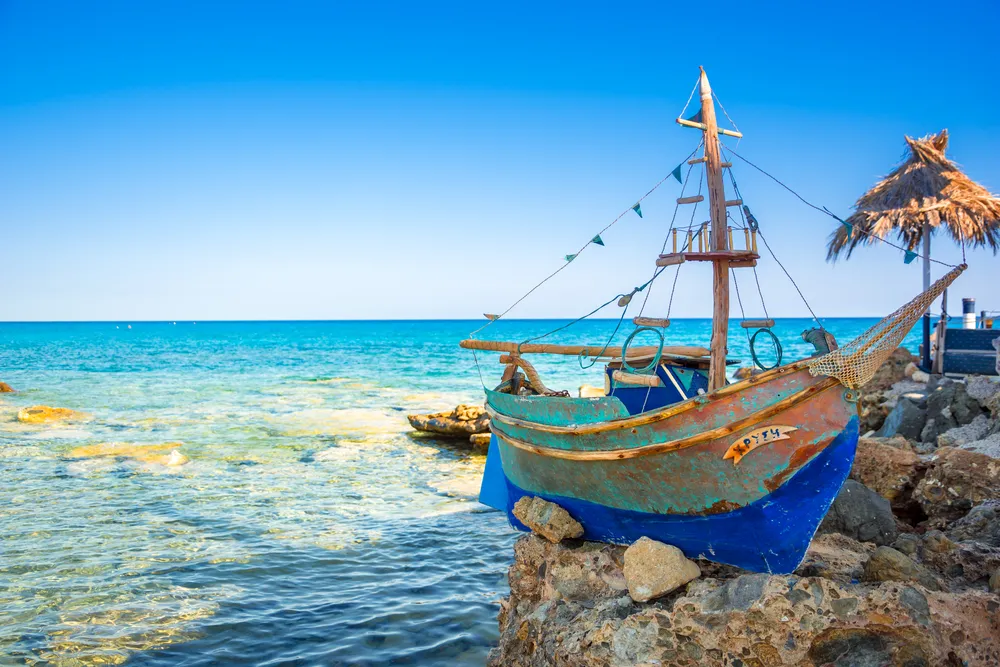
Imagine Chrissi Island Two Thousand Years Ago
Close your eyes for a moment and forget everything you have seen in the photographs.
No excursion boats.
No swimmers.
No colourful beach umbrellas.
No tourists searching for the perfect Instagram picture.
Instead, imagine Chrissi Island almost two thousand years ago.
The silence is the same.
The turquoise sea is just as clear.
The warm wind still carries the scent of salt across the island.
But the beaches are very different.
Along the rocky shoreline, groups of workers unload baskets filled with freshly collected murex shells. Others carefully separate the molluscs by hand before carrying them to small workshops built close to the water.
The work is slow.
It is difficult.
And it is anything but pleasant.
Producing Tyrian Purple was famous for one unfortunate reason.
The process created an extremely strong smell.
Ancient writers even commented on the unpleasant odour that surrounded workshops producing the dye. Yet nobody complained.
Because what emerged from those workshops was worth a fortune.
Merchants waited patiently for the finished pigment.
Ships arrived from across the Mediterranean.
Every small container of purple dye represented weeks of labour and thousands upon thousands of shells collected from the surrounding sea.
Some of that precious dye would eventually travel to the great cities of the Roman Empire.
Perhaps to Rome itself.
Perhaps to Alexandria.
Perhaps later to Constantinople.
There it would colour ceremonial robes worn by emperors, governors, military commanders and senior officials—people who would never know that the journey of their magnificent garments had begun on a tiny island south of Crete.
Today, nothing of that busy industry remains visible to the casual visitor.
The workshops have disappeared.
The merchants have long since gone.
The ships no longer anchor here to collect one of the world’s most valuable dyes.
Nature has reclaimed almost everything.
And perhaps that is one of the reasons Chrissi feels so special today.
The island has not forgotten its history.
It has simply returned to what it has always done best.
Offering a place where the sea, the wind and time itself quietly tell stories to anyone willing to listen.
What Has Changed? Visiting Chrissi Island Today
If you’ve searched online for Chrissi Island, you may have noticed something confusing.
Some travel guides describe visitors freely walking through the cedar forest and exploring every corner of the island. Others mention restrictions and protected areas.
So, what is the situation today?
The answer is simple.
Chrissi Island is still open to visitors, but the way people experience it has changed.
Over the last two decades, the island became one of Crete’s most popular day-trip destinations. During the busiest summer days, thousands of people arrived on the island, placing increasing pressure on an ecosystem that had taken centuries to develop.
The greatest concern was not the beaches.
It was the ancient juniper forest.
Scientists discovered that constant foot traffic was damaging exposed roots, preventing young trees from growing and slowly degrading one of the Mediterranean’s rarest coastal ecosystems. Sand dunes were also becoming increasingly fragile, while native vegetation struggled to recover after every tourist season.
For years, environmental experts warned that if nothing changed, Chrissi could eventually lose the very beauty that attracted people in the first place.
The Greek authorities therefore introduced a series of conservation measures designed to protect the island without preventing visitors from enjoying it.
Today, the priority is clear:
Protect the island first. Tourism comes second.
As a visitor, you’ll still experience Chrissi’s spectacular beaches and unforgettable turquoise waters, but you’ll also notice that certain areas are protected and that everyone is expected to respect the current regulations.
Personally, I believe these changes were necessary.
As someone who works in tourism, it might seem strange to say that.
But if protecting the island today means that our children—and their children—will still be able to admire the same crystal-clear waters and ancient trees decades from now, then it is absolutely the right decision.
Chrissi has survived for thousands of years.
It deserves the chance to survive thousands more.
One Important Thing Most Travel Guides Don’t Tell You
There is one question we answer almost every single day at Stefanos Tours.
In fact, many visitors ask it before they ask about the price.
“How do we actually get onto the island?”
It is a perfectly reasonable question—and one that surprisingly few travel guides explain properly.
Unlike many Greek islands, Chrissi does not have a harbour or a pier where excursion boats can dock.
The island has remained largely untouched by modern development, and that is part of its charm. Protecting its shallow coastline and sensitive marine environment means that large excursion boats stay offshore rather than coming directly onto the beach.
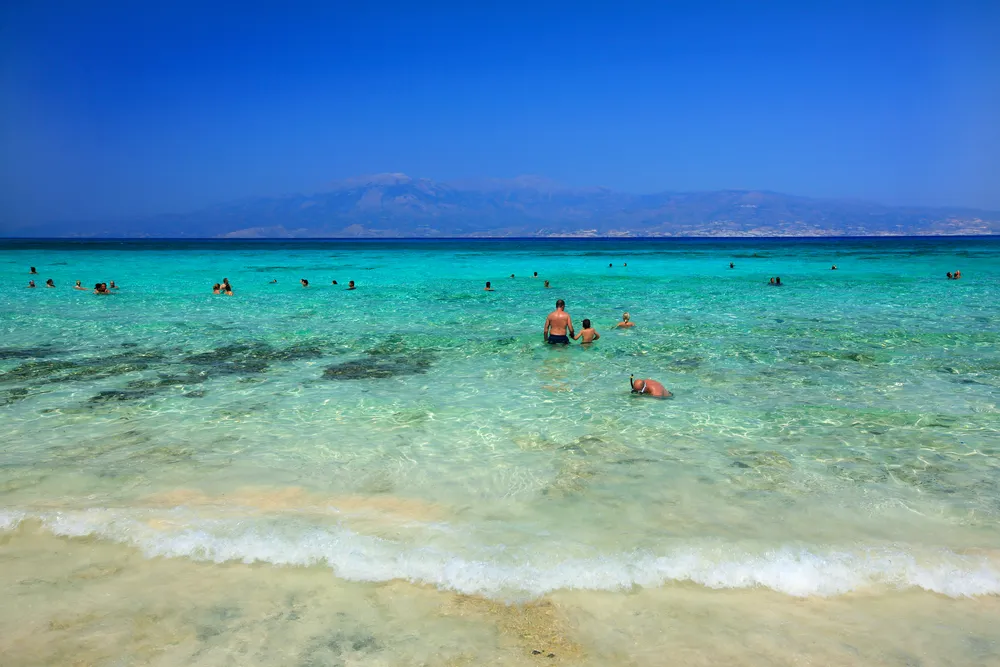
As the captain approaches the island, the engines slow down and the boat drops anchor in the crystal-clear water, usually a short distance from the shore.
And this is where the adventure begins.
If you enjoy swimming, you’ll probably love the arrival.
Passengers climb down the swimming ladder into the warm, transparent waters of the Libyan Sea and swim the short distance to the beach. For many people, this becomes one of the most memorable moments of the entire excursion. There aren’t many places where your first steps onto an island begin with a swim through water that looks like liquid glass.
But what if you don’t want to swim?
This is the part that many visitors are relieved to hear.
You don’t have to.
The crew operates a small tender boat, making continuous trips between the main excursion vessel and the beach.
Visitors who prefer to stay dry, families with young children or anyone who simply doesn’t feel like swimming can board the tender and be taken comfortably ashore.
And what about your belongings?
Another common concern.
Nobody wants to carry a backpack full of towels, cameras, sunscreen and phones through the water.
Fortunately, you don’t need to.
While passengers make their way to the beach, the crew transports all beach bags and personal belongings separately using the tender boat, ensuring that your things arrive safely and dry on the shore.
It is a simple system, but one that works remarkably well.
After seeing it for the first time, most visitors wonder why they worried about it at all.
There is, however, one important point to keep in mind.
Because access to the island involves either using the swimming ladder or boarding the tender boat, this excursion may not be suitable for visitors with significant mobility difficulties. If you have concerns, we always recommend asking us before booking so we can advise you honestly.
I’d much rather answer every question in advance than have someone arrive feeling uncertain.
After all, the only surprise you should experience on the day is just how beautiful Chrissi Island really is.
Why Is the Water So Incredibly Blue?
Every summer, I hear the same comment dozens of times.
Visitors step off the boat, look at the sea for a few seconds and then turn to the person next to them with a smile.
“This can’t be real.”
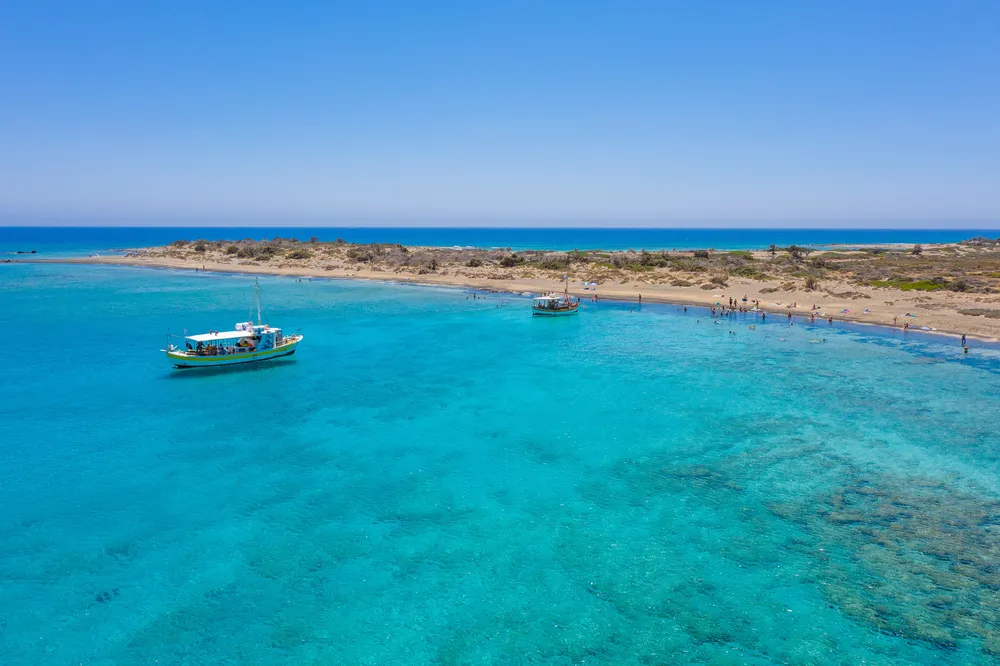
The colours almost seem impossible.
Brilliant turquoise.
Emerald green.
Crystal-clear aqua.
Deep sapphire blue.
Sometimes, all of these shades can be seen at the same time, changing every few metres.
Naturally, people assume there must be a secret.
There is.
In fact, there are several.
The first is the Libyan Sea itself.
Unlike many coastal areas around Europe, the waters south of Crete remain exceptionally clean. There are no large rivers carrying mud or sediment into the sea around Chrissi, which means the water stays incredibly clear throughout the summer.
The second secret lies beneath your feet.
Much of the seabed surrounding the island consists of light-coloured sand, limestone and millions of tiny shell fragments that have been broken down naturally by the waves over thousands of years.
Instead of absorbing sunlight, these pale surfaces reflect it.
As sunlight passes through the water, bounces off the bright seabed and returns to your eyes, it creates the vivid turquoise colours that have made Chrissi famous.
Depth plays an equally important role.
Near the beach, where the water is shallow, sunlight reaches the bottom with ease, producing transparent aquamarine colours.
Further from the shore, as the sea becomes deeper, the colours gradually change to cobalt and finally to the dark blue of the open Mediterranean.
If you’re standing on the deck of the boat during the final approach, you can actually watch this transformation happen before your eyes.
But perhaps the biggest reason the colours appear so extraordinary is something much simpler.
The Mediterranean sun.
Southern Crete enjoys some of the highest levels of sunshine in Europe. On a calm summer day, with the sun almost directly overhead and barely a ripple on the surface, the sea becomes a natural mirror, reflecting every shade of blue imaginable.
I’ve made this journey more times than I can count.
And I still find myself walking to the side of the boat during the final approach.
Not because I’m checking anything.
Simply because I enjoy watching the colours change.
They never look exactly the same twice.
That’s one of the beautiful things about Chrissi.
Every visit is familiar.
Yet every visit is completely different.
The Ancient Juniper Forest: Chrissi’s Greatest Treasure
Ask ten visitors what they remember most about Chrissi Island and most will probably mention the beaches.
Ask a botanist, an ecologist or a conservation scientist, and you’ll almost certainly hear a different answer.
The ancient juniper forest.
While the turquoise waters attract the eye, it is this remarkable forest that makes Chrissi one of the most important protected islands in the Mediterranean.
The trees growing here are often referred to as cedars, and you’ll hear many locals—including me—use that name in everyday conversation.
Botanically, however, they are Phoenician junipers (Juniperus phoenicea), a species perfectly adapted to survive in one of the harshest coastal environments in Europe.
At first glance they may not seem extraordinary.
They are not particularly tall.
They do not form dense forests like the pines of northern Europe.
Many appear twisted, bent and sculpted by the wind.
But that is exactly what makes them so remarkable.
Every curve in their trunk tells the story of decades spent resisting salt spray, strong winds, intense summer heat and long periods without rain.
Some of the oldest trees on Chrissi are believed to be well over 200 years old.
That means many of them were already mature long before the first organised tourists ever arrived in Crete.
Long before photography.
Long before aeroplanes.
Some were already standing here while Napoleon was still alive.
And yet they continue to survive.
These trees do far more than create beautiful scenery.
Their roots hold the fragile sand dunes together, reducing erosion and helping the island resist winter storms.
Their branches provide shelter for birds migrating between Europe and Africa.
Their shade creates tiny pockets of life where insects, reptiles and native plants can survive during the hottest months of the year.
Without the juniper forest, Chrissi would be a completely different island.
Unfortunately, it is also incredibly vulnerable.
Unlike many fast-growing trees, junipers grow slowly.
Very slowly.
Damage that takes only a few seconds to cause can take decades to repair.
Repeated trampling over exposed roots, breaking branches for photographs or walking through sensitive areas may seem insignificant to a single visitor.
Multiply that by tens of thousands of visitors every summer, and the consequences become obvious.
That is why large parts of the forest are now protected.
Personally, I think this is one of the best decisions ever made for Chrissi.
If you’ve travelled all this way to experience one of Europe’s last truly untouched coastal ecosystems, then preserving it should be part of the experience itself.
Sometimes the greatest way to appreciate nature…
is simply to leave it exactly as you found it.
Beneath the Surface: The Hidden World of Chrissi Island
Most visitors spend their day looking at the sea.
Very few stop to think about what lies beneath it.
Yet the underwater world surrounding Chrissi Island is every bit as extraordinary as the beaches above the surface.
The first thing you’ll notice when you enter the water is the incredible visibility.
On calm summer days, it is often possible to see the seabed several metres below with astonishing clarity. Small fish move effortlessly through the shallow lagoons, while patches of rock and sand create a constantly changing underwater landscape.
If you enjoy snorkelling, even for just a few minutes, you’ll discover a completely different side of the island.
But the true treasure of Chrissi is something that many people swim over without ever noticing.
Beneath the surface grow vast underwater meadows of Posidonia oceanica.
Although many visitors mistake it for seaweed, Posidonia is actually a flowering marine plant—one of the oldest and most important living organisms in the Mediterranean.
Scientists often describe it as the “lungs of the Mediterranean Sea.”
And for good reason.
These underwater meadows produce enormous quantities of oxygen, trap carbon dioxide, stabilise the seabed, reduce coastal erosion and provide shelter for hundreds of marine species.
Without Posidonia, the Mediterranean would be far less rich in marine life.
It is also one of the reasons why the water around Chrissi remains so remarkably clear.
The plant helps trap suspended particles, naturally filtering the surrounding sea and creating the exceptional visibility that visitors admire every summer.
The island’s waters also support an impressive variety of marine life.
Schools of seabream, wrasse and damselfish move through the shallows, octopuses hide among the rocks, sea stars and sea urchins cling to the seabed, while countless smaller creatures remain hidden beneath the sand and stones.
Every now and then, nature offers something even more special.
The wider waters around southern Crete are occasionally visited by Loggerhead Sea Turtles (Caretta caretta), one of the Mediterranean’s most recognisable marine species.
Even rarer is the Mediterranean Monk Seal (Monachus monachus), one of the world’s most endangered marine mammals. Although sightings around Chrissi are uncommon, the presence of such species highlights the exceptional ecological importance of this part of the Libyan Sea.
When people describe Chrissi as a paradise, they usually mean the beaches.
But paradise doesn’t stop at the shoreline.
An entire world exists beneath the surface—quiet, delicate and largely invisible to those who never take the time to look.
And perhaps that is one of the island’s greatest lessons.
Sometimes the most extraordinary things are hidden in plain sight.
10 Local Tips That Will Make Your Visit Even Better
After helping visitors organise excursions to Chrissi Island for many years, I’ve noticed that the people who enjoy the island the most are not necessarily those with the most expensive cameras or the best swimming skills.
They’re simply the ones who know what to expect.
If I were sitting with you in our office before your excursion, these are the ten pieces of advice I would give you.
1. Don’t spend the whole day taking photographs.
I completely understand the temptation.
Chrissi is one of the most photogenic places in Greece.
Take your pictures.
Capture the memories.
Then put your phone away.
Some moments are simply too beautiful to experience through a screen.
2. Bring more water than you think you’ll need.
The Libyan Sea may provide a refreshing breeze, but the summer sun in southern Crete is powerful.
A bottle of water always seems to disappear faster than expected.
3. Travel light.
You don’t need to pack everything for the day.
A towel, swimwear, sunscreen, sunglasses and a bottle of water are usually all you need.
The lighter your bag, the easier your day will be.
4. Don’t worry about your belongings.
One of the questions we hear most often is:
“How do I keep my bag dry if I have to swim?”
The answer is simple.
You don’t carry it.
The crew transports your belongings separately using the tender boat while you make your way to the beach.
Once visitors hear this, they usually smile with relief.
5. Water shoes are worth bringing.
They’re not essential.
But they can make walking across shells or small rocky sections much more comfortable.
6. Respect the protected areas.
The restrictions are there for a reason.
Every visitor who stays on the permitted routes helps preserve Chrissi for the next generation.
7. Book your excursion early in your holiday.
This is probably the most valuable advice I can give.
Excursions always depend on weather conditions.
If strong winds force a cancellation, you’ll still have another opportunity to reschedule if you haven’t left it until your final day.
8. Don’t expect a luxury beach resort.
Chrissi is something much better.
It is nature.
There are no hotels, no large developments and no loud beach clubs.
The island’s greatest luxury is its simplicity.
9. Spend a few minutes doing absolutely nothing.
No swimming.
No photographs.
No talking.
Just sit quietly and listen.
The waves.
The wind.
The silence.
It’s amazing how rarely we allow ourselves moments like these.
10. Leave with memories—not souvenirs.
Don’t collect shells.
Don’t pick plants.
Don’t take pieces of the island home.
The greatest souvenir you can bring back from Chrissi is the memory of having experienced one of the Mediterranean’s last truly unspoilt islands.
Every summer, thousands of people visit Chrissi.
Most remember the colour of the water.
I hope you’ll also remember something else.
The feeling of spending a day somewhere that nature still comes first.
Why Chrissi Island Isn’t for Everyone… and That’s Exactly Why It’s So Special
This may sound like a strange thing for someone working in tourism to say.
But I don’t think Chrissi Island is the perfect destination for everyone.
If you’re looking for luxury beach clubs, loud music, cocktails served to your sunbed or a day packed with organised entertainment, there are many other places in Crete that will suit you better.
Chrissi offers something completely different.
It offers authenticity.
It offers simplicity.
It offers the rare opportunity to spend a few hours in a place where nature still sets the rules.
There are no hotels rising above the beach.
No apartment buildings.
No shopping streets.
No rows of restaurants competing for your attention.
Instead, there is a small island where the sea has shaped the coastline for thousands of years, where ancient juniper trees continue to grow against all odds and where every visitor is simply a guest in an environment that existed long before any of us arrived.
I often think that this is why so many people remember Chrissi long after their holiday has ended.
Not because they did dozens of activities.
But because, for a few hours, they slowed down.
They listened to the waves instead of traffic.
They watched the colours of the sea instead of a phone screen.
They experienced silence—a luxury that has become surprisingly rare in modern life.
As someone who lives in Crete, I feel incredibly fortunate to have places like Chrissi so close to home.
But I also feel a responsibility.
Not just to help visitors discover the island.
But to encourage them to respect it.
Because if there is one thing history has taught us, it is that remarkable places are not guaranteed to remain remarkable forever.
They survive only when people choose to protect them.
Perhaps that is why I never describe Chrissi as simply another excursion.
For me, it is an experience.
An opportunity to disconnect from everyday life and reconnect with something much older, quieter and more meaningful.
So…
Is Chrissi Island worth visiting?
After everything you’ve read in this guide, I hope you already know my answer.
Not because it has the bluest water.
Not because it has beautiful beaches.
Not even because it once helped colour the robes of emperors.
But because places like Chrissi are becoming increasingly rare.
And once you’ve experienced one, you’ll understand exactly why they deserve to be protected.
Staying in the Ierapetra Area?
If you’re staying in Ierapetra, Koutsounari, Ferma, Makry Gialos, Koutsouras or Myrtos, you can book your Chrissi Island excursion directly through our Stefanos Tours Ierapetra office.
For personalised advice, availability and bookings, feel free to contact our local travel expert Georgia Chatzimarkaki directly on WhatsApp:
📱 +30 697 900 7042
She’ll be happy to answer your questions and help you choose the best excursion for your holiday.