

From Lincoln to Sissi: A Teacher, a Student and a Friendship That Endured
18/07/2026
Why Have Crete’s Sacred Places Endured for Over 4,000 Years?
21/07/2026By Stefanos Katrinakis
“To understand a Greek panigiri, one must first understand that it is not a festival that happens to include a church service. It is a sacred celebration of the Church that naturally blossoms into a celebration of the whole community.”
Introduction
If you travel through Greece during the summer months, sooner or later you will hear the sound of church bells echoing across a village.
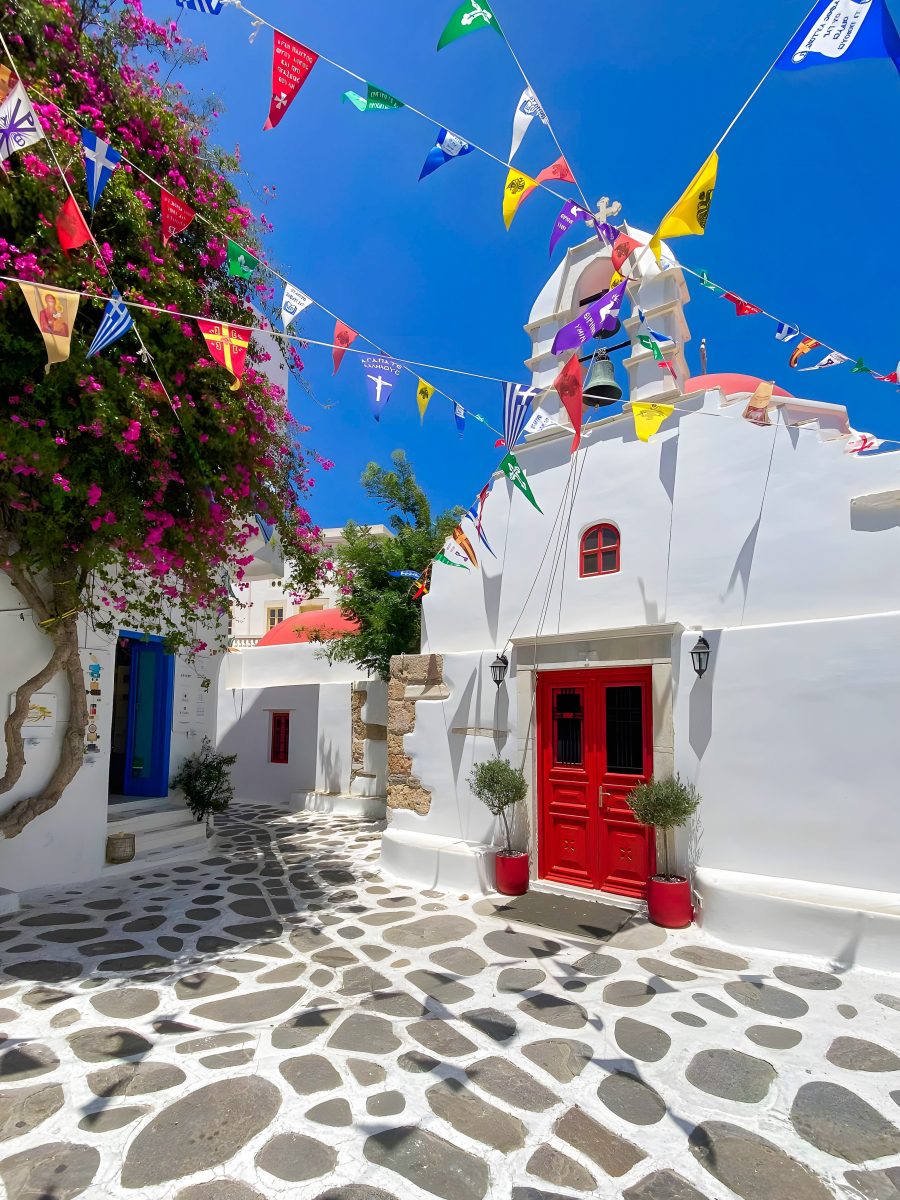
As evening approaches, families begin walking towards the local church. Elderly women carry freshly baked bread and fragrant branches of basil. Children hold candles in their hands while grandparents greet neighbours they may not have seen for months. The scent of incense fills the air, Byzantine hymns are heard through the open doors of the church, and the entire village slowly gathers in prayer.
A few hours later, the atmosphere changes.
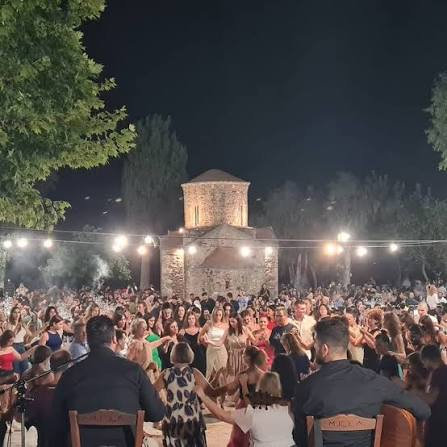
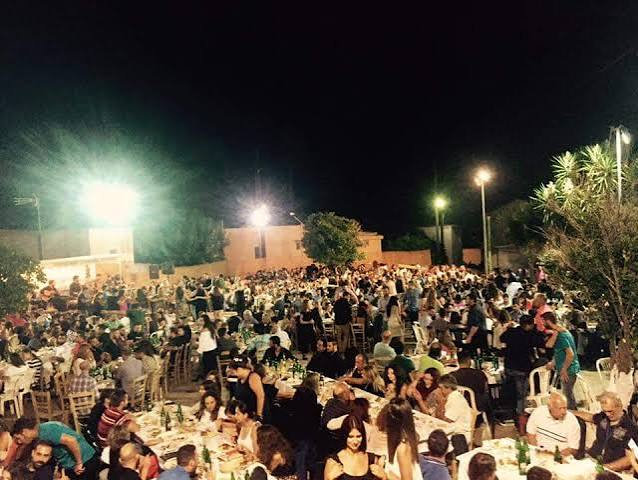
Long wooden tables appear beneath the trees of the village square. Traditional food is shared generously, local wine is poured, musicians tune their instruments and, before long, people of every generation are singing, dancing and celebrating together.
For many visitors, this seems to be a beautiful cultural festival.
For Greeks—and especially for Orthodox Christians—it is something far deeper.
Although the word Panigiri is often translated into English as festival or village feast, neither expression fully captures its true meaning.
A Greek panigiri is first and foremost a religious celebration. It is the annual feast of a church, monastery or village dedicated to Christ, the Virgin Mary or one of the saints of the Orthodox Church. Everything that follows—the shared meal, the hospitality, the music and the dancing—is born from that sacred celebration.
This distinction is essential.
Without the church, there is no panigiri.
Without prayer, there is no celebration.
The festivities are not separate from the worship.
They are its joyful continuation.
As someone who was born and raised in Crete and has attended village panigiria since childhood, I have always found it difficult to explain this tradition to foreign visitors. Many leave remembering the music and the delicious food, yet the true heart of the celebration often remains hidden from them.
This article is my attempt to open that door.
Not simply to describe what happens during a Greek panigiri, but to explain why it happens, what it means to Orthodox Christians, and why this centuries-old tradition continues to unite entire communities throughout Greece today.
What Does the Word Panigiri Mean?
The Greek word πανηγύρι (panigiri) has a history stretching back more than two thousand years.
It derives from the ancient Greek word πανήγυρις (panēgyris), formed from pan (all) and agyris (assembly or gathering). Literally, it means “a gathering of everyone.”
In ancient Greece, a panēgyris referred to a large public gathering where people came together for religious ceremonies, athletic competitions and communal celebrations.
With the spread of Christianity, however, the meaning of the word gradually changed.
The gathering remained.
Its purpose did not.
Instead of gathering around the temples of the ancient world, Christians gathered around the Church.
Instead of honouring the gods of antiquity, they gathered to worship the Holy Trinity and celebrate the feasts of Christ, the Virgin Mary and the saints.
Today, throughout Greece and especially in Crete, the word panigiri refers to the annual feast of a church or monastery and the celebration that surrounds it.
Yet translating it simply as festival can easily create the wrong impression.
A festival usually exists for entertainment.
A panigiri exists for worship.
Entertainment may follow.
It is never the reason people gather.
For this reason, every authentic Greek panigiri begins not in the village square, but inside the church.
Everything else grows naturally from there.
More Than a Tradition
To an outside observer, a panigiri may appear to be one of Greece’s most colourful cultural traditions.
To the Orthodox Christian, however, it is something much more profound.
It is a meeting between heaven and earth.
A day when an entire community gathers to glorify God, honour its patron saint, pray together, receive God’s blessings and then continue that joy through hospitality, friendship and shared celebration.
Perhaps this is why the Greek panigiri has survived for centuries.
Empires have risen and fallen.
Wars have been fought.
Villages have changed.
Generations have come and gone.
Yet every year, church bells continue to ring.
Candles continue to be lit.
Prayers continue to be offered.
Bread continues to be blessed.
Families continue to gather.
And somewhere, beneath the summer sky of a Greek village, another panigiri begins.
The Spiritual Heart of Every Panigiri
For many visitors, the celebration seems to begin when the musicians arrive or when the first tables are set in the village square.
For an Orthodox Christian, however, the panigiri begins much earlier.
It begins with prayer.
The evening before the feast, the church usually celebrates Great Vespers, gathering the faithful to prepare spiritually for the following day. On the morning of the feast, the celebration continues with Matins (Orthros) and reaches its fulfilment in the Divine Liturgy, the most sacred service of the Orthodox Church.
This is the true heart of every panigiri.
Everything that follows exists because of what takes place here.
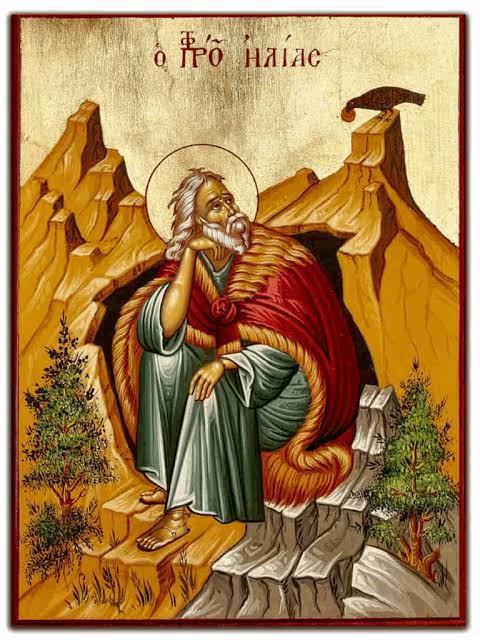
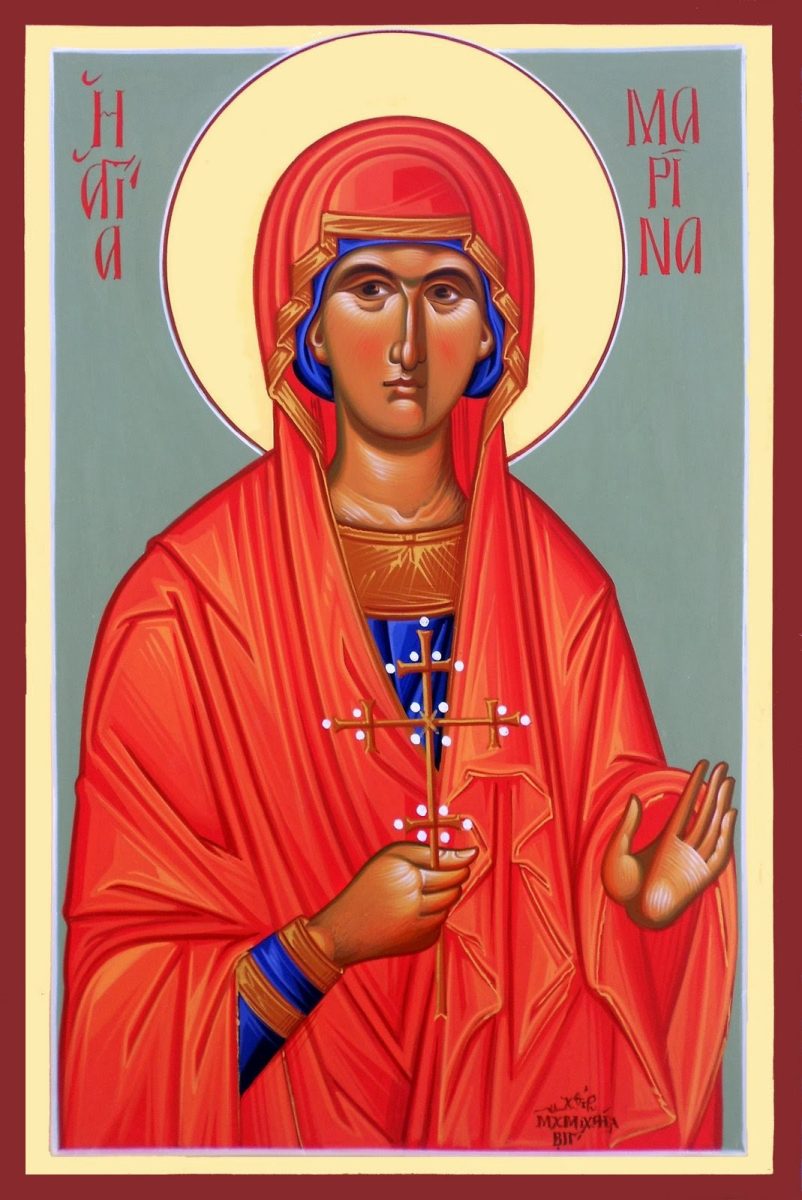
The Saints Are Not Simply Remembered
One of the greatest differences between Orthodox Christianity and the way many people understand history is the Church’s relationship with the saints.
Orthodox Christians do not honour the saints simply because they were remarkable people who lived long ago.
They honour them because they believe the saints are alive in Christ.
The Church is understood not merely as a community of people living on earth, but as the living Body of Christ, embracing both the faithful who continue their earthly journey and those who have entered eternal life.
For this reason, when the feast day of a saint arrives, the Church does not simply remember the saint’s life.
She celebrates the living communion that exists between Christ, His saints and His people.
The saint is not absent.
The saint is honoured as a living member of the Church, whose example continues to inspire and whose prayers continue to strengthen the faithful.
The Divine Liturgy and the Holy Eucharist
At the centre of every panigiri stands the Divine Liturgy.
For Orthodox Christians, the highest and holiest moment of every panigiri is the celebration of the Divine Liturgy and participation in the Holy Eucharist.
This is not simply another part of the day’s programme.
It is the very reason the community has gathered.
During the Divine Liturgy, the Church offers bread and wine to God in thanksgiving. Through the grace of the Holy Spirit, Orthodox Christians believe that these gifts become the true Body and Blood of Christ.
Receiving Holy Communion is therefore not understood as a symbolic remembrance.
It is the deepest expression of communion with Christ and with His Church.
For this reason, Orthodox Christians prepare themselves with prayer, repentance and, when necessary, the Sacrament of Confession before approaching Holy Communion.
For many faithful, receiving the Holy Eucharist on the feast day of their patron saint is the greatest blessing of the entire celebration.
Nothing that follows outside the church is considered more important than this sacred moment.
From the Holy Altar to the Village Square
One of the most beautiful aspects of a Greek panigiri is that the joy experienced during the Divine Liturgy does not end when the service is over.
Instead, it continues naturally into the life of the community.
The people who have prayed together now greet one another with affection.
The families who stood side by side before the Holy Altar now sit side by side around the same table.
Neighbours exchange blessings.
Visitors are welcomed with genuine warmth.
Children play freely in the church courtyard while older generations share stories and memories.
For Orthodox Christians, this is not simply a pleasant social gathering.
It is the continuation of the same celebration.
The Divine Liturgy remains at its heart.
The hospitality that follows is its natural fruit.
Faith becomes fellowship.
Prayer becomes community.
Love of God becomes love of neighbour.
Perhaps this is why the Greek panigiri has preserved its authenticity for so many centuries.
The celebration does not move away from the Church.
It flows out from it.
More Than a Festival
Visitors often remember the music, the dancing and the traditional food.
These are indeed beautiful memories.
Yet if you ask an elderly villager what the most important part of the feast was, the answer will rarely be the entertainment.
More often than not, the answer will be simple:
“We celebrated the Divine Liturgy.”
That single sentence explains everything.
For Orthodox Christians, the music is beautiful because it follows prayer.
The meal is meaningful because it follows thanksgiving.
The celebration is joyful because it follows communion with Christ.
Without the Divine Liturgy, there may still be a village festival.
But there is no panigiri.
And that is perhaps the most important truth a visitor can understand before attending one for the first time.
The Blessing of the Five Loaves: A Tradition of Faith, Gratitude and Sharing
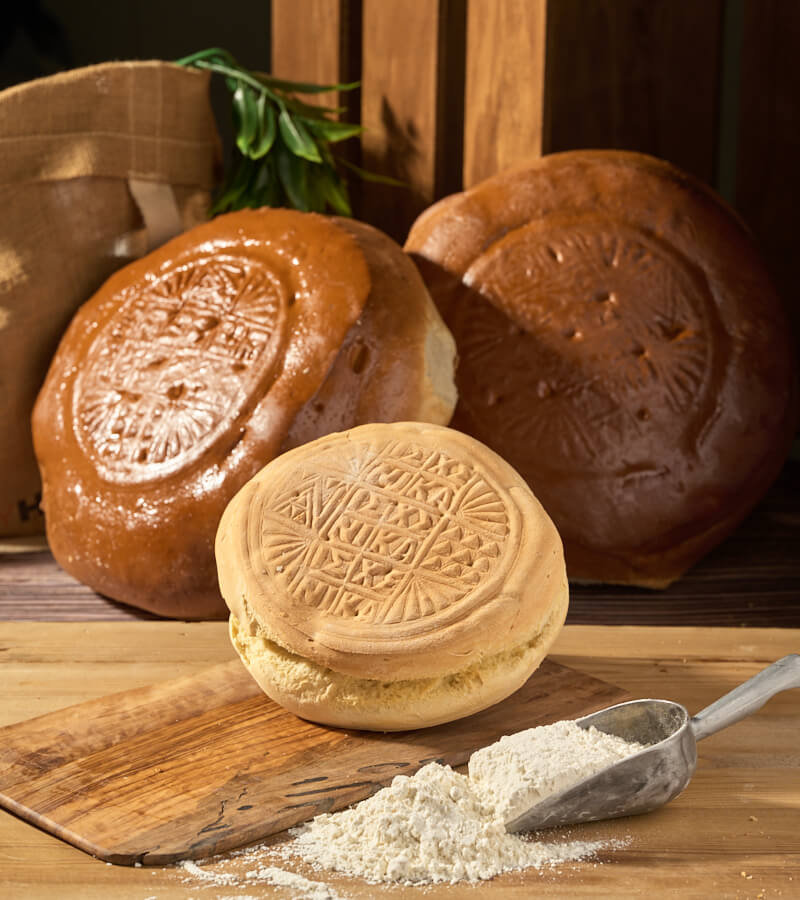
If you attend a Greek panigiri, you may notice something placed on a table in front of the icons.
Several beautifully decorated loaves of bread.
A bottle of wine.
A container of olive oil.
To many visitors, these may simply appear to be traditional offerings.
For Orthodox Christians, however, they form part of one of the Church’s most beautiful services: the Artoklasia, the Blessing of the Five Loaves.
An Offering Made with Love
In many Greek villages, families prepare the bread themselves.
Sometimes it is offered in thanksgiving after recovering from illness.
Sometimes it fulfils a personal promise made to God or to a saint.
At other times it is simply an expression of gratitude for the blessings received throughout the year.
Preparing the bread is often a family tradition passed from one generation to the next.
The loaves are carefully baked, decorated with the sign of the Cross and brought to the church with reverence.
No one brings them to be admired.
They are brought to be offered.
In Orthodox Christianity, every offering begins with gratitude.
The Miracle Behind the Tradition
The Artoklasia recalls one of the most beloved miracles recorded in the Gospels.
When thousands of people followed Christ into the wilderness, the disciples worried that there would not be enough food for everyone.
Yet Christ took five loaves and two fish, blessed them, gave thanks to God, and fed the multitude.
Not only was everyone satisfied, but twelve baskets of food remained.
For the Orthodox Church, this miracle is more than a story about physical nourishment.
It reveals God’s abundant generosity.
It reminds the faithful that what is offered to God in faith is returned as a blessing for many.
This is why the blessing of bread remains such an important part of many feast-day celebrations throughout Greece.
“The Rich Have Become Poor and Hungry…”
One of the most moving moments of the Artoklasia comes near its conclusion.
As the priest prepares to distribute the blessed bread, he chants the ancient words of Psalm 33 (34):
“The rich have become poor and hungry, but those who seek the Lord shall not lack any good thing.”
For many Orthodox Christians, these words are deeply familiar.
They have echoed through village churches, monasteries and cathedrals for centuries.
Their message is both simple and profound.
Material wealth alone can never satisfy the human heart.
True richness is found in seeking God.
Those who place their trust in Him will never lack what is truly necessary for life and salvation.
These words are especially meaningful during a panigiri.
They remind everyone gathered that the greatest gift received that day is not the meal that will follow.
It is God’s blessing.
Blessed Bread Shared with Everyone
After the prayer, the blessed bread is distributed among the faithful.
No tickets are required.
No payment is expected.
No distinction is made between rich and poor, local residents or visitors.
Everyone receives the same blessed bread.
For a first-time visitor, this may seem like a small gesture.
For Orthodox Christians, it expresses something much greater.
The blessing given by God is never meant to remain in the hands of one person alone.
It is shared.
Freely.
Joyfully.
Without exception.
Perhaps this simple act explains why hospitality occupies such an important place in Greek culture.
Long before people gather around the village tables, they have already shared something far more meaningful inside the church.
They have prayed together.
They have received God’s blessing together.
And they have shared the blessed bread together.
The meal that follows is not the beginning of hospitality.
It is its continuation.
A Lesson That Extends Beyond the Church
The Artoklasia quietly teaches a lesson that reaches far beyond the walls of the church.
Everything begins with gratitude.
Everything received from God becomes a gift to be shared.
Bread is never blessed to remain on the table.
It is blessed to be broken and offered.
Perhaps the same can be said of every Greek panigiri.
Faith is received.
Joy is shared.
Hospitality is offered.
And no one should leave feeling like a stranger.
For this reason, many visitors remember the taste of the blessed bread long after they have forgotten the menu served later that evening.
Sometimes, the simplest gifts carry the deepest meaning.
The Table Where Everyone Is Welcome
Once the Divine Liturgy has been celebrated, the Artoklasia shared and the final blessing given, the celebration slowly moves from the church into the village.
Tables are carried into the square.
Large pots of traditional food arrive from village kitchens.
Fresh bread is placed in baskets.
Wine is poured.
Children laugh and play while older generations greet one another with the warmth of people who may not have met since the previous year’s feast.
For many visitors, this is where the panigiri seems to begin.
For the people of the village, however, it is simply where the celebration continues.
Hospitality as a Way of Life
Hospitality has always occupied a special place in Greek culture.
In Orthodox Christianity, however, hospitality is more than good manners.
It is an expression of love.
Throughout the Gospels, Christ repeatedly identifies Himself with the stranger, the hungry and the traveller.
Welcoming another person is therefore understood not merely as kindness, but as an opportunity to serve Christ Himself.
Perhaps this is why guests are rarely treated as outsiders during a village panigiri.
They are offered a seat.
A plate of food.
A glass of wine.
A warm smile.
Sometimes, despite sharing no common language, conversations begin with nothing more than a handshake and a sincere welcome.
A Meal Prepared by the Whole Community
One of the most remarkable features of many village panigiria is that the feast is not organised by a catering company.
It is prepared by the community itself.
Some families donate olive oil.
Others offer vegetables from their gardens.
Local shepherds may contribute meat from their own flocks.
Village bakers prepare fresh bread.
Volunteers spend hours cooking, serving and cleaning.
No one asks who deserves more recognition.
No one keeps score.
Everyone contributes according to their ability.
The feast belongs to everyone because it has been prepared by everyone.
This spirit of offering reflects the very heart of the panigiri itself.
Before anyone receives, someone has already given.
More Than Food
The meal served after the church service is rarely extravagant.
Its purpose is not luxury.
Its purpose is sharing.
People who may never have met before often find themselves sitting side by side at the same table.
The elderly speak with young children.
Visitors speak with local families.
Strangers become friends.
For a few hours, differences of nationality, language, profession and social background quietly disappear.
Everyone shares the same bread.
The same food.
The same joy.
Perhaps this explains why so many visitors later describe the experience not simply as delicious, but as deeply moving.
They leave remembering not only what they ate.
They remember how they were welcomed.
A Lesson the Modern World Still Needs
In today’s world, meals are often hurried.
People eat alone.
Families struggle to find time to gather around the same table.
A village panigiri offers a different picture.
It reminds us that sharing a meal is about far more than satisfying hunger.
It is about recognising one another.
Listening.
Laughing.
Giving thanks.
Building relationships.
The table becomes a place where faith quietly becomes friendship.
Perhaps this is why, for centuries, the shared meal has remained an inseparable part of the Greek panigiri.
Not because people simply enjoy eating together.
But because a community that has first gathered before God naturally wishes to remain together afterwards.
The table does not replace the church.
It extends the spirit of the church into everyday life.
The Meaning of “Come and Eat”
Visitors are often surprised by how easily they are invited to join.
Someone they have never met may simply smile and say,
“Come and eat with us.”
There is no expectation.
No obligation.
No hidden cost.
Only an invitation.
Perhaps this simple invitation expresses the spirit of the Greek panigiri better than anything else.
The church has gathered the community.
The community now opens its table.
And for one evening, everyone is welcome.
Music, Dancing and the Joy of Being Together
As night falls, another familiar sound begins to fill the village.
The first notes of the Cretan lyra.
The deep rhythm of the laouto.
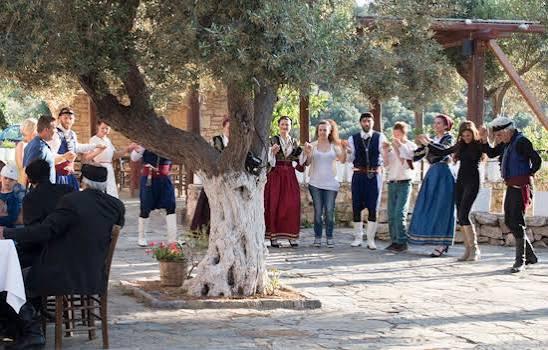
People slowly leave their seats, forming circles that have remained unchanged for generations.
Children dance beside their grandparents.
Young people learn the steps by watching their elders.
Visitors are often encouraged to join, even if they have never danced before.
For many travellers, this is the moment they remember most vividly.
Yet to understand its meaning, it is important to remember everything that came before it.
Joy That Follows Worship
The music does not replace the church service.
It follows it.
The dancing does not compete with prayer.
It comes after it.
This order is important because it reflects the spirit of the panigiri itself.
The faithful have already gathered in prayer.
They have celebrated the Divine Liturgy.
They have participated in the Holy Eucharist.
They have received the blessed bread of the Artoklasia.
They have shared a common meal.
Now they express their joy simply by being together.
For this reason, music and dancing are not the purpose of the feast.
They are the joyful expression of a community that has first gathered before God.
The Sound of Crete
In Crete, the music of a panigiri is unlike anywhere else in Greece.
The lyra sings melodies that have accompanied the island for centuries.
The laouto provides its steady rhythm.
Traditional mantinades—short poetic couplets—are often improvised, celebrating friendship, love, faith, hospitality or the beauty of the village itself.
For Cretans, these songs are not performances.
They are part of their identity.
Many people know them by heart.
Others create new verses as the evening unfolds.
Every panigiri becomes a living conversation between music, memory and community.
Dancing Together
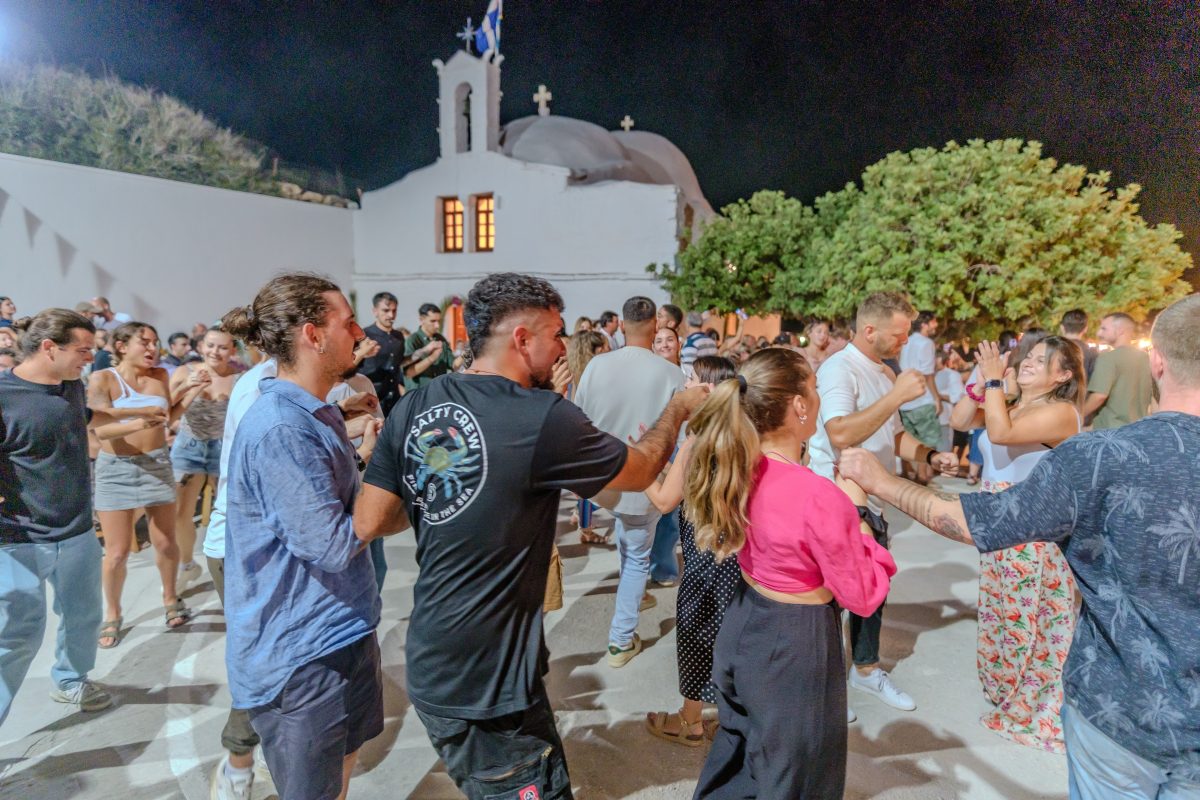
One of the first things visitors notice is that traditional Greek dancing is not about individual performance.
People dance in circles.
They hold hands.
Each person supports the rhythm of the next.
No one dances alone.
There is something profoundly symbolic about this.
The circle has no beginning and no end.
Young and old participate together.
Experienced dancers naturally encourage beginners.
Nobody expects perfection.
Participation matters far more than technique.
Perhaps this is why so many visitors feel comfortable joining in after only a few minutes.
They are not being judged.
They are being welcomed.
A Living Tradition
Unlike many performances created specifically for tourists, the music and dancing of a village panigiri exist first for the community itself.
Visitors are invited to share in something that already belongs to the village.
Nothing has been staged for an audience.
Nothing has been choreographed for a camera.
The celebration would take place even if no tourists were present.
And perhaps that is precisely why it feels so genuine.
Its authenticity has not been created for tourism.
It has been preserved by generations of local people who continue to celebrate their faith, their families and their shared history.
More Than Entertainment
Perhaps this is the greatest lesson a visitor can learn.
The panigiri is not divided into a “religious part” and an “entertainment part.”
It is one continuous celebration.
Prayer gathers the people.
The Divine Liturgy unites them.
The Holy Eucharist strengthens them.
The Artoklasia reminds them that God’s blessings are shared.
The common meal expresses hospitality.
Music and dancing simply become the joyful language of a community that has already celebrated together before God.
This is why, for generations of Greeks, the panigiri has never been understood as merely a social event.
It is a celebration of faith lived together.
When the Music Finally Stops
Eventually, the musicians play their final melody.
The dancing comes to an end.
Tables are cleared.
Families begin their journey home.
The village gradually becomes quiet once again.
Yet something remains.
Not only the memory of a pleasant evening.
But the memory of having belonged—even if only for a few hours—to a community united by faith, gratitude, hospitality and joy.
Perhaps that is why those who experience a genuine Greek panigiri often remember it for the rest of their lives.
Not because it entertained them.
But because, for one summer evening, it allowed them to glimpse the soul of a Greek village.
A Personal Reflection
As someone who was born and raised in Crete, I have attended village panigiria for as long as I can remember.
As a child, I remember standing beside my parents as candles flickered before the icons, breathing in the fragrance of incense and fresh basil, and listening to the ancient melodies of Byzantine chant long before I was old enough to understand every word.
Later came the conversations outside the church, the laughter in the village square, the shared meals and the music that continued late into the summer night.
Looking back, I realise that none of these moments existed separately.
They were all part of the same celebration.
That is what I hope visitors to Greece will discover for themselves.
A panigiri is not a performance created for tourists.
It is not a folklore show.
It is not simply an evening of traditional music and food.
It is a living tradition that has been passed from one generation to the next for centuries.
Its outward forms may vary from one village to another, but its heart remains the same.
It begins with prayer.
It is centred on the Divine Liturgy.
It reaches its highest expression in the Holy Eucharist.
It continues through the blessing of the Artoklasia.
It is shared around a common table.
And it finds joyful expression in music, dancing and genuine hospitality.
Perhaps this is why so many visitors leave a Greek panigiri feeling that they have experienced something difficult to describe.
They have not simply watched a tradition.
For a few hours, they have become part of it.
If you ever have the opportunity to attend a village panigiri during your travels in Greece, I encourage you to do so with an open mind and a respectful heart.
You do not need to understand every prayer.
You do not need to know every custom.
Simply observe.
Listen.
Accept the hospitality that is offered to you.
Allow yourself to experience the celebration as the local community experiences it.
You may discover that the most memorable moments of your journey are not always found in famous archaeological sites or beautiful beaches, but in a small village church, surrounded by people who welcome you not as a customer, but as a guest.
The Enduring Beauty of Orthodoxy
Perhaps this is Orthodoxy at its most beautiful.
People gathered in common prayer.
United in the Divine Liturgy and the Holy Eucharist.
Receiving the blessed bread of the Artoklasia.
Sharing a meal around the same table.
Welcoming strangers with genuine hospitality.
While the gentle fragrance of incense and fresh basil quietly fills the church.
Simple.
Humble.
Timeless.
And perhaps that is why, after all these centuries, the Greek panigiri continues to touch the hearts of everyone who experiences it.
Whether they arrive as believers, curious travellers or first-time visitors to Greece.
Written by Stefanos Katrinakis
Tourism Professional | Owner of Stefanos Tours | Orthodox Christian from Crete