
Vrachasi, Crete: The Mountain Village Most Tourists Never Enter
15/07/2026
Saint Marina: The July 17 Feast Day and the Historic Pilgrimage in Voni, Crete
17/07/2026Only a short drive from Agios Nikolaos, the coastal landscape of eastern Crete begins to change. The sea gradually disappears behind olive groves, the road climbs towards the foothills of the Dikti Mountains, and the white houses of Kritsa Crete appear across the hillside.
Kritsa is often described as one of Crete’s most beautiful traditional villages. That description is justified, but it tells only part of the story. Kritsa is not simply a collection of picturesque streets created for visitors. It is a living village with a long history, strong traditions and an identity shaped by religion, resistance, craftsmanship and the surrounding land.
As someone who has lived and worked in Lasithi for most of my life, I have visited Kritsa many times. What I appreciate most is not only its historic monuments or picturesque streets, but the way the village connects the different faces of eastern Crete: its ancient past, Orthodox heritage, mountain landscape and everyday local life.
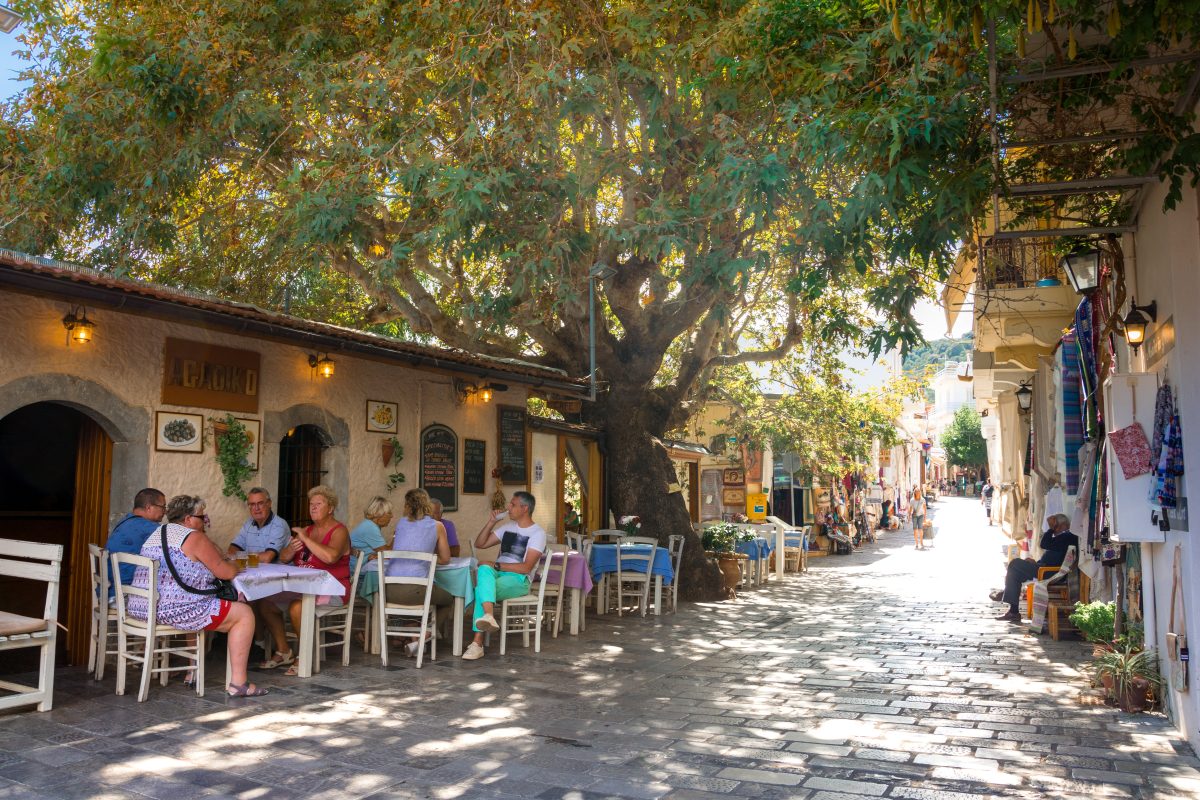
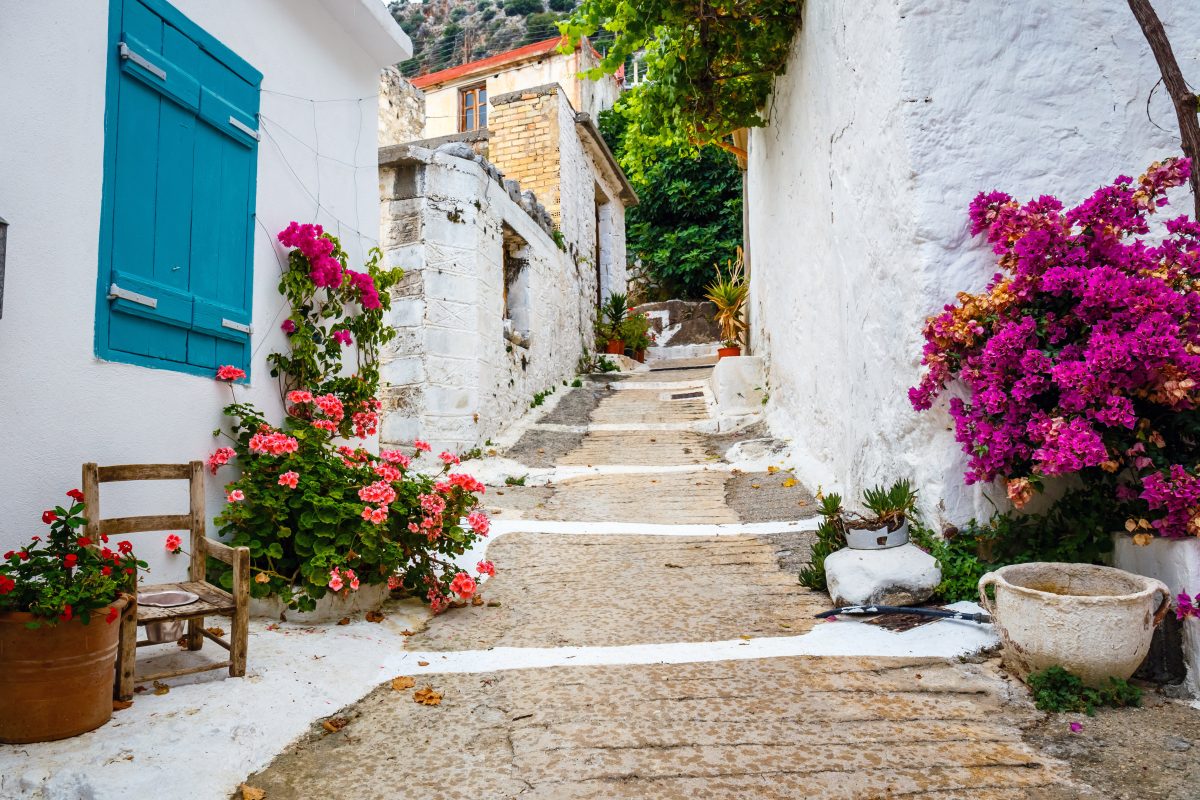
The central street becomes lively during the summer, with cafés, local products and displays of colourful textiles. Yet a few minutes away, the atmosphere changes completely. Narrow lanes climb between old houses, flowerpots decorate small courtyards, cats sleep beneath stone staircases and everyday village life continues beyond the busiest visitor route.
Kritsa also provides an excellent base for discovering several important attractions. The Byzantine church of Panagia Kera, the ancient city of Lato and the dramatic Kritsa Gorge are all located nearby.
For travellers exploring eastern Crete, Kritsa offers much more than a pleasant village walk. It brings together history, religious art, archaeology, nature and authentic Cretan character within a remarkably small area.
Where Is Kritsa?
Kritsa is located approximately 10 kilometres southwest of Agios Nikolaos, in the Lasithi region of eastern Crete. The journey from Agios Nikolaos usually takes around 15 minutes by car, while visitors travelling from Sissi should allow approximately 40 to 45 minutes.
The village is built amphitheatrically against the lower slopes of the mountains. Its hillside location creates beautiful views over olive groves and the surrounding countryside, but it also means that many streets are steep.
The easiest way to reach Kritsa is by car or private transfer. Public buses connect the village with Agios Nikolaos, although timetables may vary according to the season and day of the week.
Visitors arriving by car should park near the entrance or lower part of the village. Driving through the historic centre is neither necessary nor enjoyable. The streets become narrow, local traffic can make manoeuvring difficult and Kritsa is best discovered on foot.
What Is Kritsa Crete Really Like?
Kritsa does receive tourism, and it would be misleading to describe it as an undiscovered village untouched by visitors. During the summer, organised groups arrive regularly, and the main street can feel busy.
However, this is only one side of Kritsa.
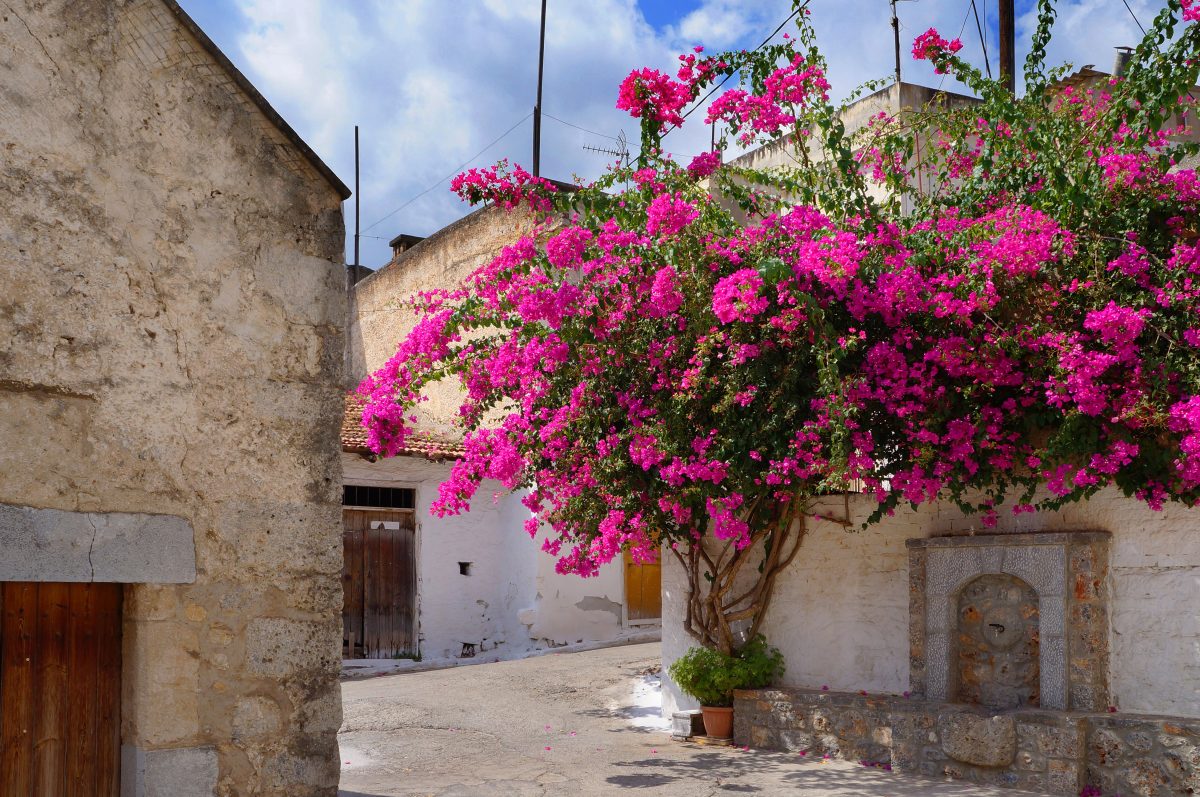
Leave the central road and follow one of the lanes climbing into the old neighbourhoods. The souvenir displays gradually disappear, the streets become quieter and the village begins to reveal its real personality.
Old stone doorways stand beside more recent homes. Small churches are hidden between houses, washing hangs above courtyards and conversations carry from one lane to another. Some buildings have been restored, while others openly display the marks left by time.
Kritsa is not polished to perfection—and that is part of its appeal. It still feels like a place where people live, work, worship and maintain a strong relationship with their community.
The best way to explore the village is without a strict route. Walk along the main street, turn into the smaller alleys and allow yourself to get slightly lost. The most memorable corner may not be the one marked on a map.
A Village With a History of Resistance
The wider area around Kritsa has been inhabited since ancient times. Nearby Lato became one of the most important Dorian cities of Crete, while during the Byzantine period the area developed a rich religious tradition, reflected in the numerous churches and chapels found around the village.
Kritsa also played an active role in the Cretan struggles against Ottoman rule. Its association with resistance remains an important part of local identity.
One of the village’s most famous figures is Rodanthi, remembered through tradition as the Kritsotopoula, or “young woman of Kritsa.” According to the story, she fought against the Ottomans disguised as a man and was killed in battle. History and legend have inevitably become intertwined, but her story continues to represent bravery, sacrifice and the participation of Cretan women in the island’s struggles.
Kritsa later gained international attention when it became a filming location for He Who Must Die, the 1957 film directed by Jules Dassin and based on Nikos Kazantzakis’ novel Christ Recrucified. Local residents participated in the production, turning the village itself into part of an internationally recognised film.
These stories help visitors understand that Kritsa’s importance is not based on appearance alone. Behind its attractive streets lies a community with a powerful historical memory.
Panagia Kera: A Byzantine Treasure
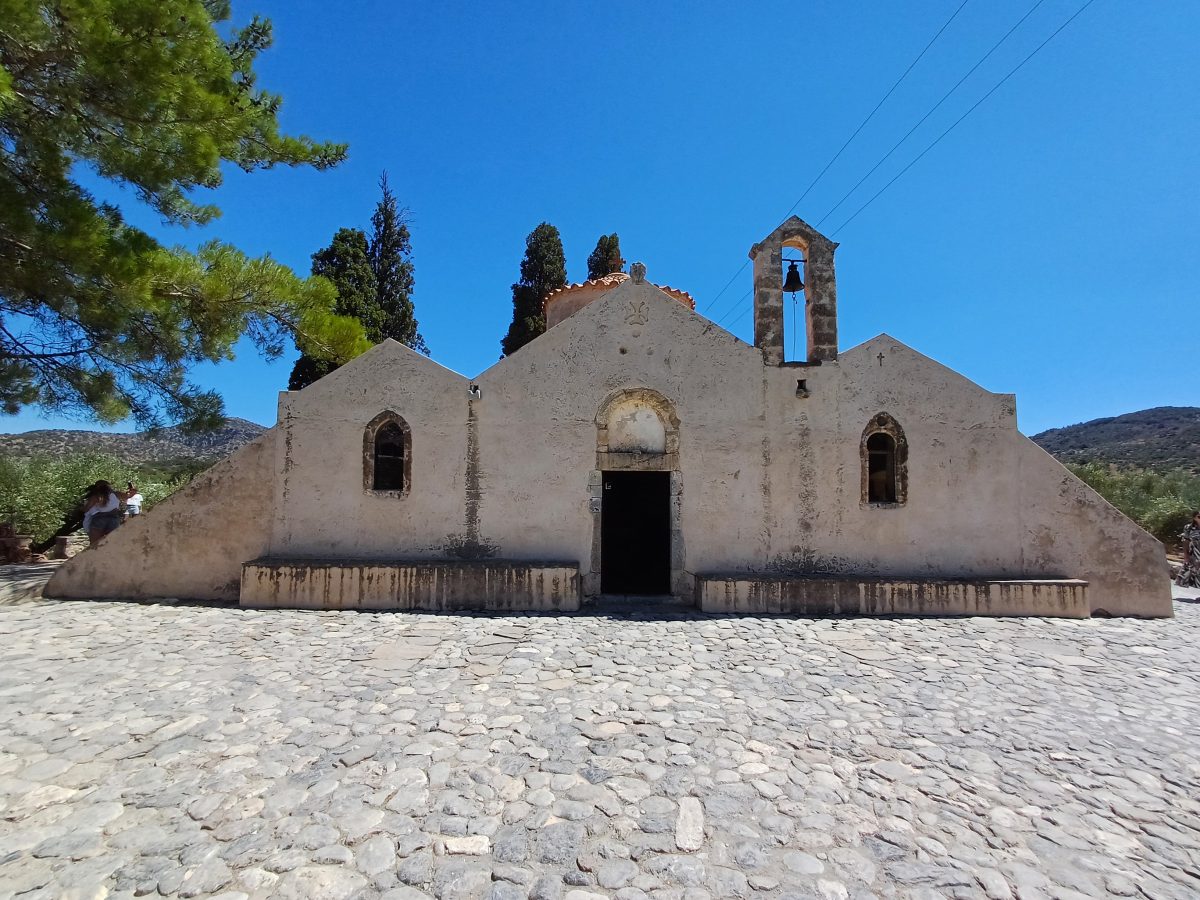
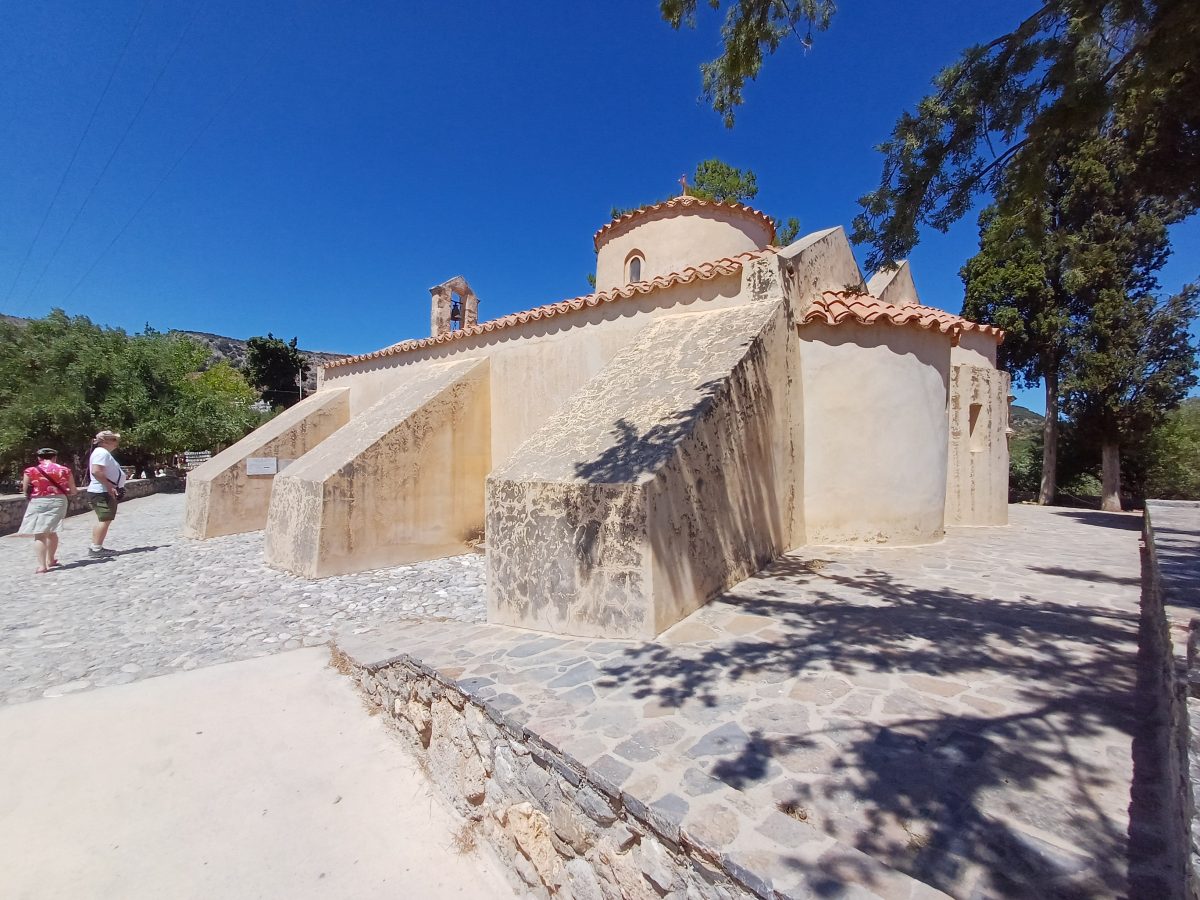
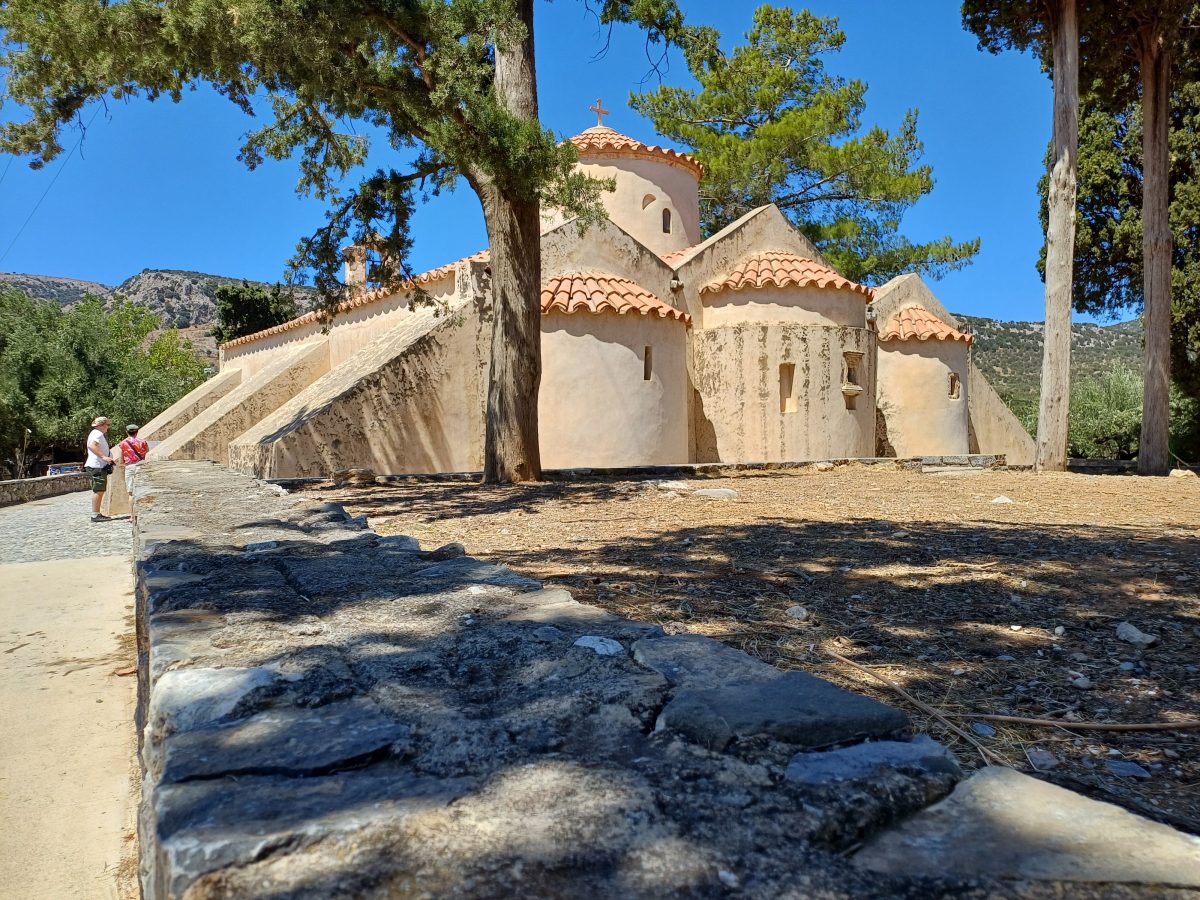
Approximately 500 metres before the village stands Panagia Kera, one of the most important Byzantine monuments in Crete. From the outside, the church appears relatively modest. Inside, however, its walls are covered with an extraordinary collection of medieval frescoes.
The church consists of three aisles and was constructed gradually. The central aisle is dedicated to the Dormition of the Virgin Mary, while the side aisles honour Saint Anne and Saint Anthony. Its surviving paintings depict scenes from the life of the Virgin Mary and Christ, saints, biblical events and the Last Judgement. The Greek Ministry of Culture provides additional information about the monument and its architecture.
Even visitors with little knowledge of Byzantine art can appreciate the atmosphere inside. The limited light, intimate space and painted walls create an experience entirely different from entering a large cathedral or modern museum.
Allow approximately 30 minutes for your visit. Photography restrictions may apply, and visitors should follow the instructions displayed at the monument. As Panagia Kera is an important religious site, respectful clothing and behaviour are appropriate.
Opening arrangements can change seasonally, so check the latest official information before planning your visit.
Ancient Lato
A few kilometres from Kritsa, ancient Lato occupies a naturally fortified position between two hills. It is considered one of the best-preserved ancient city-states in Crete and offers a fascinating combination of archaeology and mountain scenery.
Lato was a Dorian city that flourished particularly during the Classical and Hellenistic periods. Its strategic position provided natural protection and commanded views over the surrounding countryside and the Gulf of Mirabello.
The city was connected with its coastal port, Lato pros Kamara, situated in the area of modern Agios Nikolaos. Lato is also associated with Nearchus, the celebrated admiral of Alexander the Great.
Visitors can walk among the remains of houses, workshops, public buildings, stairways and the ancient agora. Unlike archaeological sites where only scattered foundations survive, Lato’s layout makes it easier to imagine how an organised ancient community once functioned.
The ground is rocky and uneven, so closed shoes are strongly recommended. Shade is limited, making early morning the most comfortable time to visit during summer.
Allow approximately one to one and a half hours. Even if archaeology is not your main interest, the peaceful setting and panoramic views make Lato a worthwhile addition to a visit to Kritsa. The Greek Ministry of Culture describes its position between two hills as naturally fortified and strategically important.
Walking Through Kritsa Gorge
Kritsa also has an adventurous side. Close to the village, Kritsa Gorge provides an impressive hiking route through steep limestone walls and characteristic Cretan vegetation.
The gorge quickly becomes narrow, and in certain places the passage is only wide enough for one person. Walkers may need to climb over rocks and use their hands for balance. Under suitable conditions, specialised climbing equipment is not normally required, but this should not be mistaken for an ordinary village walk.
Good footwear, sufficient water and reasonable physical fitness are essential. The gorge should never be entered during heavy rain or when unstable weather is expected, as narrow gorges can become dangerous very quickly.
Some walkers pass through the most dramatic narrow section and return, while experienced hikers may follow a longer route through the surrounding countryside. Before setting out, check the route carefully and choose an option suitable for your ability.
Kritsa Gorge is not recommended for people with mobility difficulties, anyone uncomfortable in confined spaces or families with very young children. During summer, begin early and avoid the hottest hours.
Weaving, Embroidery and Local Products
Kritsa has a long tradition of weaving and embroidery. For generations, women produced textiles for their homes using knowledge passed from mother to daughter.
Today, visitors will see tablecloths, fabrics, lace, bags and embroidered pieces displayed along the central streets. These are not simply decorative souvenirs. They reflect a period when household objects were produced locally and skilled work formed an important part of village life.
As in every popular destination, not everything on display is necessarily handmade in the village. If authenticity matters to you, ask where an item was produced, which materials were used and whether it was made by hand or machine. Genuine craftsmanship takes time and will rarely compete in price with mass-produced souvenirs.
Olive cultivation is equally important to the area. Extensive groves surround Kritsa, and olive oil has supported local families for centuries. Visitors can also find herbs, honey and other products connected with the Cretan landscape.
Purchasing directly from local producers and craftspeople helps preserve traditional skills and keeps more of the visitor economy within the community.
How Long Should You Spend in Kritsa?
Allow at least two hours to explore the village without rushing. This provides enough time to walk through the central street, discover some of the older neighbourhoods and stop for coffee or a meal.
For a rewarding half-day visit, combine Kritsa with Panagia Kera or ancient Lato. Travellers interested in all three can begin at Lato early in the morning, visit Panagia Kera afterwards and spend the remainder of their time in the village.
Kritsa also combines naturally with Agios Nikolaos. You can explore the village and its surroundings during the morning before continuing to the coast for a walk around Lake Voulismeni and the harbour.
The gorge requires separate planning. Trying to include Kritsa, Panagia Kera, Lato, the gorge and Agios Nikolaos in one day would create a rushed checklist rather than an enjoyable experience.
The Best Time to Visit Kritsa
Spring and autumn offer the most comfortable conditions. Temperatures are usually better for walking, and the surrounding countryside displays more colour than during the dry height of summer.
Between June and September, visit early in the morning or later in the afternoon. Although Kritsa stands above the coast, its steep streets can become tiring under the midday sun.
Morning is particularly suitable for ancient Lato and the gorge. Late afternoon is excellent for exploring the village, when the light softens and the central streets gradually become quieter. Remember, however, that monuments and archaeological sites may close before the village cafés.
Comfortable footwear is essential in every season. Bring water and sun protection, and take extra care on stone lanes after rain.
Is Kritsa Worth Visiting?
Kritsa is an excellent destination for travellers who want to discover a side of Crete beyond its beaches and coastal resorts. It is especially rewarding for those interested in history, traditional villages, Byzantine art, archaeology, photography and walking.
Visitors expecting a completely hidden village may be surprised by the activity along the main street. People with reduced mobility may also find the steep and uneven lanes challenging.
Nevertheless, Kritsa retains a genuine identity. Its character becomes clearer when you move beyond the busiest street, explore its neighbourhoods and connect the modern village with Panagia Kera, ancient Lato and the surrounding landscape.
Kritsa is not merely a picturesque stop. It is a place shaped by centuries of faith, conflict, hard work and close connection with the land. That depth is what makes it one of the most rewarding villages to visit in eastern Crete.
Visit Kritsa with Stefanos Tours
If you would like to discover Kritsa without worrying about driving, parking or organising the itinerary, Stefanos Tours can arrange a private excursion adapted to your interests.
Depending on availability, opening hours and your preferences, the itinerary can combine Kritsa with Panagia Kera, ancient Lato or Agios Nikolaos. A private excursion gives you the freedom to travel comfortably, spend more time at the places that interest you and experience eastern Crete at your own pace.
Contact Stefanos Tours in Sissi for availability, prices and a personalised itinerary.