
Eastern Crete Travel Guide (2026): The Best Places to Visit Near Sissi
14/07/2026
Why Do Cretan Drivers Cross Themselves at Selinari?
15/07/2026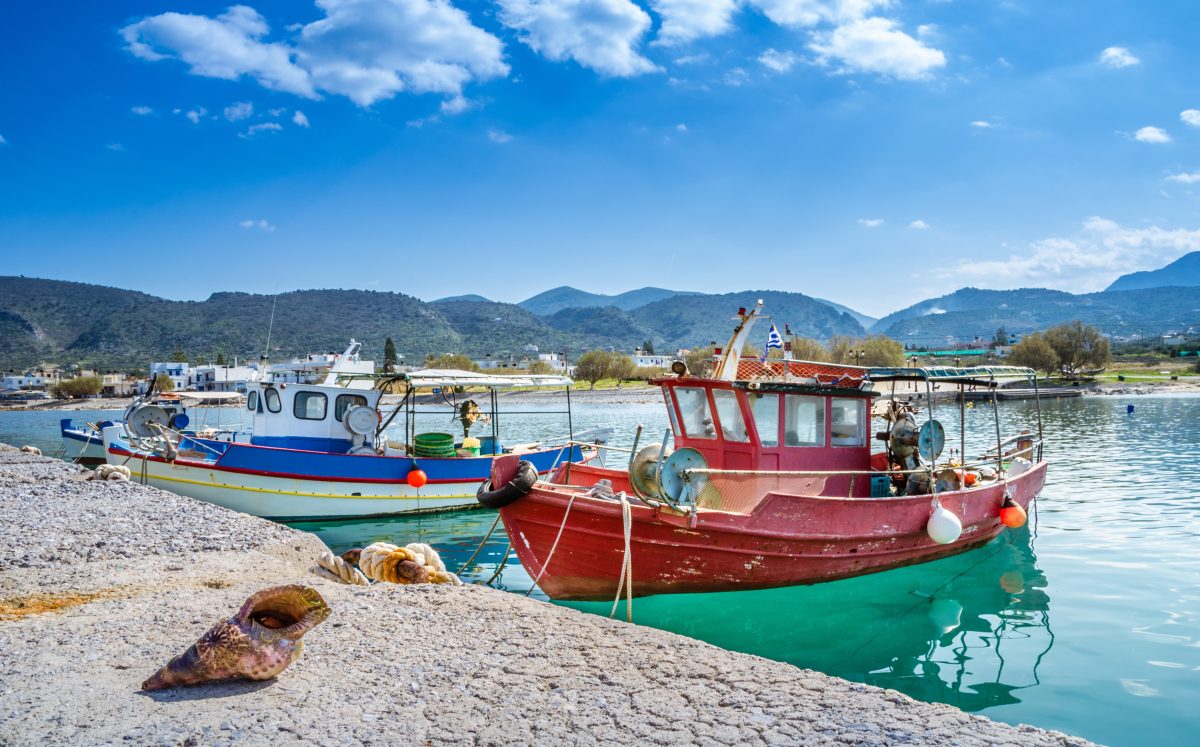
Some of Crete’s most memorable places are not the ones surrounded by tour buses, souvenir shops and long queues. Sometimes they are the small villages found only a few kilometres beyond the main road—the places many visitors pass without ever knowing what they have missed.
Milatos Crete is one of them.
Located on the northern coast of eastern Crete, just a short drive from Sissi, Milatos combines a peaceful fishing harbour, traditional tavernas, small swimming coves, an old Cretan village and one of the region’s most moving historical sites.
It is not a destination trying to impress visitors with large attractions or organised entertainment. Its appeal is quieter and more authentic: fishing boats moving gently inside the harbour, tables beside the sea, olive-covered hills and a pace of life that still feels connected to the surrounding land.
As someone who has lived and worked in this part of Crete for many years, I often recommend Milatos to visitors who want to explore somewhere close to Sissi without spending half their holiday travelling across the island.
It may be only around 15 minutes away, but it offers an entirely different experience.
Where Is Milatos Crete?
Milatos is located in the Lasithi region of eastern Crete, between Sissi and the inland town of Neapoli.
The name does not refer to only one settlement. There is the original village of Milatos, built slightly inland among olive groves and low hills, and the coastal settlement commonly known as Milatos Beach or Paralia Milatou.
The traditional village has stone houses, narrow streets, churches and a peaceful rural atmosphere. The coastal settlement developed around the small harbour and is where visitors will find most of the waterfront tavernas, accommodation and swimming spots.
Together, these two areas allow you to experience two different sides of Crete within a very short distance: the traditional countryside and the northern coastline.
From Sissi, Milatos can usually be reached in approximately 15 minutes by car. This makes it ideal for a morning visit, an afternoon swim or a relaxed evening meal beside the sea.
Why Should You Visit Milatos?
Milatos is not one of Crete’s famous international attractions—and that is part of the reason it is worth visiting.
There are no enormous hotels dominating the coastline, no crowded shopping streets and no nightlife competing with the sound of the sea. Visitors come here for simpler experiences: a walk around the harbour, a plate of fresh fish, a swim in clear water or an unhurried conversation over coffee.
Milatos is particularly suitable for travellers who want to escape the busier resorts without travelling very far. It is close enough to Sissi and Malia to visit spontaneously, yet it still retains the feeling of a small coastal community.
You do not need a complicated programme. A few hours are enough to understand its character.
Come for a swim and lunch, explore the old village or combine your visit with Milatos Cave. If you have time, stay until the early evening, when the temperature falls and the coastline becomes especially peaceful.
Discover the Traditional Village of Milatos
Before heading directly to the sea, it is worth taking a short walk through the original village of Milatos.
Like many old Cretan settlements, it was built away from the exposed coastline. For centuries, coastal communities faced the danger of pirate raids and other attacks, so villages were often established further inland, where residents had greater protection.
Modern Milatos remains a living village rather than an attraction created for tourists. Its narrow streets, traditional homes, small courtyards and old churches reflect the everyday character of rural Crete.
This means there may not be a clearly marked walking route or a long list of monuments to visit. The pleasure comes from observing the architecture, the quiet neighbourhoods and the surrounding agricultural landscape.
Olive cultivation remains an important part of life in the wider area, and the hills around Milatos are covered with olive groves, carob trees and low Mediterranean vegetation.
Visitors should remember that people live in these houses. Walk respectfully, avoid entering private courtyards and do not block the village’s narrow roads when parking.
Milatos does not need to be turned into an outdoor museum to be interesting. Its authenticity lies precisely in the fact that local life continues here.
Milatos Beach and Its Small Fishing Harbour
The coastal settlement is the part of Milatos that most visitors discover first.
A road follows the shoreline, passing small hotels, holiday apartments and traditional tavernas. At the heart of the settlement is a modest harbour, used by fishing boats and small private vessels.
The harbour is not grand or luxurious, but it gives Milatos much of its charm. You can walk beside the water, watch the boats and enjoy the changing colours of the sea.
It is particularly pleasant early in the morning, before the day becomes hot, or in the evening when visitors gather for dinner beside the water.
Unlike the larger ports of Crete, Milatos has remained small and informal. There is no need to rush from one attraction to another. The harbour itself is part of the experience.
Sit down, order a coffee and allow yourself to do very little for a while. In a holiday filled with excursions, schedules and long drives, that can sometimes be exactly what you need.
Beaches and Swimming in Milatos
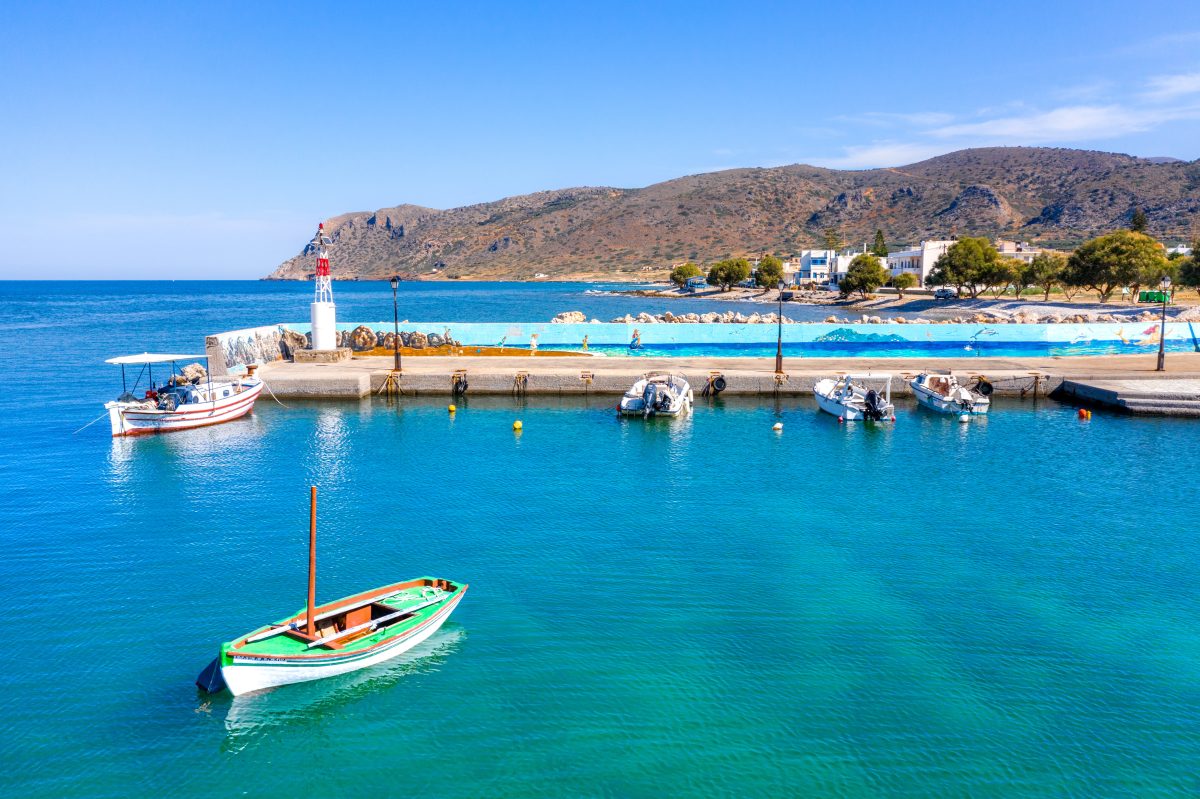
Visitors should not expect one enormous, uninterrupted sandy beach. The coastline of Milatos is formed by smaller beaches, pebbled sections, rocky areas and sheltered coves.
Some swimming spots are easier to access than others. The areas around the harbour can be suitable for a relaxed swim, while other parts of the coast are better for confident swimmers who are comfortable entering the water from stones or rocks.
The water is often clear, making the area attractive for snorkelling. Water shoes can be useful, particularly in places where the seabed is rocky or covered with pebbles.
Families travelling with young children should examine the beach before settling down. Not every section has shallow access, organised facilities or a lifeguard.
The northern coast of Crete can also be affected by wind. When the sea is rough, avoid exposed rocks and choose a more sheltered location—or simply enjoy the harbour and tavernas instead.
Milatos will not suit everyone. If you want a large organised beach with endless rows of sunbeds, loud music and water sports, there are better choices elsewhere.
But if you appreciate small coves, clear water and a more peaceful setting, the coastline has its own special beauty.
Enjoy a Meal Beside the Sea
For many visitors, the best reason to come to Milatos is the food.
Several tavernas are located directly beside the water, creating an ideal setting for a long lunch or early evening meal. Fish and seafood naturally play an important role, although you will also find familiar Greek and Cretan dishes.
Depending on availability, the menu may include grilled fish, calamari, octopus, prawns and other seafood. Those who prefer meat or vegetarian dishes can usually choose from salads, grilled meats, stuffed vegetables, local cheeses and traditional appetisers.
Do not rush the meal. Order a few dishes for the table, enjoy the view and allow the experience to unfold at the slower pace of the village.
If you choose fresh fish, remember that it is often priced according to weight. Ask what is available, check the price per kilogram and confirm the approximate final cost before ordering. This is normal practice in Greek fish tavernas and helps avoid misunderstandings.
During July and August, waterfront tables can become busy in the evening. If you have selected a particular restaurant, reserving a table is sensible.
The setting matters almost as much as the menu. Eating only a few metres from the sea, while small boats rest in the harbour, is one of those simple holiday experiences people often remember long after returning home.
Milatos Cave: A Place of History and Remembrance
A few kilometres from the village lies the most historically significant landmark in the area: Milatos Cave, also known as Rapas Cave.
Today, the cave appears peaceful. However, it is associated with one of the most tragic episodes in the history of eastern Crete.
In February 1823, during the Cretan struggle against Ottoman rule, a large number of local residents sought refuge inside the cave as Ottoman-Egyptian forces moved through the region. The exact number differs between historical accounts and local traditions, but it is generally remembered that thousands of people—many of them women, children and elderly residents—were trapped inside.
The cave was surrounded, leaving those sheltering there with little food or water. After days of suffering and attempts to resist, the ordeal ended in bloodshed, capture and the loss of many lives.
For local people, Milatos Cave is not simply a geological attraction. It is a memorial.
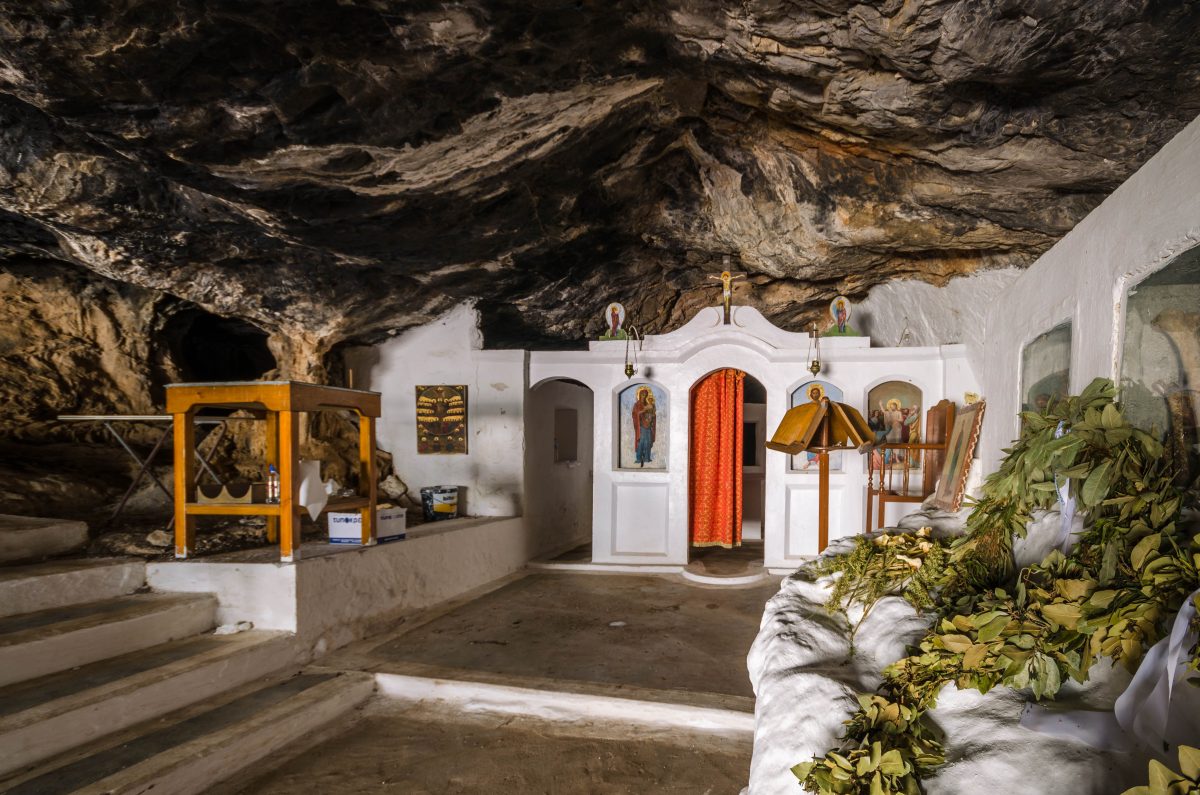
Inside stands a small chapel dedicated to Saint Thomas, while an ossuary preserves bones associated by tradition with the victims of 1823. A memorial service is held in remembrance of those who died.
Visitors should therefore approach the cave with the same respect they would show inside a church or at a historical monument. Photography may be possible, but loud conversations and careless behaviour are inappropriate around the chapel and ossuary.
The tragedy of Milatos is part of Crete’s long and painful struggle for freedom. Visiting the cave helps travellers understand that the island’s history extends far beyond its palaces, beaches and holiday resorts. Incredible Crete
What to Expect at Milatos Cave
The cave is located approximately three kilometres from the village. Visitors follow the local signs by road and then continue on foot from the parking area.
The walk to the entrance normally takes around 10–15 minutes. Although it is not exceptionally long, the path is uphill and uneven in places. Suitable footwear is strongly recommended.
Avoid flip-flops, especially if you intend to explore beyond the entrance.
Parts of the cave receive natural light through several openings, but other sections are much darker. Bring a small torch or make sure your mobile phone has enough battery to use its flashlight.
The floor can be uneven and slippery, so walk slowly and watch your step. The visit may be unsuitable for people with serious mobility difficulties, and young children should remain close to an adult.
Milatos Cave has not been transformed into a highly organised tourist attraction with smooth paths and elaborate visitor facilities. The experience remains relatively natural—and requires personal responsibility.
During summer, visit in the morning if possible. The walk becomes less comfortable during the hottest part of the day, particularly in July and August. Carry drinking water and wear a hat on the exposed sections of the path.
According to local tourism information, the cave lies about three kilometres northeast of Milatos at an altitude of approximately 155 metres. Cretan Beaches
The Ancient History of Milatos
The history of Milatos reaches much further back than the events of 1823.
Ancient Milatos was one of the Cretan cities mentioned by Homer in the Iliad. The wider area was inhabited in antiquity and occupied a position between the mountains, agricultural land and the sea.
Ancient tradition also connected Cretan Milatos with the great city of Miletus in Asia Minor. According to one version recorded by the ancient geographer Strabo, settlers led by Sarpedon travelled from Crete and gave the new settlement the name of their Cretan homeland.
This should be understood as an ancient founding tradition rather than a simple modern historical fact. Nevertheless, it demonstrates the importance attached to the name Milatos in the ancient Greek world.
The remains of ancient Milatos are not presented like the major archaeological sites of Knossos or Malia. Visitors should not expect a large, organised area with restored monuments, a ticket office and extensive information panels.
The ancient references instead add another layer to the landscape. The quiet hills around the modern village were part of a region shaped by settlement, agriculture and maritime connections for thousands of years.
How Much Time Do You Need?
You can enjoy Milatos in a few hours or turn it into a relaxed half-day visit.
For a swim and lunch beside the sea, allow approximately three to four hours. If you also want to visit the traditional village and Milatos Cave, half a day is more realistic.
A comfortable summer itinerary could be:
- Visit Milatos Cave in the morning.
- Walk briefly through the traditional village.
- Continue to the coast for lunch.
- Swim near the harbour during the afternoon.
- Enjoy a coffee or early evening walk before returning to Sissi.
Starting with the cave is important during hot weather. Exploring it at midday and then walking uphill beneath the summer sun can make the visit unnecessarily tiring.
Do not overload your programme. The main attraction of Milatos is not the number of things you can tick off a list, but the atmosphere you experience between them.
Getting to Milatos from Sissi
The easiest way to reach Milatos from Sissi is by car, taxi or private transfer.
The journey normally takes around 15 minutes, depending on your exact starting point and the road conditions. The route passes through a pleasant rural landscape of olive groves and low hills.
A vehicle is particularly useful if you want to visit all three main areas: the old village, the cave and the coast.
Public transport in this part of Crete can be limited and seasonal, so check the current timetable locally rather than assuming there will be a frequent bus connection.
The roads are generally manageable, although some sections toward the cave are narrower. Drive carefully and be prepared to slow down when another vehicle approaches.
Combine Milatos With Other Nearby Places
Milatos can easily be combined with another destination close to Sissi:
- Sissi: Walk around its natural harbour and enjoy one of the most attractive coastal settings in eastern Crete.
- Potamos Beach: Spend time on a larger sandy beach near the archaeological site of Malia.
- Malia Palace: Discover one of Crete’s most important Minoan sites.
- Neapoli: Experience an inland Cretan town with traditional cafés, churches and everyday local life.
- Vrachasi: Visit a mountain village surrounded by dramatic scenery.
Two or three nearby stops are enough. Trying to include too many villages in one day can turn an enjoyable drive into a rushed checklist.
Discover Milatos on an ATV Quad Safari
Travellers who do not have a rental car—or who want a more adventurous experience—can discover the wider area during an organised ATV Quad Safari from Sissi.
The route passes through the countryside, olive groves and traditional villages, revealing a side of eastern Crete that cannot be seen from the main national road. Depending on the day’s programme and conditions, the experience can include Milatos Cave, a coastal swimming stop and lunch.
The excursion is not only about driving a quad. It brings together the region’s landscape, local history, mountain routes and coastline within a single day.
Participants must follow the guide’s instructions, wear the provided helmet and carry the required driving licence. Safety should always come before speed.
For many visitors, this is a memorable way to discover Milatos because the journey itself becomes part of the experience.
Is Milatos Worth Visiting?
Yes—particularly if you are staying in Sissi, Malia or another nearby resort.
Milatos does not need to compete with Crete’s famous attractions. It offers something different: proximity, simplicity and the feeling that local life has not completely disappeared behind tourism.
You can swim in a small cove, eat beside the harbour, walk through a traditional village and visit a cave that carries the memory of a tragic moment in Cretan history—all within a few kilometres.
Milatos is not perfect, polished or designed to impress everyone. Some beaches are rocky, the cave requires effort and the village does not offer endless entertainment.
But perhaps that is exactly why it remains special.
It is a place for travellers who are willing to slow down, look beyond the most advertised destinations and discover the quieter character of eastern Crete.
Sometimes you do not need to drive across the entire island to find something authentic.
Sometimes it is waiting only 15 minutes from Sissi.