

Crete by the Numbers: Surprising Facts Every Visitor Should Know
12/07/2026
Greek Monastic Products in Greece – Discover the Spiritual Heritage of Mount Athos at Kastanias Monastic Products in Crete
13/07/2026Introduction
In Sissi Tavernas, one of the first things many visitors notice when eating in Sissi is the freshness of the food.
A tomato tastes sweeter. A cucumber has a satisfying crunch. Courgettes, potatoes and peppers retain their natural flavour, while a slice of chilled watermelon at the end of a summer meal can be every bit as memorable as the main course.
This freshness is not accidental.
Just beyond Sissi’s harbour, hotels and waterfront cafés, the landscape changes. Olive groves, vegetable gardens and cultivated fields reveal another side of the village—one shaped by farming traditions that existed long before tourism arrived.
Many local taverna owners and families remain closely connected to the land. Some cultivate their own vegetables, herbs and fruit, while others buy directly from growers in Sissi, Malia and the surrounding countryside.
As a result, ingredients often travel only a short distance before reaching the kitchen and, eventually, the visitor’s table.
Sissi Is More Than a Seaside Resort
Most travellers first see Sissi as a peaceful coastal village.
They notice the harbour, the fishing boats, the waterfront tavernas and the relaxed rhythm of summer life. Yet only a short distance inland, agriculture continues to form an important part of the local landscape.
For generations, families in the wider area have cultivated olive trees, potatoes, tomatoes, cucumbers, courgettes, onions, aubergines and seasonal fruit.
Tourism may now play a major role in the local economy, but farming has not disappeared. In many families, the two exist side by side.
Someone serving visitors in a taverna during the evening may also care for an olive grove, vegetable garden or family field at another time of the year.
This connection between tourism and agriculture is one of the reasons Sissi has retained a genuine village character.
Many Local Tavernas Stay Close to the Land
Not every ingredient served in a restaurant is grown locally, and no honest guide should suggest otherwise.
However, many family-run tavernas in and around Sissi make a serious effort to use fresh, good-quality produce. Some owners grow part of their own vegetables, while others work with local farmers and suppliers whom they have known for years.
Depending on the season, locally cultivated ingredients may include:
- Tomatoes
- Cucumbers
- Potatoes
- Courgettes
- Peppers
- Onions
- Aubergines
- Beans
- Parsley, mint and other fresh herbs
When vegetables are allowed to ripen naturally and are harvested close to the time they are served, the difference is easy to taste.
A Greek salad does not need an elaborate recipe when the tomatoes are ripe, the cucumbers are crisp and the olive oil is good.
Simple ingredients are often the foundation of the most satisfying Cretan meals.
The Melons and Watermelons of Sissi and Malia always served in Sissi Tavernas
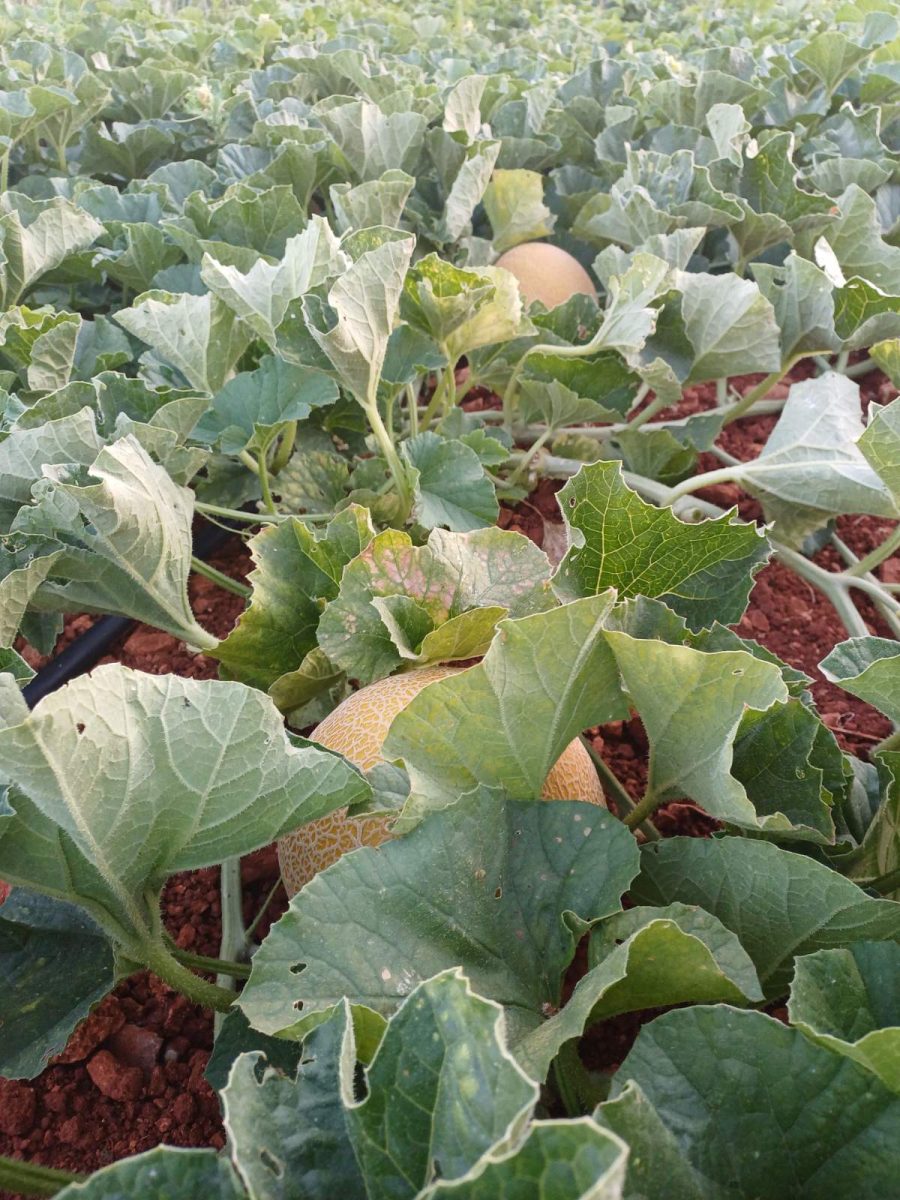
The fertile countryside around Sissi and Malia is especially well known locally for its summer melons and watermelons.
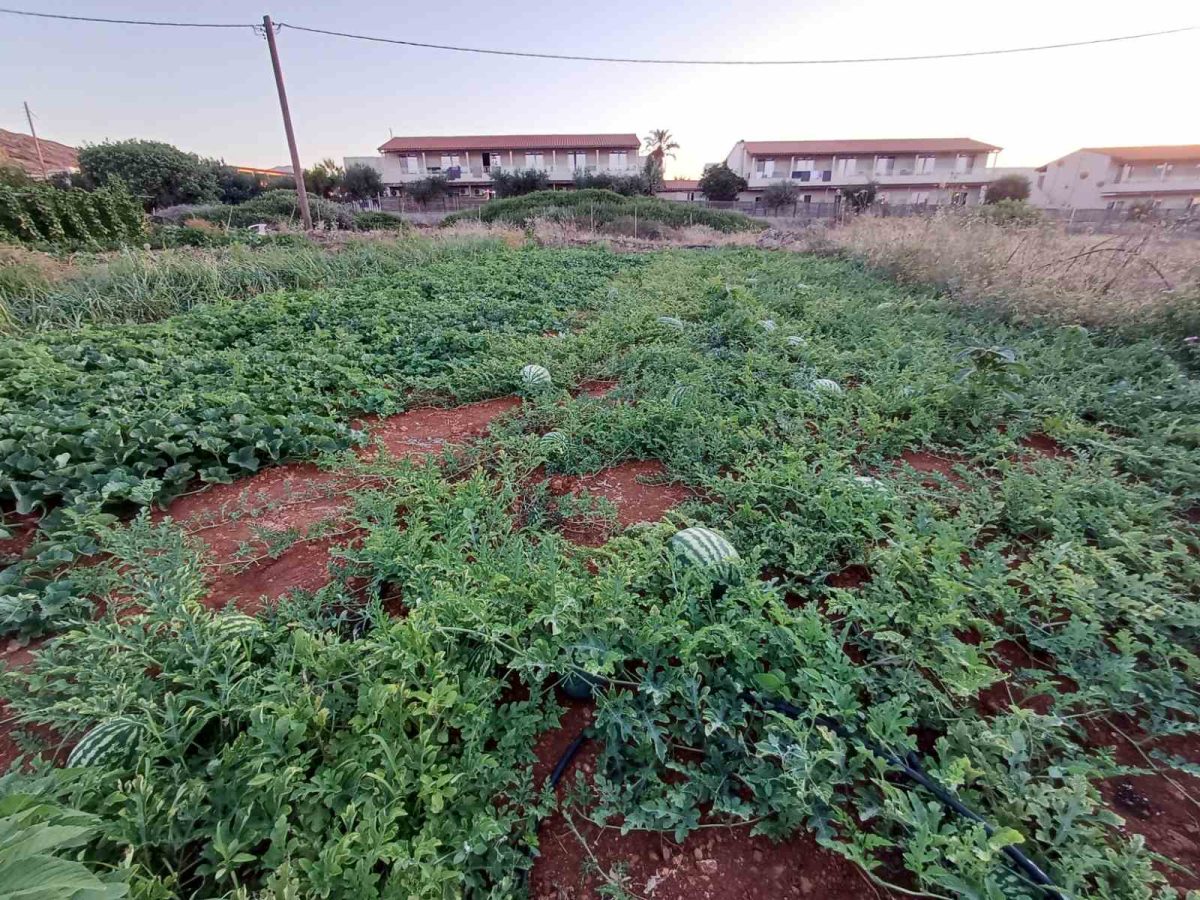
During the warmer months, the fields are filled with vines spreading across the reddish soil, while the fruit slowly ripens beneath the Cretan sun.
The combination of warm weather, long hours of sunshine, local soil conditions and careful irrigation helps produce watermelons that are juicy and crisp, as well as melons with a strong aroma and natural sweetness.
Local people have valued this fruit for generations, and many families still buy it directly from growers in the area.
In summer, watermelon and melon are often served chilled after a meal. There is no complicated presentation and no need for one.
When the fruit has been picked at the right moment, its freshness speaks for itself.
From the Field to the Table, Sissi Tavernas
In modern food supply chains, fruit and vegetables may travel hundreds or even thousands of kilometres before reaching a restaurant.
In Sissi, the journey can be much shorter.
A tomato, cucumber, melon or watermelon grown in the surrounding fields may reach a local kitchen shortly after being harvested. This shorter distance helps preserve texture, aroma and flavour while also supporting farmers and other small local businesses.
The phrase “farm to table” is often used as a marketing expression. Finest fresh igredients for guests’ Food in Sissi Crete
Here, it can describe something much more ordinary and authentic: a direct relationship between the people who cultivate the land and the people who prepare the food.
For local families, this is not a recent tourism trend. It is simply the way food has traditionally moved through the community.
Why Food in Sissi, Crete Tastes So Fresh
Another reason local food can taste different is seasonality.
Traditional Cretan cooking has always depended on what the land produces at a particular time of year.
Tomatoes and cucumbers are at their best during the warm months. Courgettes, beans, aubergines, melons and watermelons also have their natural season. Olive harvesting takes place later in the year, while wild greens become especially important during the cooler months.
Using produce in its proper season means it can be harvested when it is naturally ready rather than picked early to survive a long journey.
This is why even a simple plate of vegetables can taste noticeably different in Crete.
It is not only about the recipe.
It is about timing.
Farming Behind the Holiday Village
Visitors experience Sissi mainly during summer.
Local agricultural life, however, continues throughout the year.
Spring is a period of planting and preparation.
Summer brings the harvest of many vegetables, melons and watermelons.
Autumn is connected with grapes and olive preparation, while winter is often the time for pruning, maintaining the land and preparing for the next season.
This yearly cycle exists quietly behind the holiday experience.
It explains why agriculture remains part of local identity, even in a village known internationally for tourism.
The fields are not a decorative background.
They are working land.
A Family Connection to the Land
For my own family, this relationship with farming is personal.
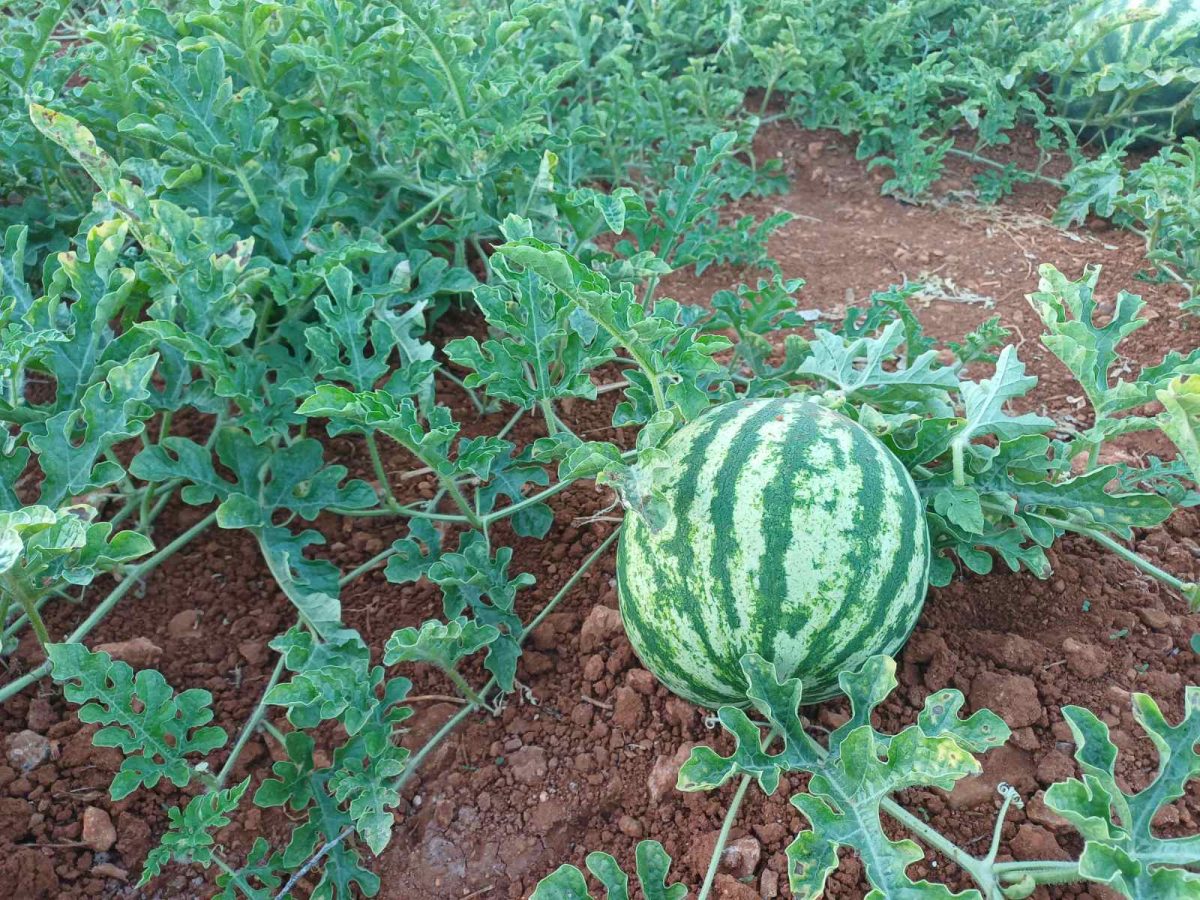
Every summer, my father cultivates melons and watermelons in the fields around Sissi.
The photographs in this article were not taken for a tourism campaign or selected from an image library. They show real fruit growing in local soil, only a short distance from the village and its tavernas.
Watching the plants develop across the field is a reminder of how much work lies behind something as simple as a slice of watermelon.
The soil must be prepared.
The plants need water and attention.
The fruit must be protected and harvested at the right time.
Only then does it reach the table.
Many families in Sissi, Malia and the surrounding area have similar connections to the land. Some grow fruit and vegetables. Others maintain olive groves, vineyards or small gardens.
Together, these family traditions continue to shape the flavours visitors experience during their stay.
Local Food Supports Local People
Choosing locally grown produce has benefits that go beyond freshness.
It supports farmers, family-run tavernas, small suppliers and other businesses within the surrounding community.
It also helps preserve agricultural knowledge that might otherwise disappear as tourism and modern development continue to expand.
Every locally grown tomato, cucumber, melon or watermelon carries a small part of that wider story.
It represents the soil, the season and the work of the person who cultivated it.
Visitors may not always know exactly where every ingredient comes from. But when a taverna makes a genuine effort to work with local and seasonal products, that connection becomes part of the dining experience.
What Visitors Should Expect
The fact that Sissi has strong agricultural traditions does not mean that every restaurant grows everything it serves.
That would be unrealistic.
Tavernas must operate professionally, maintain consistent supplies and serve large numbers of guests during the summer season. They may combine their own produce with ingredients purchased from farmers, markets and trusted suppliers.
What matters is the effort many local businesses make to choose quality ingredients and remain connected to the surrounding land.
Some tavernas focus strongly on traditional Cretan recipes.
Others offer a broader menu that includes Greek and international dishes.
Serving tourists does not automatically make food inauthentic. What matters is the quality of the ingredients, the care in the kitchen and the honesty of the people preparing it.
A Simple Taste of Sissi
Some of the strongest holiday memories are surprisingly simple.
A ripe tomato in a village salad.
Freshly cut cucumber beside grilled meat.
Courgettes cooked with olive oil and herbs.
A cold slice of watermelon served after dinner on a hot evening.
These flavours do not need complicated explanations.
They reflect the land around Sissi, the season in which they were harvested and the people who continue to cultivate them.
The next time you sit down at a local taverna, take a moment to notice the ingredients on your plate.
Some of them may have begun their journey only a few fields away.
Final Thoughts
Sissi is known for its peaceful harbour, coastal scenery and welcoming atmosphere.
But behind the holiday village lies another story.
It is the story of local fields, family gardens, olive groves and farmers who continue to work the land throughout the year. It is also the story of taverna owners who understand that good food begins with good ingredients.
The melons and watermelons growing around Sissi and Malia are part of that tradition. So are the tomatoes, cucumbers, potatoes, courgettes and herbs that find their way into local kitchens each season.
This connection between the field and the table is not always visible to visitors.
But it can often be tasted.
And sometimes, the clearest expression of authentic Cretan food is not an elaborate dish.
It is a perfectly ripe piece of fruit, grown beneath the sun only a short distance from where it is served.