
Wine Tasting from Sissi – Discover the Authentic Soul of Cretan Wine at Lyrarakis Winery
30/07/2026
Jesus Walks on the Water
01/08/2026Every year, millions of visitors travel to Crete to admire its crystal-clear waters, dramatic mountains, ancient archaeological sites and traditional villages.
Yet many leave the island with the same unanswered question.
Why are there churches everywhere?
From tiny white chapels standing beside lonely country roads to historic monasteries hidden among the mountains, Crete is home to thousands of places of worship. To many visitors, they are beautiful landmarks or opportunities for memorable photographs. To the people of Crete, however, they represent something far deeper.
They tell the story of an island whose identity has been shaped for centuries by the Orthodox Christian faith.
As the owner of Stefanos Tours, I have spent more than two decades welcoming visitors from all over the world. One of the questions I am asked most often is why faith continues to play such an important role in everyday Cretan life and why churches can be found in almost every village, valley and mountainside.
This article is my attempt to answer that question.
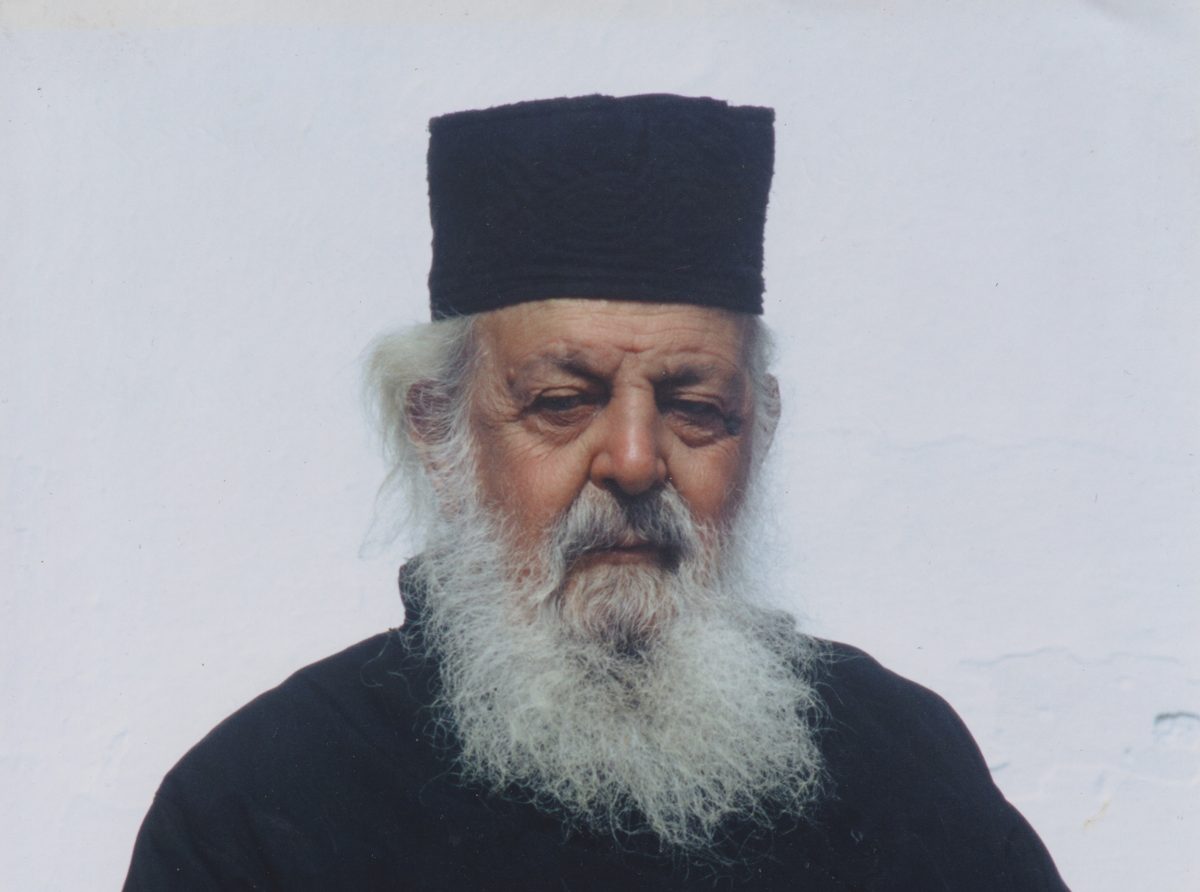
Rather than beginning with architecture or history alone, I would like to introduce you to one remarkable man whose life reflects the spiritual heritage of Crete in its purest form. Elder Eugenios Kastanias
The Boy from Crete
On 26 July 1914, in the small village of Skinias in eastern Crete, a boy was born who would one day spend more than eight decades in the silence of Mount Athos.
His parents could never have imagined that their son would leave home while still a child and devote his entire life to God. Like countless Cretan families of the time, they lived a life shaped by hard work, deep faith and a close-knit community where the Church stood at the centre of everyday life.
Early twentieth-century Crete was a land of contrasts. Material comforts were few, yet spiritual life was remarkably rich. Every village revolved around its church, feast days united entire communities and children grew up hearing stories from the Gospel, the lives of the saints and the struggles of previous generations who had defended both their homeland and their faith.
It was within this environment that the young Emmanuel first encountered the values that would define his entire life.
Humility was not taught through books but through example.
Hospitality was not considered a virtue to be admired but a duty to be practised.
Prayer was not reserved for Sundays; it accompanied the rhythm of each day.
These early experiences left a profound mark upon the boy who would later become Elder Eugenios.
Even after spending more than eighty years on the Holy Mountain, those who knew him could still recognise the quiet dignity, sincerity and generous spirit so often associated with the traditional Cretan character.
At the age of twelve, Emmanuel made a decision that would alter the course of his life forever.
While most children were preparing for adulthood within the familiar surroundings of their village, he set out for Mount Athos—the spiritual heart of Orthodox monasticism.
The journey from Crete to the Holy Mountain was far more than a change of location.
It was the beginning of a complete transformation.
He left behind his family, his village and the world he had always known.
Before him lay an unfamiliar life of obedience, prayer, manual labour and spiritual struggle.
For many, such a sacrifice would have seemed impossible.
For the young Emmanuel, it became the path that God had prepared from the very beginning.
The Holy Mountain would become his home.
The Kellion of Kastanias would become his family.
And the child from Skinias would gradually grow into one of the most beloved and respected elders of his generation, not through extraordinary achievements, but through a lifetime of quiet faithfulness.
A Child Enters the Holy Mountain
The Mount Athos that welcomed the young Nikolaos in 1926 was a very different world from the one pilgrims encounter today.
Roads were almost non-existent.
Electricity had not yet reached the monasteries.
Communication with the outside world was limited, and life followed a rhythm that had changed little for centuries.
Everything revolved around prayer.
The Holy Mountain was not simply a collection of monasteries. It was a living spiritual republic, where each monastery, skete and kellion formed part of an unbroken monastic tradition stretching back more than a thousand years.
For a twelve-year-old boy arriving from rural Crete, it must have seemed like stepping into another age.
His destination was the Kellion of the Dormition of the Theotokos, better known as Kastanias, a dependency of the Great Lavra situated in the secluded region of Provata.
Hidden among forests of chestnut, oak and holm oak, the kellion stood far from the busy pilgrim routes. Silence was not something deliberately sought there; it was simply part of the landscape.
Here, Emmanuel would spend the rest of his earthly life.
His first years were those of a novice.
Like every young monk before him, he learned not through lectures but through daily life. He observed the older fathers, followed their example and gradually absorbed the unwritten wisdom of Athonite monasticism.
The days began long before sunrise.
The chapel was illuminated by oil lamps.
The Divine Offices filled the darkness with ancient hymns.
After prayer came work.
There were gardens to cultivate, paths to maintain, wood to cut, bread to bake and countless practical tasks necessary for the life of a remote kellion.
No task was considered insignificant.
Every duty, however humble, became an offering to God.
The young novice soon discovered that the true education of Mount Athos was not found in books alone.
It was found in obedience.
In patience.
In silence.
In learning to place the common good before personal preference.
These lessons would shape his character far more deeply than any formal schooling could have done.
The child who had left Skinias with little more than faith and determination was slowly being formed into a monk.
No one could yet foresee that he would remain at Kastanias for more than eighty years, becoming one of the most recognisable and beloved figures of Provata.
For now, he was simply another young novice, taking his first steps along a path that countless monks had walked before him—a path that demanded everything, yet promised something infinitely greater.
The Kellion of Kastanias
To understand the life of Elder Eugenios, one must first understand the place that became his home.
The Kellion of the Dormition of the Theotokos, universally known as Kastanias, is one of the historic kellia belonging to the Monastery of Great Lavra in the region of Provata on Mount Athos.
Its name has long intrigued visitors.
Some associate it with the chestnut trees (kastanies) that flourish throughout the surrounding landscape. Others connect it with the old Athonite tradition that links the kellion to a monk known as Kastanias. Whatever the precise origin of the name, it has become inseparable from the history of the place itself.
Long before Elder Eugenios arrived, Kastanias had already witnessed generations of monks who sought a life of prayer away from the larger monasteries.
A kellion occupies a unique place within Athonite monasticism.
It is neither a great monastery nor an isolated hermitage.
Usually inhabited by a small brotherhood under the guidance of an elder, it combines the liturgical life of the Church with manual labour, study, hospitality and continuous prayer. Its scale allows for a deeply personal form of monastic life, where every member shares responsibility for both the spiritual and practical needs of the community.
Kastanias embodied this ideal.
The chapel stood at its heart.
Around it were the modest living quarters, storerooms, workshops and gardens that sustained the brotherhood throughout the year. Everything reflected simplicity rather than comfort. Nothing was excessive, yet nothing essential was lacking.
The surrounding countryside added to its distinctive character.
Dense forests, steep footpaths and the changing colours of the seasons created an atmosphere of profound stillness. Pilgrims often remarked that merely approaching Kastanias prepared the soul for silence long before they reached its gate.
For Elder Eugenios, this landscape was not simply beautiful scenery.
It became the setting of an entire lifetime.
Here he prayed through countless nights.
Here he welcomed pilgrims from Greece and abroad.
Here he buried beloved fathers and received young novices.
Here he witnessed the passing of generations while the ancient rhythm of Athonite life continued unchanged.
Few people remain in one place for more than eighty years.
Even fewer become so closely identified with that place that mentioning one immediately brings the other to mind.
Such was the relationship between Elder Eugenios and Kastanias.
The humble kellion shaped the monk.
And through his life of quiet faithfulness, the monk became one of the living symbols of Kastanias itself.
A Life Hidden in Prayer
As the years passed, the young novice matured into a monk, and the monk into a spiritual father.
There was no single moment that marked this transformation.
It came gradually, shaped by thousands of ordinary days that, taken together, became an extraordinary life.
On Mount Athos, holiness is seldom associated with dramatic events.
It is forged in the quiet repetition of prayer, obedience and humble service.
Day after day, Elder Eugenios followed the same rhythm.
Before dawn, the brotherhood gathered in the chapel for the Midnight Office, Orthros and the Divine Liturgy. Long before the first rays of sunlight reached the forests of Provata, the sound of Byzantine chant already filled the small church of Kastanias.
When the services ended, prayer gave way to work.
Like every Athonite monk, Elder Eugenios understood that manual labour was not separate from the spiritual life but an essential part of it.
The gardens needed tending.
Wood had to be cut for the winter.
Bread was baked in the traditional oven.
The chapel required constant care.
Pilgrims had to be received.
Every task, no matter how ordinary, became an act of thanksgiving.
Visitors were often surprised by the simplicity of life at Kastanias.
There was no sense of luxury, nor any attempt to impress.
Everything reflected moderation.
Meals were plain.
The furnishings were modest.
Possessions were few.
Yet those who entered the kellion rarely spoke about what it lacked.
Instead, they remembered what it possessed in abundance: peace.
That peace flowed naturally from the Elder himself.
He never hurried.
He never appeared burdened by anxiety.
Even during difficult times, he remained composed, trusting that every circumstance ultimately rested in the hands of Divine Providence.
It was this inner peace, perhaps more than any words he spoke, that touched the hearts of those who came to seek his counsel.
Many pilgrims arrived carrying heavy burdens.
Some sought answers.
Others simply longed to rest for a few hours in the silence of the Holy Mountain.
Elder Eugenios welcomed them all with the same gentle warmth.
He did not try to impress them with learning or eloquence.
His greatest sermon was the example of his own life.
Those who met him encountered a man whose words and actions were perfectly united—a rare harmony that can only be cultivated through many years of hidden prayer.
A Father to All Who Came
As the years went by, the reputation of Elder Eugenios spread quietly across Greece and beyond.
It was not the kind of reputation built through publicity or extraordinary claims. In fact, he avoided attention whenever possible. Those who travelled to Kastanias did so because someone else had simply said, “Go and meet the Elder.”
And so they came.
Monks.
Priests.
Bishops.
University professors.
Farmers.
Sailors.
Businessmen.
Young students searching for direction.
Parents burdened with worries about their children.
People carrying grief, illness or uncertainty.
At Kastanias, no distinctions were made.
The Elder received everyone in exactly the same way.
There were no appointments, no formal audience rooms and no sense of distance between the monk and his visitors. Hospitality began the moment someone crossed the threshold. Before any conversation took place, there was usually coffee, a glass of water, a piece of loukoumi or whatever the kellion could offer that day.
Only afterwards would the conversation begin.
Elder Eugenios possessed a rare gift that cannot be taught.
He knew how to listen.
In a world where many are eager to speak, he understood that genuine listening is itself an act of love.
Visitors often found themselves speaking more openly than they had intended. They sensed no judgement, no impatience and no desire to control their decisions. Instead, they encountered a man who listened with complete attention before offering a few simple words.
His advice was rarely complicated.
He preferred practical wisdom to lengthy explanations.
He reminded people to pray, to forgive, to remain humble and to trust in God’s providence, even when circumstances appeared overwhelming.
Those who expected dramatic revelations were sometimes surprised.
The Elder did not promise easy solutions.
He pointed instead towards a life of repentance, patience and hope.
Perhaps this explains why so many left Kastanias with a sense of peace.
Their problems had not necessarily disappeared.
But they had encountered someone whose own life testified that faith could carry a person through every trial.
That quiet witness became his greatest ministry.
Without travelling the world, he touched people from many parts of it.
Without writing books, he became a living lesson.
Without seeking disciples, he became a spiritual father to countless souls who remembered him not for extraordinary words, but for the extraordinary kindness with which he welcomed every human being who knocked upon the door of Kastanias.
The Measure of a Monk
Those who met Elder Eugenios often tried to describe what made him different.
Some spoke of his humility.
Others remembered his hospitality.
Many recalled his kindness.
Yet those who knew him best understood that these virtues did not exist separately. They were all expressions of a single life centred entirely on Christ.
He never sought admiration.
In fact, he was uncomfortable whenever visitors praised him.
If someone thanked him for his hospitality, he would immediately attribute everything to the Panagia or to the grace of God. If people spoke of his virtues, he would change the subject or begin speaking about someone else.
This was not false modesty.
It was genuine humility.
He had spent so many years struggling against his own will that self-promotion had simply disappeared from his character.
One of the defining features of Elder Eugenios was his complete lack of pretence.
Whether speaking to a bishop or to a young pilgrim visiting Mount Athos for the first time, he remained exactly the same person.
There was no carefully constructed image to maintain.
No different manner of speaking according to the importance of his guest.
He treated every person as someone created in the image of God.
This simplicity inspired confidence.
Visitors never felt that they were entering the presence of an inaccessible ascetic.
Instead, they encountered a spiritual father who understood ordinary human struggles because he listened with compassion rather than judgement.
He knew that behind every question lay a person.
Behind every mistake, a wounded heart.
Behind every sin, a soul longing for God’s mercy.
His own life reflected this understanding.
Years of prayer had not made him distant from people.
On the contrary, they had made him more approachable.
The deeper his relationship with God became, the greater his love for every person who crossed the threshold of Kastanias.
Perhaps this is the true measure of holiness.
Not extraordinary gifts.
Not public recognition.
Not remarkable achievements.
But the quiet ability to make others experience something of God’s love through the ordinary encounters of everyday life.
This was the hidden greatness of Elder Eugenios.
He never attempted to become an example.
Yet by simply living the Gospel with sincerity, he became one.
The Door That Never Closed
One of the first things pilgrims remembered about Kastanias was not the chapel, the forest or even the Elder himself.
It was the feeling that they had arrived home.
On Mount Athos, hospitality is not merely a custom; it is part of the monastic vocation. Every visitor is received as Christ Himself, according to the ancient Christian tradition. Elder Eugenios embodied this principle with remarkable sincerity.
The door of Kastanias was rarely closed.
Throughout the day, footsteps could often be heard approaching the courtyard. Some visitors had planned their pilgrimage for months. Others arrived unexpectedly after wandering through the footpaths of Provata. Some came seeking advice. Others simply needed a place to rest before continuing their journey.
No one was turned away.
The Elder would welcome them with the same warmth, regardless of who they were.
The kettle was placed on the stove.
Coffee was prepared.
A glass of cool water was offered.
If bread had just come out of the oven, it was shared immediately. If there were olives, fruit, loukoumi or a simple meal available, the guests were invited to sit at the table.
Everything was offered with such natural simplicity that visitors never felt like strangers.
There was no sense of obligation.
No expectation of gratitude.
Hospitality was simply the natural expression of love.
Many pilgrims later admitted that they could hardly remember the exact words the Elder had spoken.
What remained vividly in their memory was the atmosphere.
The quiet.
The absence of haste.
The feeling that, for a little while, the anxieties of the world had been left outside the gate.
In an age increasingly defined by schedules, interruptions and constant movement, Kastanias offered something that had become exceedingly rare: unhurried human presence.
Elder Eugenios never made people feel that they were taking up his time.
When someone sat before him, that person became the centre of his attention.
He listened patiently.
He spoke gently.
He allowed silence to become part of the conversation.
It was a form of hospitality that nourished not only the body, but also the soul.
Perhaps this explains why so many pilgrims returned to Kastanias again and again.
They did not come in search of extraordinary experiences.
They came because they had found something increasingly difficult to discover elsewhere: a place where they were received with genuine love, quiet respect and the simple joy of Christian fellowship.
The Wisdom of Simplicity
To many people, simplicity appears easy.
In reality, it is one of the most difficult virtues to acquire.
It is possible to own very little and still be consumed by pride. It is possible to live in silence while carrying great turmoil within the heart. True simplicity is not measured by outward appearance but by inner freedom.
Those who lived alongside Elder Eugenios recognised this freedom immediately.
His room contained only the essentials.
His clothing was plain.
His meals were modest.
Nothing in his daily life suggested a desire for comfort or luxury.
Yet his simplicity was never an end in itself.
He did not reject material things because they were evil.
He simply refused to allow them to occupy the place that belonged to God.
This freedom shaped every aspect of his character.
He was content with whatever Providence provided.
If the harvest was abundant, he gave thanks.
If the year was difficult, he gave thanks all the same.
He neither complained in hardship nor became attached to abundance.
Everything was received as a gift.
Everything was entrusted back to God.
Visitors often noticed that the Elder spoke very little about himself.
Instead, he preferred to ask questions.
How was your family?
How were your children?
How was your health?
Had you confessed recently?
Were you praying?
His concern was always directed towards the person before him rather than towards his own experiences.
This quiet self-forgetfulness made others feel immediately at ease.
They were not speaking with someone interested in telling his own story.
They were speaking with someone genuinely interested in theirs.
Perhaps that explains why so many people felt deeply understood after only a brief conversation.
The Elder had learned one of the greatest lessons of the spiritual life.
Love begins when the self no longer occupies the centre.
In today’s world, where success is often measured by accumulation, visibility and personal achievement, the life of Elder Eugenios offers a profoundly different vision.
He possessed little.
He sought nothing.
Yet those who met him often left feeling that they had encountered a man richer than anyone they had ever known.
His wealth was invisible.
It consisted of peace, gratitude, humility and a heart entirely free to love God and every person who came before him.
A Living Tradition
One of the greatest misunderstandings about Mount Athos is the belief that it belongs only to the past.
To many observers, it appears as a place frozen in history, where ancient customs have simply survived the passing centuries.
Nothing could be further from the truth.
Mount Athos is not a museum.
It is a living spiritual community.
Every day, prayers continue to rise from its monasteries exactly as they have for more than a thousand years. New monks continue to arrive. Young novices continue to leave behind the world in search of God. Elderly fathers continue to hand on their wisdom to the generations that follow.
Elder Eugenios understood that he was only one link in this unbroken chain.
He never imagined that Kastanias belonged to him.
He had inherited it from the fathers before him, just as they had inherited it from those who came before them.
His responsibility was not to change the tradition, but to preserve it faithfully and to pass it on intact.
That responsibility shaped his entire life.
The chapel had to remain the heart of the community.
The Divine Liturgy had to be celebrated with reverence.
Hospitality had to remain unconditional.
Prayer had to come before every other activity.
The younger monks had to be formed not merely through instruction but through personal example.
He understood that traditions are rarely preserved by words alone.
They survive because someone lives them.
Day after day.
Year after year.
Generation after generation.
Perhaps this explains the extraordinary continuity of Mount Athos.
Empires have risen and fallen.
Political systems have changed.
Wars have reshaped nations.
The modern world has transformed almost every aspect of human life.
Yet within the forests of the Holy Mountain, the same prayers continue to be chanted, the same bells continue to ring before dawn and the same Gospel continues to shape ordinary men into monks.
Elder Eugenios became part of that living continuity.
His life was not remarkable because it introduced something new.
It was remarkable because it faithfully preserved something ancient.
In doing so, he reminds us that the future of every civilisation depends not only upon innovation, but also upon those who quietly safeguard the truths that must never be forgotten.
The Final Years
Time leaves its mark upon every human life.
Even on Mount Athos, where the rhythm of prayer seems to transcend the passing years, age gradually brings new limitations. The hands that once carried heavy timber become slower. The feet that had walked countless mountain paths grow weary. The body weakens, yet the soul often grows stronger.
Such was the final chapter of Elder Eugenios.
By the closing years of the twentieth century, he had become one of the oldest and most respected monks in the region of Provata. Generations had come and gone before his eyes. Young novices whom he had welcomed decades earlier had themselves become experienced monks. Pilgrims who had first visited him as young men now returned with grey hair, bringing their own sons to receive his blessing.
The world beyond Mount Athos had changed beyond recognition.
Television, the internet and rapid communication had transformed everyday life. Greece itself had entered a new era. Yet within the walls of Kastanias, the essential rhythm remained unchanged.
Prayer still began before dawn.
The Divine Liturgy remained the centre of each day.
Pilgrims continued to arrive.
The Elder continued to receive them.
Although advancing age gradually reduced his physical strength, it never diminished his generosity.
Those who visited him during his later years often noticed that his words had become even fewer.
He spoke only when there was something worth saying.
Silence itself had become part of his teaching.
A simple smile.
A blessing.
A few carefully chosen words.
For many visitors, these were more valuable than the longest conversation.
As his health declined, the brotherhood naturally assumed many of the physical responsibilities that he had carried for decades.
The Elder accepted this transition with the same humility that had characterised his entire life.
He neither complained nor resisted the reality of old age.
He understood that every season of life has its own offering.
If youth offers strength, old age offers wisdom.
If the hands can no longer labour as before, the heart can continue praying.
Until the very end, Elder Eugenios remained what he had always been.
A monk.
Not defined by activity, but by communion with God.
His greatest work had never been the buildings he maintained or the pilgrims he welcomed.
It was the quiet transformation of his own soul through more than eighty years of faithful perseverance.
When the end of his earthly pilgrimage finally approached, there was nothing dramatic about it.
It was the peaceful conclusion of a life that had been offered, day by day, to Christ.
Just as he had lived without seeking attention, he prepared to depart this world with the same humility, leaving behind not wealth or monuments, but the enduring memory of a life wholly dedicated to God and to every person who crossed the threshold of Kastanias.
His Final Journey
On 13 November 2009, after more than eighty-two years of uninterrupted monastic life, Elder Eugenios Kastanias peacefully departed this world.
For the monks of Mount Athos, death is never spoken of as an end.
It is a passage.
A final journey from the struggles of this life into the eternal presence of Christ.
Throughout his life, Elder Eugenios had prepared for that moment in the same way he had prepared for every other day—with prayer, humility and complete trust in God’s mercy.
His repose brought deep sorrow to those who had known him, yet it also filled many with quiet gratitude.
They were not mourning simply the loss of an elderly monk.
They were giving thanks for a life that had been lived with remarkable consistency and faithfulness.
News of his repose spread naturally among the Athonite monasteries and beyond.
Monks travelled to pay their final respects.
Priests and pilgrims remembered the countless occasions on which the Elder had welcomed them, encouraged them and strengthened their faith through his quiet example.
There were no public ceremonies seeking attention.
No headlines.
No worldly honours.
Such things would have been entirely foreign to the man himself.
The funeral reflected the same simplicity that had characterised his entire life.
Within the peaceful surroundings of Kastanias, the prayers of the Church accompanied the final farewell to the monk who had spent more than eight decades praying those very same hymns.
The brotherhood entrusted his body to the earth of the Holy Mountain that had become his home as a twelve-year-old child.
Yet while his earthly journey had ended, his influence had not.
Those who returned from his funeral carried with them far more than memories.
They carried an example.
The example of a man who had demonstrated that greatness is not measured by titles, achievements or recognition, but by unwavering faithfulness to one’s calling.
The paths of Provata remained unchanged.
The chapel continued to welcome the faithful.
The bells still called the monks before dawn.
Life at Kastanias continued, just as Elder Eugenios himself would have wished.
For he had never regarded the kellion as something belonging to him.
He had simply served it for a season, before entrusting it to those who would continue the same sacred work.
In this way, his final journey became not the end of a story, but the completion of a life whose deepest legacy could never be buried.
It lived on in the prayers he had offered, the souls he had comforted and the countless lives he had quietly transformed through the simple witness of Christian love.
A Legacy That Endures
The life of Elder Eugenios cannot be measured by the standards of the modern world.
He accumulated no wealth.
He sought no position of authority.
He left behind no published works and founded no institutions that would bear his name.
By worldly standards, his life might appear quiet, even unnoticed.
Yet those who measure life only by visible achievements often overlook its deepest influence.
For more than eighty years, Elder Eugenios transformed lives without ever intending to do so.
He welcomed the stranger.
He comforted the grieving.
He encouraged the discouraged.
He listened without judging.
He prayed without ceasing.
These simple acts became the true monument of his life.
Today, pilgrims continue to visit the region of Provata.
Some know the story of Elder Eugenios.
Others arrive knowing nothing about the humble monk who once lived there.
Yet the spirit that shaped his life continues to permeate the Kellion of Kastanias.
The chapel remains open.
The Divine Liturgy continues to be celebrated.
The brotherhood continues the daily rhythm of prayer, work and hospitality that has defined the place for generations.
This continuity is perhaps the greatest testimony to his life.
He never attempted to create something centred upon himself.
Instead, he faithfully preserved a tradition far greater than any individual.
He understood that every monk is only a temporary steward of an eternal inheritance.
One generation receives it.
The next safeguards it.
Another passes it on.
That chain has remained unbroken on Mount Athos for more than a thousand years.
Elder Eugenios became one of its most faithful links.
His legacy therefore does not belong only to those who knew him personally.
It belongs to everyone who believes that humility possesses greater strength than pride.
That kindness is more powerful than authority.
That silence can speak more deeply than many words.
That a faithful life, however hidden from the world, is never hidden from God.
Perhaps this is why his memory continues to inspire those who hear his story today.
Not because he lived an extraordinary public life.
But because he proved that the greatest holiness is often found in the ordinary duties of each day, offered with love, perseverance and complete trust in Christ.
The Soul of Crete
The story of Elder Eugenios Kastanias is, in many ways, a story of two worlds.
One is the island of Crete, where he was born in 1914—a land of rugged mountains, humble villages and a people whose identity has long been shaped by faith, courage and hospitality.
The other is Mount Athos, where, from the age of twelve, he spent more than eighty years in prayer, silence and humble service.
At first glance, these worlds seem very different.
One is filled with family life, villages and the rhythm of ordinary society.
The other is a place of solitude, monastic discipline and uninterrupted prayer.
Yet, through the life of Elder Eugenios, we discover that they are profoundly connected.
The values that made him such a beloved Athonite elder did not begin on Mount Athos.
They were planted much earlier.
They were planted in Crete.
In the faith of his parents.
In the life of his village.
In the small church where he first learned to pray.
In a culture where hospitality was instinctive, where respect for God and neighbour was taken for granted and where endurance through hardship was simply part of daily life.
Mount Athos did not replace those foundations.
It perfected them.
For more than eight decades, the Kellion of Kastanias became the place where those childhood virtues matured into a life of holiness.
Visitors who travelled to meet Elder Eugenios often believed they were searching for a wise monk.
Many returned having discovered something far greater.
They discovered that genuine holiness is astonishingly simple.
It listens before it speaks.
It gives before it receives.
It serves before it leads.
It loves without expecting recognition.
Perhaps that is why the memory of Elder Eugenios continues to inspire long after his earthly departure.
He reminds us that greatness is rarely found in extraordinary achievements.
More often, it is hidden within ordinary days lived with extraordinary faithfulness.
As visitors continue to arrive in Crete from every corner of the world, they naturally admire its beaches, its mountains, its archaeological treasures and its famous hospitality.
These are all part of the island’s beauty.
Yet the deepest beauty of Crete has never been found only in its landscape.
It has always been found in its people.
In men and women whose faith quietly shaped the character of the island across generations.
Elder Eugenios Kastanias was one of them.
Although he spent almost his entire life on Mount Athos, he remained, in the deepest sense, a son of Crete.
His life became a bridge between the island that gave him birth and the Holy Mountain that became his home.
If this story encourages us to look beyond appearances, to value humility more than success, generosity more than possessions and faithfulness more than recognition, then the quiet witness of Elder Eugenios continues.
That, perhaps, is the greatest legacy any person can leave behind.
Not that the world remembers their name.
But that the world becomes a little better because they lived.
I think the answer is much deeper than simply saying that Elder Eugenios was your relative.
He is important to Stefanos and Stefanos Tours because he represents the values that you want visitors to discover when they come to Crete.
You are not trying to sell religion.
You are trying to explain the culture that shaped the island.
Something like this could become your “About Us” philosophy:
Why Elder Eugenios Kastanias Matters to Stefanos Tours
At first glance, a travel company and an Athonite monk may seem to have nothing in common.
In reality, they are connected by the same story.
I was born and raised in Crete, an island whose identity has been shaped for centuries by its history, traditions and Orthodox Christian faith. Elder Eugenios Kastanias was not only a member of my family; he was a living example of the values that have long defined Cretan life—humility, hospitality, generosity, honesty and respect for every person.
These are the same values upon which I have tried to build Stefanos Tours.
Every year, I have the privilege of welcoming visitors from all over the world to Crete. Of course, I want them to discover our beaches, mountains, archaeological sites and beautiful villages. But I also hope they leave with a deeper understanding of the people who live here.
To understand Crete, one must understand more than its landscape.
One must understand its soul.
That soul has been shaped through centuries by family, community, tradition and the Orthodox faith. Whether someone is religious or not, these influences remain visible in everyday Cretan life—in our hospitality, our celebrations, our monasteries, our village churches and the way we welcome strangers into our homes.
The life of Elder Eugenios reminds me of that heritage every day.
Although he spent more than eighty years on Mount Athos, he never ceased to embody the finest qualities of the island where he was born. His life reminds me that success is measured not only by what we achieve, but by the kindness we show, the trust we build and the respect we offer to others.
That philosophy is at the heart of Stefanos Tours.
Our goal is not simply to organise excursions.
It is to help visitors experience the authentic Crete—to meet its people, understand its traditions and return home with memories that go far beyond photographs.
For me, Elder Eugenios Kastanias is therefore much more than a family member.
He is a daily reminder of the values I hope every guest experiences when they travel with us.
Because a journey should not only show you a destination.
It should also help you understand the people who call it home.