
Sissi or Malia: Which Is Better for Your Crete Holiday?
17/07/2026
Nautilus Apartments Sissi – Spacious, Peaceful Accommodation in the Heart of Crete
18/07/2026
Is Crete expensive ? The Wrong Question
Every summer, without exception, I hear the same sentence.
Sometimes it is spoken inside my office in Sissi while discussing excursions. Sometimes I hear it outside a hotel reception, in a taverna or during a transfer. Increasingly, I receive it in emails before visitors have even boarded their flight to Greece.
The words rarely change.
“Crete has become expensive.”
After hearing that sentence for more than twenty-five years, I have stopped answering immediately.
Instead, I usually smile and ask a different question.
“Compared to what?”
That simple question almost always changes the conversation because, in my experience, most people are not really comparing prices. They are comparing expectations.
My name is Stefanos Katrinakis. I was born and raised in Crete, and tourism has surrounded me for as long as I can remember. Long before I opened Stefanos Tours, I watched my family welcome visitors from all over Europe. As a child, I listened to different languages every summer, saw coaches arriving every morning and realised that our island meant something different to every traveller who visited it.
Today, after thousands of conversations with guests from around the world, I have reached one conclusion.
Most complaints are not really about money. They are about expectations.
If you ask me whether Crete is cheap, I cannot honestly answer yes.
If you ask me whether Crete is expensive, I cannot honestly answer yes either.
The truth is far more interesting.
Crete can be an incredibly affordable destination if that is the holiday you are looking for. It can also offer some of the most luxurious experiences in the Mediterranean. You can stay in a simple family-run apartment overlooking the sea, or in a five-star resort with private pools and every imaginable comfort. You can travel by public bus for a few euros or charter a luxury yacht for a private cruise.
Both visitors will say they spent their holiday in Crete.
The island did not change.
Only their choices did.
That is why I believe the question itself is wrong.
Instead of asking whether Crete is expensive, perhaps we should ask a better question:
“Does the experience I have chosen offer good value for the money I am spending?”
Those are two completely different questions.
Only a few days ago, I had exactly this conversation with a couple visiting my office in Sissi.
They were interested in joining one of our most popular full-day excursions. When I explained that the price was around fifty euros per person, the gentleman immediately replied:
“That sounds expensive.”
Rather than defending the price, I asked him whether we could spend a minute looking at everything those fifty euros actually included.
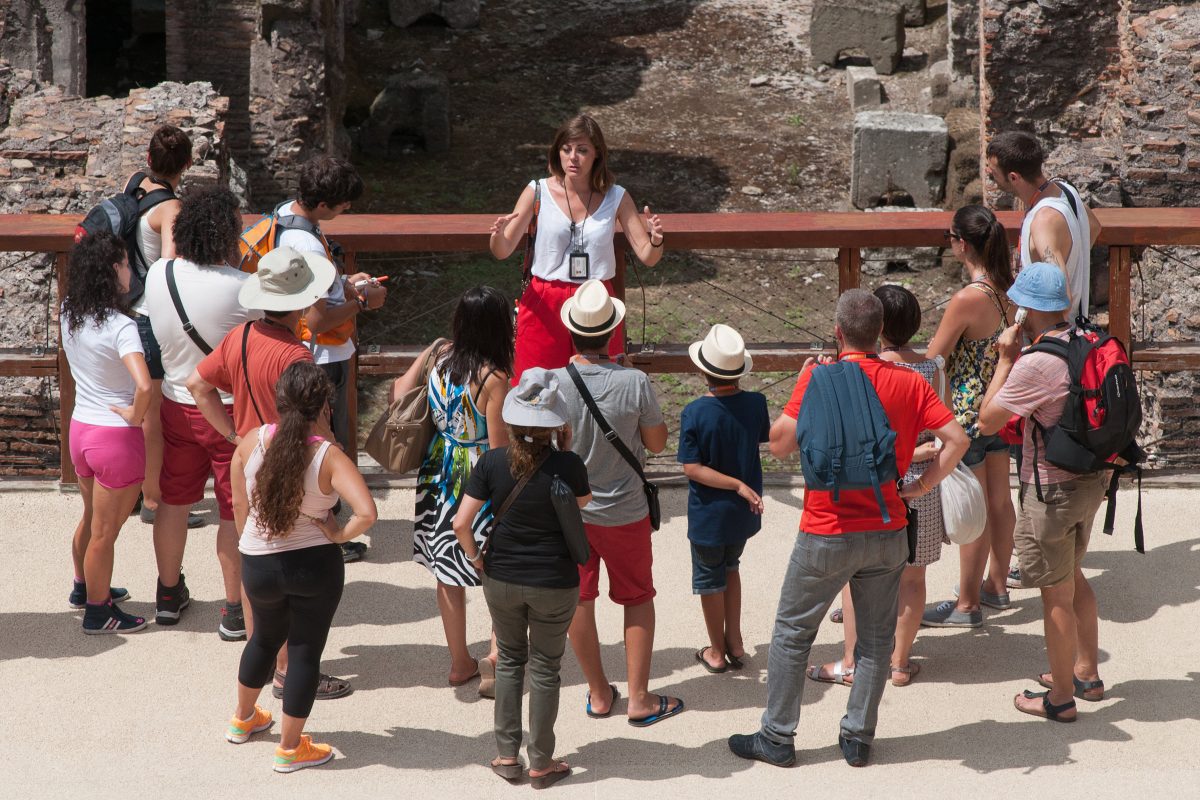
Together we listed the hotel pick-up, the air-conditioned coach, the professional driver, fuel, commercial insurance, vehicle maintenance, the licensed guide, carefully planned itineraries, visits to several destinations and a full day organised from beginning to end.
When we finished, he smiled and said something I have heard many times over the years.
“I never thought about everything that happens before the coach even leaves the hotel.”
That sentence has stayed with me ever since.
Because perhaps that is the greatest challenge in tourism.
Visitors naturally see the finished experience.
They do not see the planning, the maintenance, the early mornings, the salaries, the fuel, the insurance, the responsibility or the countless invisible details that make a holiday run smoothly.
And they shouldn’t have to.
That is our job.
But from time to time, I think it is worth remembering that every enjoyable holiday is built upon thousands of hours of work that remain completely invisible to the people enjoying it.
This article is not an attempt to convince you to spend more money during your holiday.
In fact, there have been many occasions when I have advised visitors not to spend money because I genuinely believed another option suited them better. Sometimes I recommend taking the local bus instead of booking a transfer. Sometimes I tell families that an excursion is too demanding for young children. Long-term trust has always mattered more to me than a single sale.
I wrote this article for a different reason.
After a lifetime in tourism, I have realised that the biggest misunderstandings rarely come from prices themselves.
They come from the expectations we attach to them.
And once we understand that difference, we begin to see holidays—and perhaps travel itself—in a completely different way.
Price Without Context Means Very Little
One of the biggest mistakes we make as travellers is judging a price without understanding what stands behind it.
Allow me to give you an example that I experience almost every day during the summer.
A visitor asks about a full-day excursion.
I explain the itinerary, answer a few questions and finally mention the price.
Usually somewhere between €45 and €55, depending on the excursion.
Every now and then I hear the same reaction.
“That sounds expensive.”
I completely understand why someone might think that.
After all, the only number they have heard so far is fifty euros.
But then I ask them to imagine that we remove the price tag and simply describe what they are receiving.
A modern, air-conditioned coach.
A professional driver whose responsibility is to transport dozens of people safely across hundreds of kilometres.
Fuel.
Commercial insurance.
Vehicle maintenance.
Road taxes.
Cleaning.
Office staff organising every booking.
A licensed guide speaking several languages.
Carefully planned itineraries built through years of experience.
Hotel pick-up and return.
Visits to archaeological sites, historic towns, traditional villages and places many visitors would never discover on their own.
Customer support before, during and after the excursion.
When we finish listing everything included, the conversation almost always changes.
Not because I have defended the price.
Because I have explained the value.
Nothing about the excursion has changed.
Only the perspective has.
That, in my opinion, is one of the greatest misunderstandings in modern tourism.
People naturally see the final figure.
Professionals see everything hidden underneath it.
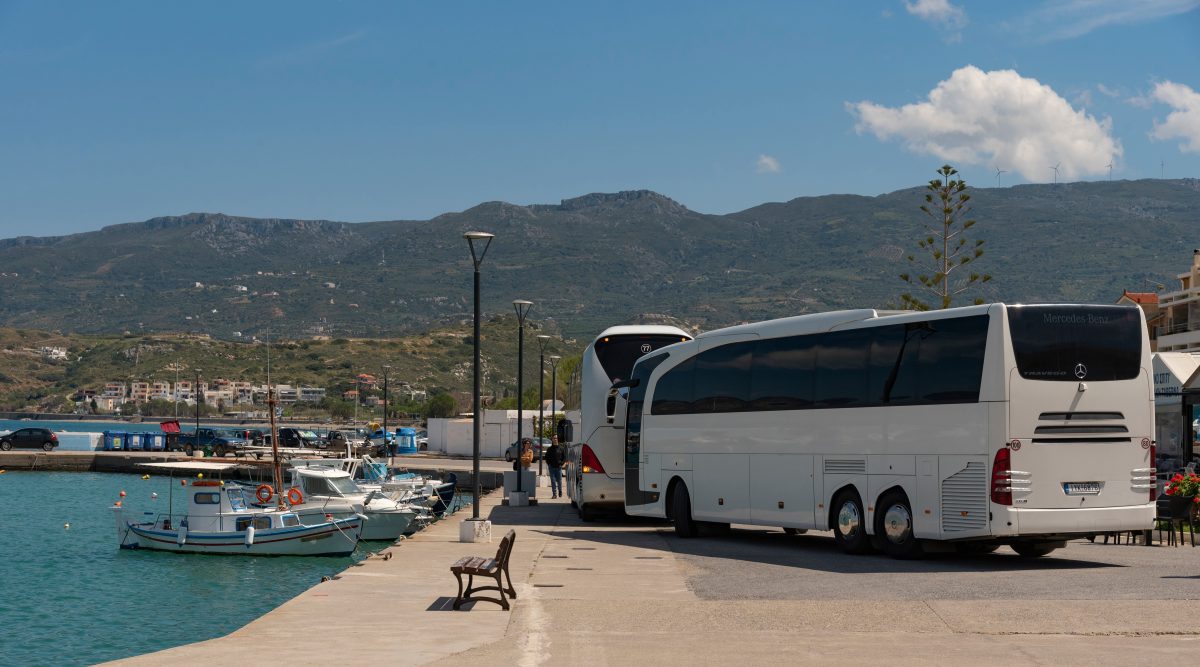
Every organised excursion begins long before the first guest boards the coach. Vehicles have to be purchased and replaced every few years. Drivers must receive continuous training. Air-conditioning systems require maintenance. Tyres wear out. Fuel prices fluctuate. Insurance premiums increase. Guides spend years learning history, archaeology and foreign languages before they ever stand in front of a group.
Visitors are not expected to think about these things while enjoying their holiday.
Nor should they.
But they are part of the reason why a price exists.
Exactly the same principle applies to accommodation.
Every August, thousands of visitors choose simple self-catering apartments costing around €50 or €60 per night.
There is absolutely nothing wrong with making that choice.
In fact, I often recommend family-run apartments because they offer something that many large hotels cannot: authenticity, independence and personal hospitality.
However, I have occasionally seen guests become disappointed because the apartment they booked did not offer the facilities of a luxury five-star resort.
This is where I believe expectations become more important than prices.
If a property was built in the 1990s and has never claimed to be anything else, then it should be judged for what it is—not for what it was never intended to become.
The photographs showed the rooms.
The description explained the facilities.
The reviews were publicly available.
The owner never promised a spa.
Never promised a wellness centre.
Never promised room service.
Never promised designer interiors or infinity pools.
Everything was visible before the reservation was made.
The accommodation has not changed.
Only the expectations have.
Sometimes I use a very simple comparison.
Nobody walks into a Mercedes dealership with the budget for a small family car and then complains because the vehicle does not have massage seats, handcrafted leather, a V8 engine and every luxury option available.
We instinctively understand that different products exist for different budgets.
Yet in tourism, people occasionally expect a budget apartment to deliver the same experience as a luxury resort costing ten times more.
That is not a failure of the accommodation.
It is a mismatch between expectations and reality.
The same misunderstanding appears in restaurants.
A family-run taverna serving traditional Cretan dishes should not be criticised because it does not resemble a Michelin-starred fine dining restaurant.
Likewise, an expensive restaurant should not automatically be considered better simply because the bill is higher.
Over the years I have enjoyed unforgettable meals in tiny village tavernas where the food was prepared by the owner’s family using recipes passed down through generations. I have also eaten in elegant restaurants where everything looked beautiful but very little stayed in my memory.
Price and value are not the same thing.
That is one of the most important lessons tourism has taught me.
The cheapest option is not always the smartest choice.
The most expensive option is not always the best.
The real question is much simpler.
Does the experience justify the price?
Whenever I help visitors choose excursions, accommodation or activities, that is the only question I ask myself.
Not whether something is cheap.
Not whether it is expensive.
But whether, at the end of the day, the person standing in front of me is likely to say:
“That was worth every euro.”
Because, in my experience, those are the words that matter far more than the price itself.
The Hidden Cost of Creating a Holiday
There is another question I occasionally hear.
“Why has Greece become more expensive?”
It is a fair question.
The honest answer, however, is that Greece has not become more expensive in isolation.
Almost everything has become more expensive.
Fuel.
Electricity.
Insurance.
Vehicle maintenance.
Building materials.
Food.
Wages.
Taxes.
Every business involved in tourism has felt the impact.
A coach company pays more to keep its vehicles on the road.
A family-run apartment pays more for electricity, water, cleaning products and repairs.
Restaurants pay more for ingredients.
Hotels pay more for staff, laundry, maintenance and energy.
These are not uniquely Greek challenges.
They are realities that businesses across Europe have been facing in recent years.
Yet many visitors still expect prices in Southern Europe to remain permanently low simply because they are on holiday.
I sometimes wonder why.
No one expects a coffee in London to cost what it did fifteen years ago.
No one expects a hotel in Paris to charge the same rates it did before the pandemic.
No one is surprised that everyday living costs have increased across Europe.
But when it comes to holiday destinations, many people subconsciously expect time to stand still.
Of course, everyone wants good value.
So do I.
When I travel with my own family, I also compare prices, read reviews and try to spend my money wisely.
There is nothing wrong with that.
The problem begins when price becomes the only criterion.
Because when the cheapest possible option becomes the only thing that matters, something else inevitably becomes cheaper too.
Usually, it is quality.
Or safety.
Or service.
Or the people delivering the experience.
Tourism is often described as an industry.
I have never liked that description.
To me, tourism is built on people.
The driver who wakes before sunrise.
The guide who answers the same questions with enthusiasm for the thousandth time.
The cleaner preparing rooms before guests return from breakfast.
The chef arriving long before lunch service begins.
The receptionist who solves problems that visitors never even realise existed.
The boat crew checking equipment before leaving the harbour.
These people are not hidden costs on a spreadsheet.
They are the experience.
Without them, there is no holiday.
This is also why I believe local businesses deserve more attention than they sometimes receive.
Across Crete, thousands of family businesses continue traditions that stretch back generations.
Small tavernas.
Independent excursion offices.
Local guides.
Taxi drivers.
Olive oil producers.
Winemakers.
Village cafés.
Family-owned accommodation.
Souvenir shops.
Bakeries.
These businesses are more than places where money changes hands.
They are part of the character of the island itself.
When visitors choose them, they are not simply purchasing a service.
They are helping local communities remain alive.
That does not mean local businesses are always better.
Nor does it mean international companies are always worse.
Good and bad examples exist everywhere.
But local businesses usually have something that cannot easily be replicated.
Reputation.
In villages like Sissi, reputation is built slowly and lost quickly.
If we disappoint visitors today, they may never return.
If we treat people honestly, they often come back year after year.
Many eventually become friends.
Some families have been visiting us for decades.
We have watched children become parents.
Parents become grandparents.
We exchange Christmas cards.
We receive wedding invitations.
Sometimes we even receive photographs of babies whose parents first met while holidaying in Crete.
Those moments remind me that tourism is ultimately about relationships, not transactions.
That is why I never believe that the cheapest possible holiday is automatically the best holiday.
Sometimes spending a little more means supporting a local family instead of an anonymous multinational company.
Sometimes it means choosing a guide who grew up hearing the stories he now shares with visitors.
Sometimes it means eating in a taverna where the tomatoes were picked that very morning from the owner’s garden.
Sometimes it simply means returning home with memories that no online discount could ever replace.
Money is an important part of every holiday.
It always will be.
Budgets matter.
Planning matters.
Comparing prices matters.
But value cannot be measured by a calculator alone.
Some of the most memorable experiences in life have very little to do with the amount we paid for them.
A conversation with a local fisherman.
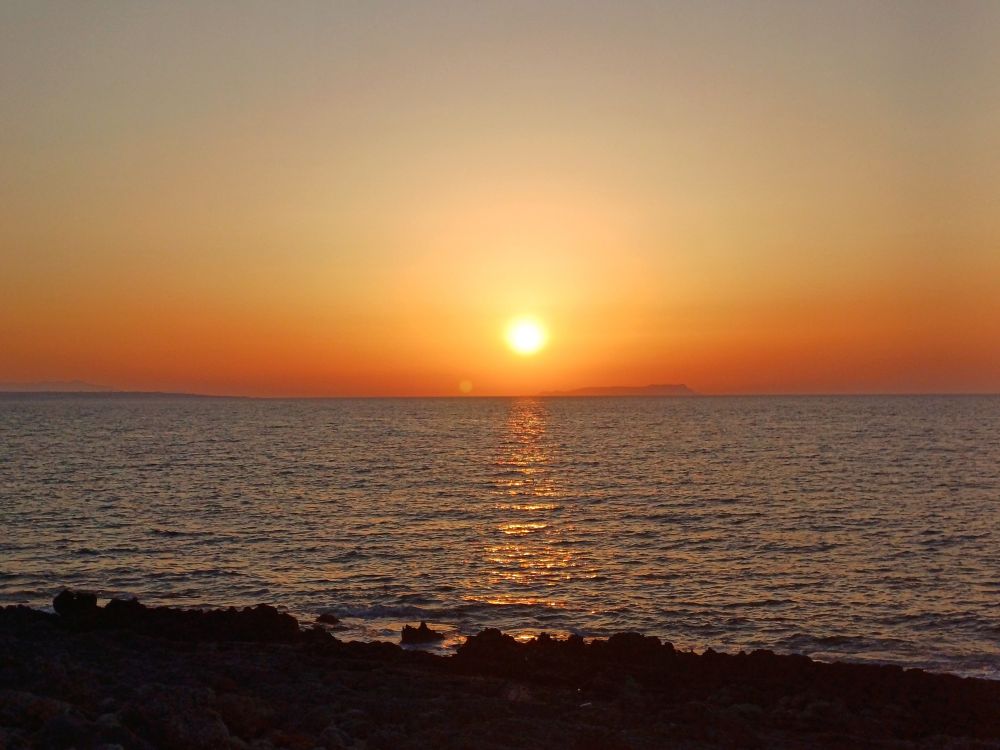
A sunset shared with family.
An unexpected invitation to join a village celebration.
Fresh bread still warm from the oven.
The smell of wild herbs carried by the mountain breeze.
The smile of someone who is genuinely happy that you chose to visit their home.
Those moments rarely appear on an invoice.
Yet they are often the memories we carry with us long after the holiday has ended.
Perhaps that is the greatest value any destination can offer.
So… Is Crete Really Expensive?
If you have read this far, you already know my answer.
No.
And yes.
It depends entirely on what you are comparing, what you expect and, perhaps most importantly, what kind of holiday you are looking for.
If your only goal is to find the absolute cheapest destination in Europe, then Crete may not always be the answer.
There will probably always be somewhere cheaper.
But if you are looking for an island where history stretches back thousands of years, where mountains meet the sea, where villages still preserve traditions, where local families welcome visitors with genuine hospitality and where one holiday can include beaches, archaeology, food, hiking, sailing and unforgettable sunsets, then the conversation changes completely.
Because value is never measured by price alone.
One of the greatest privileges of my work is meeting people from every corner of the world.
Every summer I speak with visitors from Britain, Germany, France, the Netherlands, Scandinavia, North America and many other countries.
Some stay for four days.
Others for three weeks.
Some arrive for the first time.
Others have been returning to Crete for twenty or even thirty years.
Despite their different backgrounds, I notice something fascinating.
Almost nobody remembers exactly how much they spent.
Years later, they remember different things.
The restaurant where the owner insisted they try homemade raki.
The hidden beach they discovered by accident.
The mountain village where time seemed to stand still.
The boat trip where they watched dolphins swimming beside the vessel.
The local guide whose stories made ancient history come alive.
The sunset they shared with the people they love.
Those are the memories that survive.
Not the receipt.
As someone who works in tourism, I could easily spend my time trying to convince visitors that every excursion is essential, every activity is worth buying and every extra expense is justified.
But that would not be honest.
The truth is that not every excursion is suitable for every person.
Not every traveller needs organised tours.
Some visitors are happiest hiring a small car and exploring on their own.
Others enjoy sitting beside the sea for an entire week without doing very much at all.
There is no correct way to experience Crete.
The best holiday is the one that suits you.
That is exactly why, over the years, I have often advised visitors not to book certain excursions with us.
Sometimes the local bus is a better option.
Sometimes the beach outside the hotel is exactly what a family with young children needs.
Sometimes spending less genuinely creates a better holiday.
I have never believed that success in tourism comes from selling the most expensive product.
I believe it comes from helping people make the right decision.
Because satisfied visitors return.
And returning visitors become part of the story of a place.
Looking back over my lifetime in tourism, I realise that the most valuable thing this profession has given me is not business experience.
It is perspective.
It has taught me that every visitor arrives carrying different expectations.
Different cultures.
Different budgets.
Different dreams.
No single holiday can be perfect for everyone.
But every holiday has the potential to become unforgettable when expectations and reality meet.
Perhaps that is why I no longer ask whether Crete is expensive.
I ask a different question.
Did the island make you smile?
Did you discover something new?
Did you slow down?
Did you meet people you will remember?
Did you return home with stories you could never have created anywhere else?
If the answer to those questions is yes, then perhaps the price was never the most important part of the journey.
Before I finish, I would like to leave you with one final thought.
When you visit Crete, you are not simply choosing a destination.
You are choosing to spend part of your life here.
A few days.
A week.
Perhaps two.
Those days will never come back.
That is why I hope you choose experiences that make those moments worthwhile.
Not necessarily the cheapest.
Not necessarily the most expensive.
Simply the ones that will stay with you long after your suitcase has been unpacked.
When you leave Crete, I don’t expect you to remember the prices.
I hope you remember the people.
Because prices belong to holidays.
People create memories.
About the Author
My name is Stefanos Katrinakis, and I was born and raised in Crete.
Tourism has been part of my life for as long as I can remember. Over the past 25 years, I have had the privilege of welcoming thousands of visitors from all over the world, helping them discover not only the famous attractions of Crete but also the people, traditions and authentic experiences that make this island so special.
As the owner of Stefanos Tours in Sissi, I don’t believe that the best holiday is necessarily the most expensive one—or the cheapest one.
I believe the best holiday is the one you will still be talking about years later.
Thank you for taking the time to read my thoughts.
I hope to welcome you to Crete one day.
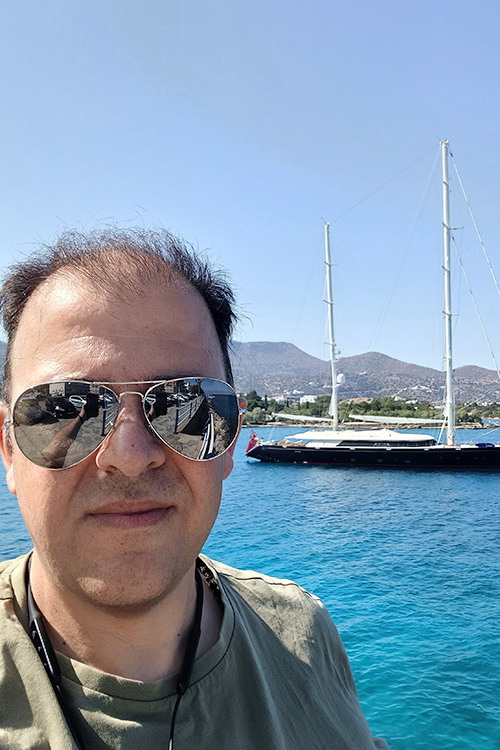
Stefanos Katrinakis
Owner, Stefanos Tours
Sissi, Crete
Have a different opinion? I’d genuinely love to hear it. Feel free to share your thoughts in the comments below. Some of the best conversations in tourism begin with different perspectives.